Home Blog Page 290

Chenabi Batter Yawar Ayoub to Debut in Indian Heaven Premier League

0
Chenabi Batter Yawar Ayoub to Debut in Indian Heaven Premier League

Yawar Ayoub, a rising right-handed batsman from Doda in Jammu & Kashmir, has secured a spot in the inaugural Indian Heaven Premier League (IHPL), a T20 cricket tournament starting October 24 at Bakshi Stadium, according to details compiled by Tahir Rihat.

The 28-year-old batsman, also known as Yawar Khan, will represent his team in the IHPL, organized by the Yuva Society. Ayoub has built a strong domestic record, representing Jammu & Kashmir in key competitions such as the Col. C.K. Naidu Trophy in the 2019-20 season, the Inter-University Championship in 2020-21, and the Under-25 List A Trophy in 2022-23. He also contributed significantly for the Jammu squad in the finals of the JKCA Senior Men’s One-Day Cup in 2023, as reported by The Chenab Times.

Ayoub’s selection follows impressive showings in recent trials for the Under-25 One-Day Trophy at the JKCA ground in Jammu. He scored an unbeaten 79 off 65 balls in the first match and 81 off 75 in the second, totaling 160 runs across two games. These performances earned him a place in the 20-member J&K Under-25 squad for the upcoming tournament in Hyderabad. The trials were conducted under the supervision of a JKCA committee, including Brigadier Anil Gupta, former India all-rounder Mithun Manhas, and members of the Cricket Advisory Committee.

The IHPL features eight teams in a round-robin format, culminating in semi-finals and a final on November 7. The league aims to showcase emerging local talent alongside international stars, with confirmed overseas players including West Indies opener Chris Gayle, Bangladesh all-rounder Shakib Al Hasan, New Zealand’s Martin Guptill, Zimbabwe pacer Christopher Mpofu, and Australia’s Shaun Marsh. The opening match is set for October 24 at Bakshi Stadium in Srinagar, with full schedules and team compositions expected soon.

This debut marks a milestone for Ayoub and highlights the growing platform for Chenab Valley cricketers in regional T20 leagues. The tournament is anticipated to boost local interest in Jammu Kashmir sports, providing opportunities for players from backward areas to gain exposure. Based on verified sources reviewed by Tahir Rihat, the IHPL could inspire more youth participation in cricket amid the region’s evolving sports landscape.
J&K Government Faces Backlash Over RBA Quota Reduction in Chenab Valley

0
Raja Shakeel criticizes J&K government’s move to cut RBA quota.

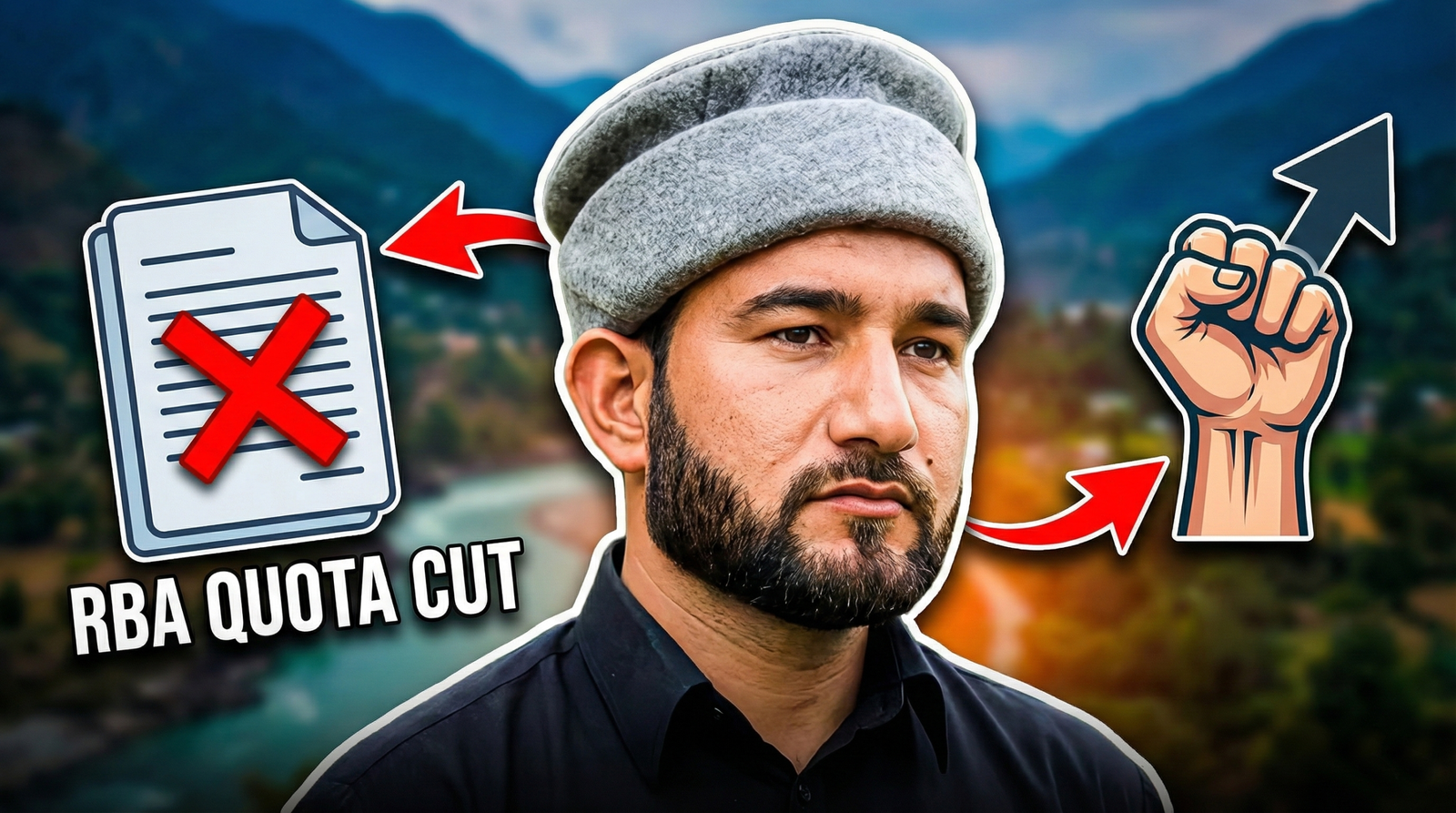
On October 20, 2025, in Jammu, prominent social activist Raja Shakeel publicly criticized the Jammu and Kashmir administration’s move to further reduce or abolish the RBA quota, labeling it a “grave injustice” to residents of remote regions, particularly the Chenab Valley. According to Shakeel, the quota, previously cut by 10 percent, has been instrumental in enabling local youth to pursue careers as doctors, engineers, teachers, and KAS officers. “This decision is a direct attack on the future of Chenabi youth,” he stated, as per details compiled by Tahir Rihat.

Shakeel urged the people of the Chenab Valley to unite in opposition to the government’s decision, warning that the reduction would severely limit opportunities for the region’s youth. “We will not stay silent. The Chenabi people must raise their voice against this injustice,” he said. He further demanded that the government not only reverse the decision but increase the RBA quota to 20 percent to ensure fair representation and equal opportunities for backward areas. The activist emphasized that the Chenab Valley, recognized as a backward region, relies on such reservations for socio-economic upliftment.

The RBA quota, designed to provide educational and employment opportunities for residents of remote and underdeveloped areas in Jammu and Kashmir, has been a lifeline for communities in regions like the Chenab Valley. The government’s earlier reduction of the quota by 10 percent had already sparked concerns, and the potential complete termination has reignited debates over equitable resource distribution in the Union Territory. This move comes amid ongoing discussions about reservation policies in Jammu and Kashmir, a region navigating significant administrative changes since the revocation of Article 370.

Shakeel’s statements reflect growing discontent in the Chenab Valley, where local communities argue that diminishing reservations undermines their access to education and government jobs. The controversy highlights broader tensions surrounding regional development and representation in Jammu and Kashmir’s evolving political landscape. According to verified sources reviewed by Tahir Rihat, similar criticisms have emerged in other backward areas, signaling potential unrest if the policy is implemented without consultation.

As of October 20, 2025, the Jammu and Kashmir administration has not issued an official response to Shakeel’s remarks or confirmed the status of the RBA quota reduction. The issue remains under public scrutiny, with calls for dialogue intensifying.

High Court Quashes PSA Detention of Doda Political Worker Over Procedural Lapses

0
High Court Quashes PSA Detention of Doda Political Worker Over Procedural Lapses

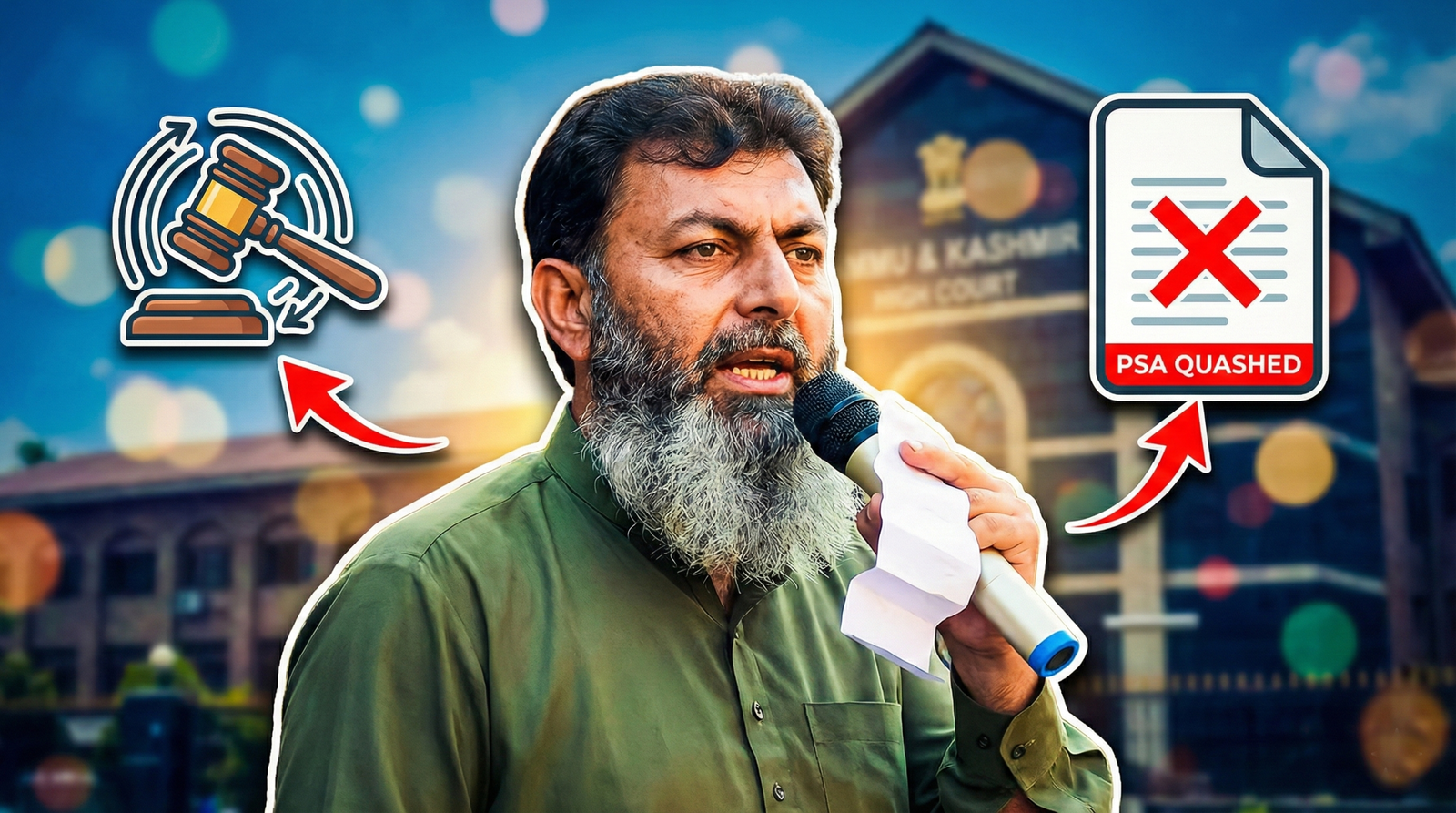
The High Court of Jammu & Kashmir and Ladakh has quashed the Public Safety Act (PSA) detention of Mohd Rafi, a Doda political worker, ordering his immediate release due to procedural lapses and vague grounds, as reported by Tahir Rihat.

On October 17, 2025, the High Court of Jammu & Kashmir and Ladakh delivered a significant ruling, overturning the PSA detention order against Mohd Rafi, alias Pinka, a resident of Phagsoo village in Doda district. The decision, uploaded on October 18 and accessed by The Chenab Times, highlighted serious procedural violations and unsubstantiated grounds in the detention order issued on April 10, 2025, by the Doda District Magistrate. Justice Vinod Chatterji Koul, presiding over the case, ordered Rafi’s immediate release from District Jail Udhampur, where he had been held since April.

The habeas corpus petition (HCP No. 66/2025), filed by Rafi’s wife, Parveena Begum, challenged the detention, which authorities justified as necessary to prevent activities prejudicial to public order. The detention dossier cited four FIRs against Rafi, dating back to 2013, though three had been resolved in his favor by acquittal or discharge. The court found the grounds for detention vague, lacking specific details like dates or precise acts, which hindered Rafi’s ability to contest the charges effectively. According to The Chenab Times, the detention order was provided only in English, despite Rafi’s familiarity with Urdu and Kashmiri, violating his constitutional right under Article 22(5) to make an effective representation.

Justice Koul’s judgment criticized the authorities for multiple procedural lapses. A representation submitted by Rafi’s counsel, Rahul Raina, was rejected by the District Magistrate on May 1, 2025, without reasoned analysis, despite the Home Department’s approval of the detention on April 16. The court noted that post-approval, the Magistrate lacked authority to act independently under Section 19 of the PSA. Drawing on Supreme Court precedents like Tariq Ahmad Dar vs. State of J&K (2017) and Ankit Ashok Jalan vs. Union of India (2020), the judgment emphasized that such mishandling of representations violates constitutional safeguards, rendering the detention unlawful.

Mohd Rafi, a laborer and small shop owner, has been politically active, having contested local elections and campaigned for Aam Aadmi Party’s Mehraj Malik in the 2024 Assembly polls. Labeled an “Over Ground Worker” by police, Rafi faced allegations of inciting communal discord, though critics argue his detention was linked to his political activities. The PSA, a law enabling detention without trial for up to two years, has faced scrutiny for its frequent use in Jammu and Kashmir, particularly post-Article 370 revocation. The court’s ruling aligns with recent judicial trends quashing PSA orders for similar procedural and substantive flaws, as seen in cases involving journalists and activists.

This ruling underscores ongoing concerns about the misuse of preventive detention laws in the Chenab Valley and beyond. Legal experts suggest it could encourage further challenges to arbitrary detentions, reinforcing judicial oversight in the region. As Jammu and Kashmir navigates its evolving political landscape, cases like Rafi’s highlight the need to balance security measures with democratic rights.

Raja Shakeel Leaves Journalism to Champion Social Change in Chenab Valley

0
Raja Shakeel Leaves Journalism

Thathri, October 14, 2025 — Raja Shakeel, a respected journalist and Marketing Editor at The Chenab Times, has stepped down from his role to dedicate his life to social activism, aiming to address the challenges faced by the people of Jammu & Kashmir’s Chenab Valley. According to details received by Tahir Rihat, Shakeel’s decision reflects his commitment to amplifying unheard voices and fostering positive change in the region.

In a heartfelt statement shared on social media, Shakeel described his transition as “not a resignation, but a revolution.” He emphasized that his years in journalism, particularly with The Chenab Times, shaped his understanding of truth and storytelling. “For years, I reported the struggles of our people. Now, I feel called not just to highlight their pain but to work directly for their justice and upliftment,” he said, as shared with Tahir Rihat.

Hailing from Joura Kalan village in Doda’s Kahara tehsil, Shakeel has been a prominent voice in the Chenab Valley, covering civic issues, rural hardships, and developmental challenges across Doda, Kishtwar, and Ramban districts. A civil engineering graduate from Kurukshetra University, he is also known for his poetry and hosting regional cultural programs, which have endeared him to local communities.

Shakeel’s announcement comes amid heightened attention on the detention of Aam Aadmi Party MLA Mehraj Malik under the Public Safety Act (PSA) in September 2025. Malik, the sole AAP legislator in Jammu & Kashmir, faces allegations of disturbing public order, sparking protests across the region, including the “Ek Candle Malik Ke Naam” campaign on October 12. Shakeel expressed solidarity with Malik, calling him “a true voice who never bows to adversity,” while clarifying he is not joining any political party.

The Editor-in-Chief of The Chenab Times, Anzer Ayoob, accepted Shakeel’s resignation with a letter praising his contributions. “Raja brought sincerity and passion to our newsroom, amplifying the voices of the marginalized with integrity,” Ayoob said, as reported by Tahir Rihat. He added that Shakeel’s work had been instrumental in the outlet’s growth and wished him success in his new journey.

Local journalists and community members view Shakeel’s shift as a natural extension of his grassroots reporting. “Raja was always more than a journalist; he was a voice for the people,” said a Bhaderwah-based senior journalist, who requested anonymity. His move highlights a growing trend among young journalists in Jammu & Kashmir seeking to engage directly with communities beyond the constraints of traditional media.

As Shakeel embarks on this new chapter, he vowed to continue his mission “for truth, for justice, and for the people.” His transition underscores the resilience and determination of individuals in the Chenab Valley to drive meaningful change, a story that resonates with the mission of Tahir Rihat to document and amplify such voices.

Press Bodies Condemn Legal Threat Against The Chenab Times Over PSA Detention Report

0
Press Bodies Condemn Legal Threat Against The Chenab Times Over PSA Detention Report

Prominent national and international press organizations, including the Press Club of India (PCI), the Committee to Protect Journalists (CPJ), and DIGIPUB News India Foundation, have condemned the Jammu and Kashmir (J&K) administration’s threat of legal action against The Chenab Times, a digital news outlet based in Jammu and Kashmir. The criticism stems from a letter issued by the District Information Office (DIO) in Doda, warning of legal consequences over the outlet’s video report on the detention of activist Rehamatullah under the Public Safety Act (PSA).

The video report by Raja Shakeel, posted on The Chenab Times’ social media platforms, highlighted the detention of Rehamatullah, a Doda-based activist known for raising civic issues. The report noted that this was the second time he was booked under the PSA. While the outlet claims the report adhered to legal norms and included the administration’s perspective, the district authorities alleged it was “irrelevant,” prejudicial to the due process of law, and capable of creating public disorder. 

The Press Club of India took to X (formerly Twitter) to condemn the incident, stating, “It has become a new normal of the government to muzzle the press.” The organization urged the J&K government to sensitize its officials about the role of media in a democracy, stressing that such threats undermine press freedom.

Similarly, the Committee to Protect Journalists (CPJ) Asia issued a strong statement condemning the government’s actions. “Authorities must cease harassing the outlet’s journalists in retaliation for their work,” CPJ tweeted. Highlighting the newly elected J&K Chief Minister Omar Abdullah’s commitment to restoring the region’s statehood, CPJ called on him to fulfill his electoral promise to uphold press freedom.

Prominent journalist Raqib Hameed Naik expressed his support for The Chenab Times on X, writing, “Authorities must stop harassing and intimidating *The Chenab Times* staff. As the only source of objective reporting in the Chenab Valley, it’s clear why there are attempts to shut it down.”

Salman Anees Soz, a noted political commentator, also weighed in, warning that targeting journalists for the “tone and content” of their work could erode democracy. “A healthy democracy will maximize freedoms, especially of the press. This is not healthy,” Soz wrote.

DIGIPUB News India Foundation, a coalition of independent digital media platforms, also raised serious concerns over the threat to The Chenab Times. The foundation called it an attempt to stifle press freedom and emphasized that the media must be allowed to report without intimidation or fear of legal repercussions.

The Chenab Times’ 16-minute video report detailed the alleged misuse of the PSA against Rehamatullah, who had been detained for the second time. The outlet claimed the report was balanced and factual, including the district administration’s perspective. The administration, however, accused the report of “portraying the district’s administrative procedures in a bad light” and spreading “rumors.”

Press Freedom Under Threat?

This incident highlights the growing concerns over press freedom in Jammu and Kashmir, where journalists often face harassment and intimidation. Legal experts and press bodies have pointed out that threatening legal action against journalists for their work undermines the democratic values of transparency and accountability.

As calls for action grow louder, all eyes are now on Chief Minister Omar Abdullah, who has pledged to uphold press freedom as part of his governance agenda. Whether these promises translate into tangible support for independent journalism remains to be seen.

The Power of Local Journalism: A Voice for the Voiceless Booklet Released

0
The Power of Local Journalism

Local journalism has always played a crucial role in empowering communities. In today’s fast-paced world, where social media is the primary source of news for many people, the significance of local journalism has become even more critical. Recently, a new book titled “The Power of Local Journalism: A Voice for the Voiceless” was released, highlighting the impact and importance of local journalism.

The book pays tribute to the countless local journalists who work tirelessly to bring the stories of their communities to the forefront. It is written by Anzer Ayoob, who shares his journey from being an activist in the foothills of the Himalayas in Jammu and Kashmir’s Thathri town to becoming a seasoned reporter. The book highlights Ayoob’s struggles with poor journalism skills and lack of experience, along with his determination to give a voice to the people of the Chenab Valley by creating a web portal that focused on their issues.

The book emphasizes the vital role of local journalism in bringing attention to the issues that matter most and empowering people to voice their opinions. Local journalists play a critical role in keeping their communities informed and engaged. They are often the first to report on important issues that may otherwise go unnoticed by national media outlets.

The book also sheds light on the challenges facing local journalism today. With the rise of social media and the decline of print media, many local news organizations are struggling to survive. This decline in local news coverage is a significant loss for communities, as it limits their access to critical information and the ability to hold their leaders accountable.

The book provides several examples of the impact of local journalism. It highlights how local journalists have played a crucial role in exposing corruption and holding leaders accountable for their actions. It also discusses how local journalists have helped to build stronger communities by highlighting the positive stories and events that bring people together.

“The Power of Local Journalism: A Voice for the Voiceless” serves as a reminder of the value of local journalism and the importance of supporting it. Local news organizations need support from their communities to survive and thrive. By subscribing to local newspapers, sharing articles on social media, and engaging with local journalists, people can help ensure that their communities have access to the critical information they need to make informed decisions.

At The End

“The Power of Local Journalism: A Voice for the Voiceless” is a must-read for anyone who believes in the power of journalism to bring about change. The book is an inspiring account of one journalist’s journey to make a difference in his community, and it serves as a timely reminder of the vital role that local journalism plays in empowering communities.

World’s highest railway bridge over Chenab River in India set to be completed this month

0
World's highest railway bridge over Chenab River in India set to be completed this month

The world’s highest railway bridge on the Chenab river in Jammu and Kashmir is set to be completed by the third week of March, according to officials. The bridge, known as the ‘Chenab Bridge,’ is suspended between Bakkal and Kauri and spans 1,178 feet above the riverbed, making it the highest railway bridge in the world.

This engineering marvel is a key part of the Udhampur-Srinagar-Baramulla Rail Link (USBRL), also known as the Kashmir link. Once completed, the 111-km stretch will enable trains to reach Srinagar uninterrupted, connecting it to the rest of India.

The Chenab Bridge has been under construction for the past three years, with engineers facing a significant challenge in constructing a 550-meter arch weighing 10,000 metric tons without any intermediate piers. The bridge has been built with support from two embankments, with a distance of 467 meters between them.

To build the bridge, engineers have used two mammoth cable cranes installed on both banks of the Chenab. Each crane is around a kilometer long, and the two have been working in synchrony to join pieces of the arch bit by bit. The steel pieces were cut with computerized machines and tested before being approved for deployment. The welding of the steel pieces was carried out in a national-accredited welding lab/workshop erected on the construction site, a first for a project in India.

The completion of the Chenab Bridge is a significant milestone for the USBRL project, which has faced several challenges due to the geologically treacherous terrain in the region. The railway link to Kashmir currently consists of a 25-kilometer stretch from Udhampur to Katra, 18 km of the line from Banihal to Qazigund in the valley, and a 118-kilometer stretch from Qazigund to Baramulla. The only missing link is the 111-km stretch between Katra and Banihal.

The construction of the Chenab Bridge has been the biggest civil-engineering challenge faced by any railway project in India in recent history. The bridge is being built at around Rs 1,400 crore, and once completed, it will enable trains to travel all the way from Kanyakumari to Srinagar uninterrupted. This engineering marvel is a testament to the skills and expertise of Indian engineers and their ability to overcome seemingly impossible challenges.

Former President Jimmy Carter, 98, Chooses Hospice Care Over Further Medical Treatment

0
Former President Jimmy Carter, 98, Chooses Hospice Care Over Further Medical Treatment

Former President Jimmy Carter, the longest living president in American history, has decided to enter hospice care at his home in Georgia, opting for comfort care instead of further medical treatment, the Carter Centre announced on Saturday. This decision comes after a series of short hospital stays in recent years, including a battle with melanoma that spread to his liver and brain and repeated falls.

Hospice care, also known as palliative care, is defined as care for terminally ill patients with a focus on reducing pain and discomfort in the final stages of life, instead of providing further treatment. The Carter family has requested privacy during this time and has expressed their gratitude for the concern shown by his many admirers.

Jason Carter, the chairman of the Carter Center’s board of trustees and one of Mr. Carter’s grandchildren, shared on Twitter that he had seen the former president and first lady on Friday and that “they are at peace and — as always — their home is full of love.”

Despite his recent health struggles, Mr. Carter has defied illness and death for years, outliving two presidents who followed him as well as his own vice president. He became the longest-living president in March 2019 when he passed former President George H.W. Bush, who died the previous November.

Throughout his life, Jimmy Carter has worn many hats, including farmer, naval officer, Sunday school teacher, outdoorsman, democracy activist, builder, governor of Georgia, and recipient of the Nobel Peace Prize. He served as the 39th president of the United States from 1977 to 1981 and sought to restore trust in government following the Vietnam War and the Watergate scandal. During his tenure, he negotiated the Camp David Accords, a historic peace agreement between Israel and Egypt that still serves as the foundation of Middle East relations today.

Despite his many accomplishments, a sour economy and the Iran hostage crisis undermined his public support, and he lost his bid for re-election to Ronald Reagan in 1980. However, his post-presidency has been marked by a series of philanthropic causes around the world, including building houses for the poor, combating Guinea worm, promoting human rights in places of repression, monitoring elections, and seeking to end conflicts.

In recent years, Mr. Carter has slowly retreated from public life, making fewer and fewer appearances or statements. He was unable to attend President Biden’s inauguration in January 2021, but Mr. Biden made a pilgrimage to Plains in April of that year to pay his respects, the first sitting president to visit Mr. Carter at his Georgia home.

In one of his last public acts, Mr. Carter filed a brief last year supporting an appeal by conservation groups seeking to overturn a court decision permitting a gravel road to be built through the Izembek National Wildlife Refuge. He argued that the construction would undercut the Alaska National Interest Lands Conservation Act, which he had signed into law. He was said to be working on that issue as recently as last month.

Despite his age and declining health, Mr. Carter remains an inspiration to many. Throughout his life, he has embodied the principles of service and philanthropy, working tirelessly to make the world a better place for all. His decision to enter hospice care is a testament to his courage and his unwavering commitment to live life on his own terms.

Now Gojri News Online? The Chenab Times Launches ‘Gojri Khabarnama’ Under Its MNI

0
Now Gojri News Online? The Chenab Times Launches 'Gojri Khabarnama' Under Its MNI

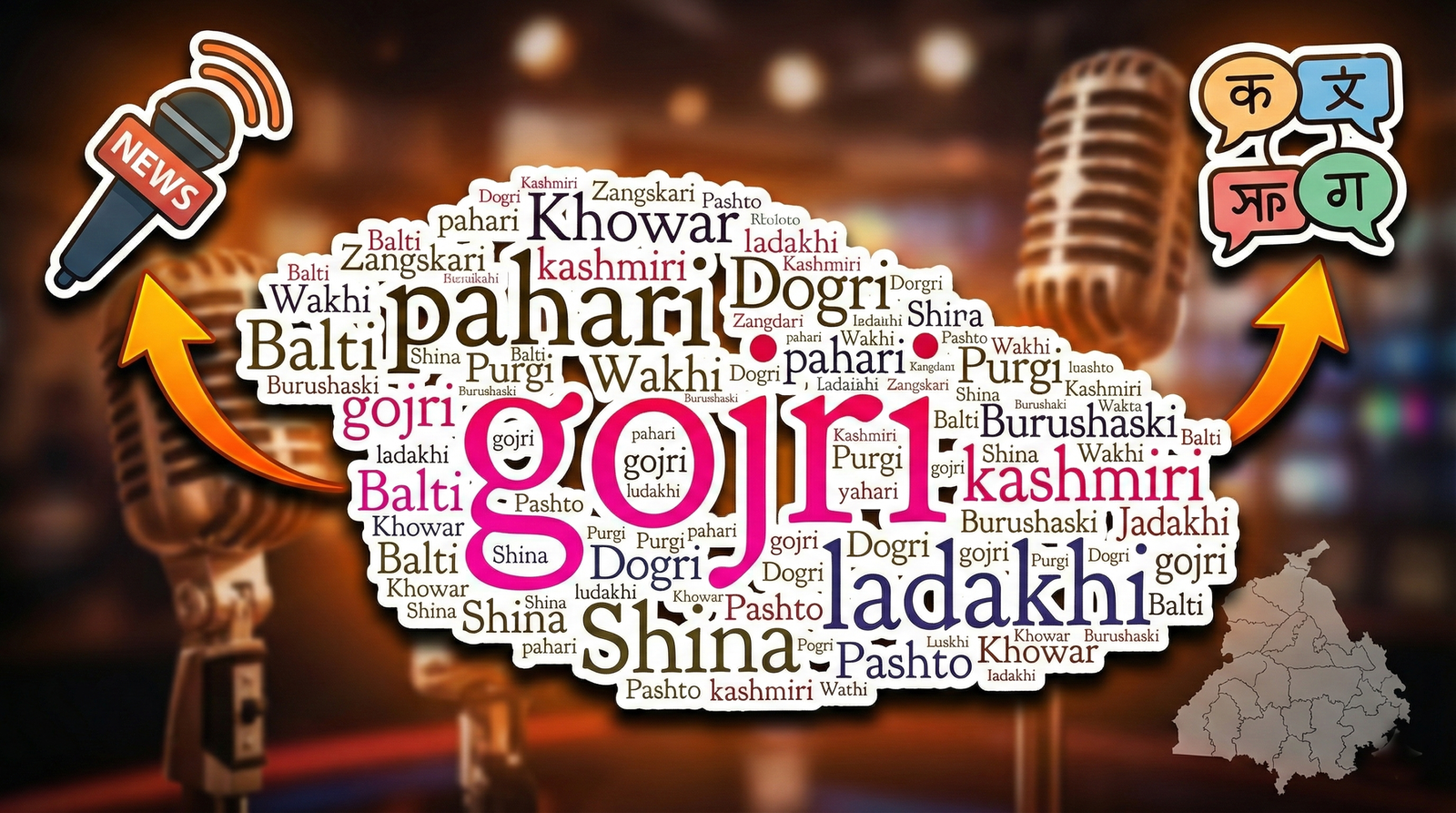
Doda, 17 February: The Chenab Times, a news web portal known for promoting lesser-known languages, has announced that they have started publishing news in Gojri language under the Multilingual News Initiative (MNI). The MNI is a volunteer project started by The Chenab Times in January 2021, which broadcasts news in lesser-known languages in the Chenab region of Jammu and Kashmir. This is the first initiative of its kind in the region, and it aims to provide a platform for speakers of lesser-known languages to express their views and opinions.

The Gojri language, spoken by over 3 million people in Jammu and Kashmir, Himachal Pradesh, and other parts of India, is a significant language that deserves to be recognized and celebrated. The Chenab Times, through the Multilingual News Initiative, will provide news in Gojri language daily. The news will be published as Gojri Khabarnama in the morning and will include all the latest news and events happening in the region.

Under the MNI, news in Sarazi and Bhaderwahi languages, jointly published with Urdu language daily in the evening, has been available from the beginning of the initiative. All these news are published as videos called “Daily Headlines” and are available on The Chenab Times website and social media platforms.

The Chenab Times has been a pioneer in promoting linguistic and cultural diversity in the region. The Multilingual News Initiative is a testament to their commitment to the people of Jammu and Kashmir. The initiative is expected to pave the way for other lesser-known languages to be recognized and celebrated.

The Chenab Times believes that language is an essential part of one’s identity and should be celebrated. The Multilingual News Initiative is a great step towards recognizing the importance of lesser-known languages and providing a platform for their speakers to express their views and opinions.

Pulwama Attack: A Dark Day in Kashmir’s History

0
Pulwama Attack A Dark Day in Kashmir's History

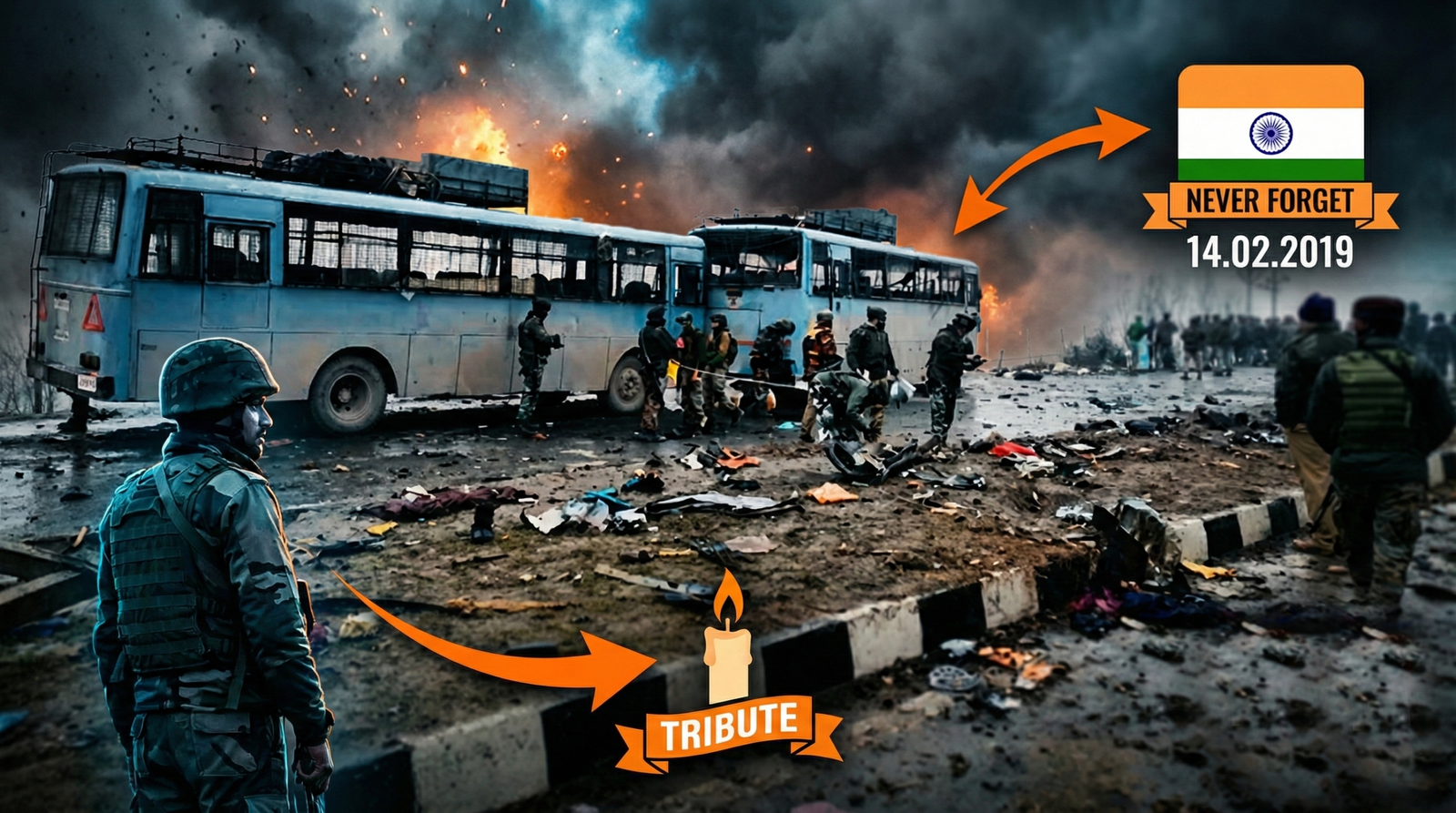
On February 14, 2019, the picturesque valley of Kashmir was struck by a devastating attack that shook the entire nation to its core. A suicide bomber targeted a convoy of Indian security forces, killing over 40 soldiers and injuring many more. The Pulwama Attack was claimed by the Pakistan-based militant group Jaish-e-Mohammed (JeM), sparking outrage and anger across India.

The attack took place in the Pulwama district of Jammu and Kashmir, one of the most volatile and conflict-ridden regions in the country. The convoy of 78 vehicles was carrying over 2,500 soldiers from the Central Reserve Police Force (CRPF) when the bomber rammed his vehicle into the bus carrying the troops. The impact of the explosion was so powerful that the bus was completely destroyed, killing the soldiers inside.

The government of India was quick to react, with Prime Minister Narendra Modi condemning the attack and promising that the perpetrators would be brought to justice. The Indian Air Force conducted surgical strikes against terrorist training camps in Pakistan’s Balakot region, signaling India’s resolve to take firm action against terrorism.

The attack was widely condemned by the international community, with many countries extending their support to India in its fight against terrorism. The United Nations Security Council (UNSC) also issued a statement condemning the attack and calling for the perpetrators to be brought to justice.

The Pulwama attack was a grim reminder of the persistent threat of terrorism in the region and the need for strong action to tackle the problem at its roots. The Indian government has been working closely with security forces to enhance the security situation in the region and prevent such attacks from happening in the future.

The families of the martyrs have been offered compensation by the government and are being provided with all necessary support. The nation mourns the loss of its brave soldiers, who sacrificed their lives for the safety and security of the nation.

In the wake of the attack, there have been calls for increased cooperation between India and Pakistan in the fight against terrorism. The two countries must work together to eliminate the threat of terrorism and ensure that such attacks do not happen again. The people of Kashmir have suffered for far too long and it is time for peace and stability to be restored to the region.

The memory of the soldiers who lost their lives in the Pulwama attack will always be cherished by the nation. The attack was a dark day in Kashmir’s history, but it has also brought the nation together in its fight against terrorism. The government and the people of India remain steadfast in their commitment to ensuring a safer and more secure future for all.