
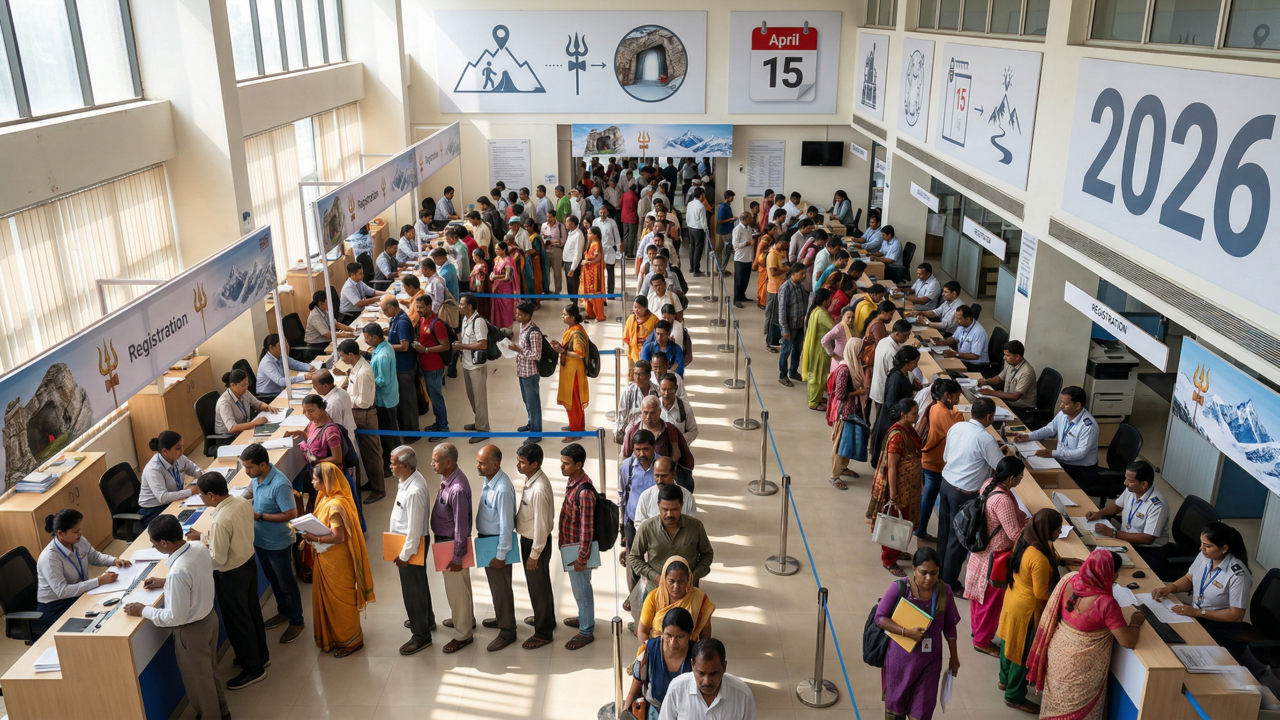
The advance registration process for the annual Amarnath Yatra is set to begin on April 15, offering pilgrims an opportunity to secure their permits for the journey to the holy shrine. The Shri Amarnath Shrine Board (SASB) has outlined a detailed procedure for registration, which will be facilitated through 554 designated bank branches across India. This pilgrimage holds immense significance for devotees of Lord Shiva and attracts hundreds of thousands of pilgrims annually.
The registration process will operate on a first-come, first-served basis, with a fixed daily quota allocated for each route at every designated bank branch. Pilgrims intending to undertake the yatra are advised to register early to secure their preferred dates and routes. The Shrine Board has emphasized the importance of adhering to the prescribed guidelines and procedures to ensure a smooth and hassle-free registration experience.
According to the guidelines issued by the SASB, only individuals aged between 13 and 70 years will be eligible for registration. Furthermore, women who are more than six weeks pregnant will not be permitted to undertake the pilgrimage, even if they possess a mandatory health certificate. These restrictions are in place to ensure the safety and well-being of all pilgrims, given the challenging terrain and high-altitude conditions of the yatra route.
For the 2026 yatra, the registration process will incorporate real-time Aadhaar-based biometric eKYC authentication. This technological integration aims to streamline the registration process and enhance its efficiency. Permits will be generated online through the official portal of the Shrine Board, minimizing paperwork and reducing the time required for registration. In the event of technical issues with biometric authentication, a provision for manual data entry with webcam-based photo capture will serve as a fallback option.
Pilgrims are required to submit a valid Compulsory Health Certificate (CHC), issued on or after April 8, 2026, by an authorized doctor or medical institution. The prescribed fee for each permit is Rs 150. The SASB has released a comprehensive list of doctors and institutions authorized to issue compulsory health certificates across 37 states and union territories. This measure ensures that pilgrims are medically fit to undertake the arduous journey.
The designated bank branches will meticulously verify the authenticity and validity of the CHC before issuing the system-generated yatra permit. The permit will specify the chosen route, either Baltal or Pahalgam, and will also indicate the date on which the pilgrim is permitted to cross the access control gates at Domel (Baltal axis) or Chandanwari (Pahalgam axis). This controlled access is implemented to manage the flow of pilgrims and prevent overcrowding on the yatra routes.
Registration for a specific yatra date will close seven days in advance. Banks have been instructed to establish help desks, conduct staff training, and launch publicity campaigns to facilitate a smooth registration process. Pilgrims are advised to ensure the accuracy of their Aadhaar and mobile details during registration and to adhere to all prescribed procedures for a trouble-free pilgrimage.
The annual Amarnath Yatra is a significant religious event in Jammu and Kashmir, drawing lakhs of pilgrims from across India and abroad. The yatra typically commences in June or July and continues for approximately 45 days. The pilgrimage involves trekking through mountainous terrain to reach the Amarnath Cave, which houses an ice stalagmite considered to be a manifestation of Lord Shiva.
Security arrangements for the yatra are typically extensive, involving the deployment of thousands of security personnel from various agencies, including the Central Reserve Police Force (CRPF), the Indian Army, and the Jammu and Kashmir Police. These measures are implemented to ensure the safety of pilgrims and prevent any untoward incidents. The yatra routes are closely monitored, and security forces conduct regular patrols to maintain law and order.
Jammu and Kashmir’s economy receives a boost from Amarnath Yatra. Local businesses, including hotels, restaurants, and transport operators, benefit significantly from the influx of pilgrims. The yatra also generates employment opportunities for local residents, who are involved in providing various services to the pilgrims. However, the yatra also poses challenges for the local administration, including managing the large number of pilgrims, providing adequate infrastructure, and ensuring environmental protection.
In recent years, there has been a focus on improving infrastructure along the yatra routes, including the construction of new roads, bridges, and accommodation facilities. These improvements aim to enhance the comfort and convenience of pilgrims. The Shrine Board has also implemented measures to promote environmental sustainability, such as waste management programs and restrictions on the use of plastic.
The Amarnath Yatra is not without its challenges, including the risk of natural disasters such as landslides and flash floods. In 2022, a flash flood near the Amarnath Cave resulted in several casualties. Search and rescue operations were launched, and the yatra was temporarily suspended. Such incidents have highlighted the importance of disaster preparedness and risk management during the yatra.
The yatra has evolved over the centuries and has adapted to changing circumstances. In recent years, technology has played an increasing role in facilitating the pilgrimage, from online registration to GPS tracking of pilgrims. The Shrine Board has also embraced social media to disseminate information and address the concerns of pilgrims. The Amarnath Yatra remains a testament to the enduring faith and resilience of devotees of Lord Shiva.
We continue to monitor updates from the Shri Amarnath Shrine Board and local authorities regarding preparations for the 2026 Yatra, including any modifications to the registration process or safety guidelines. Pilgrims are advised to stay informed through official channels and to adhere to all instructions issued by the authorities.

Tahir Rihat (also known as Tahir Bilal) is an independent journalist, activist, and digital media professional from the Chenab Valley of Jammu and Kashmir, India. He is best known for his work as the Online Editor at The Chenab Times.






Leave a Reply