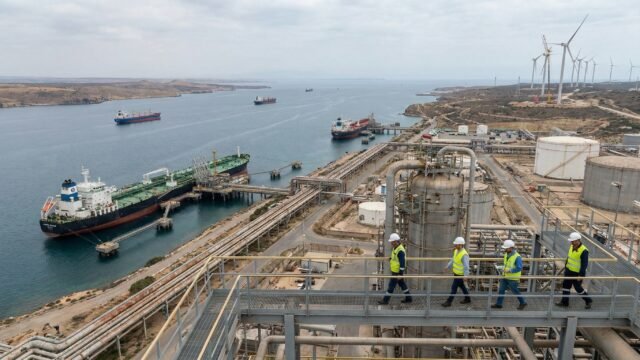
Natural gas, a vital energy source, presents unique storage challenges. Unlike oil or coal, its gaseous state requires specialized infrastructure for maintaining reserves. China, recognizing the strategic importance of energy security, has invested heavily in overcoming these challenges. This has far-reaching implications for India, which also faces growing energy demands and strategic considerations in a volatile global landscape.
China’s approach to building its natural gas stockpile involves a multi-pronged strategy. First, Beijing has invested heavily in underground natural gas storage (UNGS) facilities. These facilities, often repurposed depleted oil or gas reservoirs or constructed within deep saline aquifers, allow for the storage of vast quantities of natural gas. Second, China has also diversified its sources of supply, including establishing long-term contracts with countries like Russia and Qatar. Third, China has ramped up its domestic natural gas production to reduce reliance on foreign supplies. Although India depends on imports, as we found in our research, China is attempting to be self-sufficient.
The development of UNGS is a key component of China’s strategy. These facilities act as a buffer against supply disruptions and price volatility. They allow China to store gas during periods of low demand and draw upon these reserves during peak demand or emergencies. The scale of China’s UNGS capacity is significant. China has been constructing new storage facilities at an accelerated pace. Much of the infrastructure is funded by the government under state-owned enterprises, our analysis shows.
The diversification of supply sources is another critical element of China’s approach. We found that China has actively pursued gas import deals with multiple countries, reducing its dependence on any single supplier. These deals often involve long-term contracts, providing a stable and predictable source of natural gas. China’s relationship with Russia via pipelines like the Power of Siberia is a vital source. Liquified natural gas (LNG) from Qatar and Australia provides import diversification, although Australian imports have been impacted by trade tensions in recent years. China also has invested in projects in Africa as part of the Belt and Road Initiative.
Alongside storage and diversification, China has actively increased its domestic natural gas production, particularly from shale gas reserves, which, according to reports we examined, have the potential of dramatically affecting both global market and geopolitical stability. Shale gas extraction is more difficult than extracting from normal geological structures. China is investing in the required technology, while seeking partnerships with foreign technology firms, which allows for a steady increase in production. China’s strategy is designed to reduce its dependence on foreign natural gas. India, in contrast, relies heavily on importing gas, leaving it vulnerable to price fluctuations and supply disruptions, according to a report by the Ministry of Petroleum and Natural Gas.
The international context, including potential conflict scenarios, appears to have accelerated China’s efforts. While we could not independently verify specific classified strategic considerations, available reports suggest that China anticipates possible disruptions to global energy supplies. China’s UNGS facilities offer a degree of energy independence. This is of particular importance to Beijing amid political tensions. India also faces similar geopolitical risks, with potential disruptions in the Persian Gulf affecting its LNG imports. Developing adequate strategic reserves is vital for India’s energy security.
India’s natural gas storage capacity is significantly smaller than China’s. India relies more on short-term LNG contracts and spot market purchases, which make it vulnerable to price spikes. Investments in UNGS facilities, pipeline infrastructure, and diversification of supply are necessary for India to enhance its energy security and protect its economy from external shocks. The Indian government has set goals to increase the share of natural gas in its energy mix. The push towards gas-based economy to cut down on emissions and pollution is high on the agenda. Development of gas infrastructure is being pursued through public and private investments for a sustainable energy future.
The strategic implications of China’s natural gas strategy extend beyond economics. In a region marked by geopolitical tensions and strategic competition, energy security is paramount. China’s enhanced natural gas reserves provide it with greater leverage in international relations and protect its economy from potential disruptions. India must take strategic measures to ensure that its own energy security is not threatened.
As we have observed, India’s situation poses several challenges. India lacks the financial resources and infrastructure. Also, attracting foreign investment and technological expertise is critical. India’s own natural gas production constraints also pose a hurdle. Despite the government trying to increase domestic gas output, the reserves are insufficient to meet the rising demand. The current political scenario in the region presents a complex challenge to overcome by India. We believe further research and analysis are needed in India.
China’s development of strategic natural gas reserves serves as a case study for India. While the two countries face different geopolitical and economic realities, there are valuable lessons to be learned. Investing in UNGS facilities, diversifying supply sources, and promoting domestic production are all essential components of a comprehensive energy security strategy. For India, the path forward involves a concerted effort by the government, industry, and research institutions to develop a robust and resilient natural gas sector. This is vital not just for economic growth, but also for national security. Increased international dependence is a major concern for India.

Tahir Rihat (also known as Tahir Bilal) is an independent journalist, activist, and digital media professional from the Chenab Valley of Jammu and Kashmir, India. He is best known for his work as the Online Editor at The Chenab Times.