
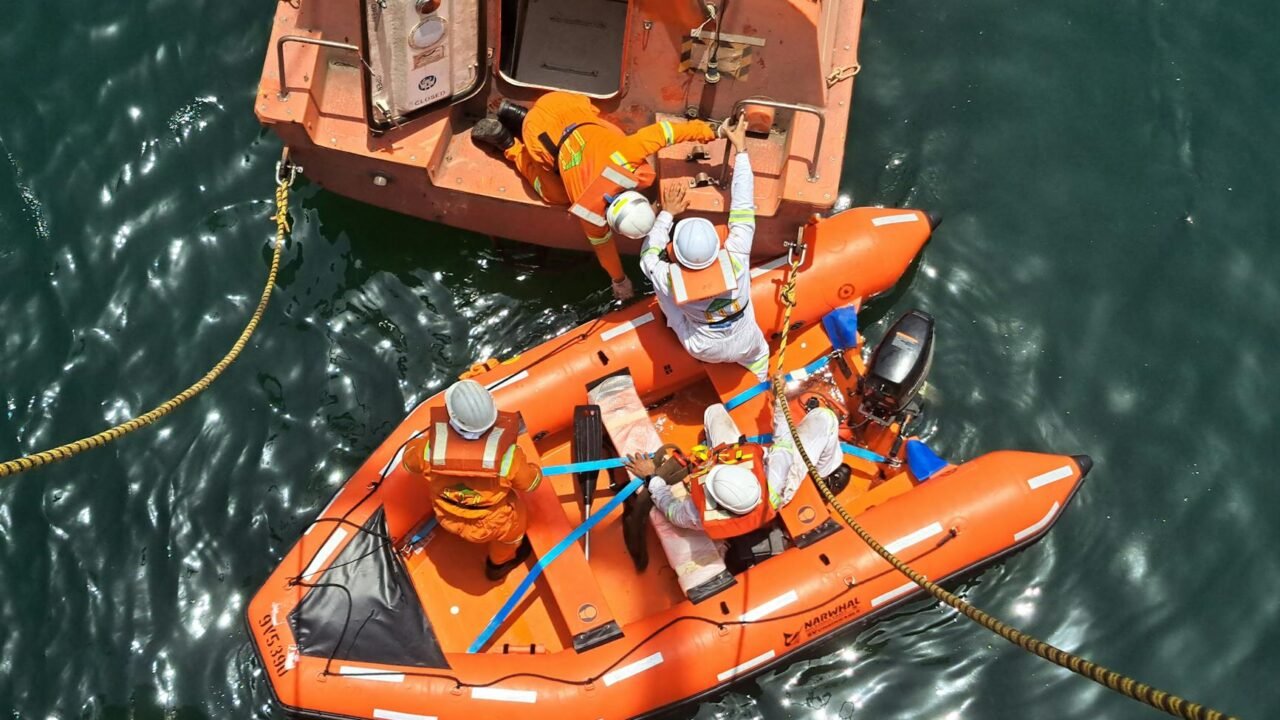
A month-long effort to extricate a humpback whale, affectionately nicknamed Timmy, from the confines of the Baltic Sea has transformed into a significant public event, drawing crowds of onlookers and media attention, yet the ultimate success of the operation remains uncertain.
The whale, a majestic creature typically found in oceanic waters, has been navigating the shallow, brackish environment of the Baltic for an extended period, prompting a concerted rescue mission. As per information available with TahirRihat.com, the complex undertaking involves a coordinated effort by marine biologists, veterinarians, and rescue teams who have been working tirelessly to guide the animal back to deeper, more suitable waters. The operation, however, is fraught with challenges, given the whale’s size, the intricate coastline, and the sensitive ecosystem of the region.
The presence of the humpback whale in the Baltic Sea is itself an unusual occurrence, raising questions among experts about the factors that may have led it so far from its natural habitat. While the exact reasons are still being investigated, theories often point to navigational errors, possibly influenced by environmental changes or unusual ocean currents. The prolonged presence of the whale in an environment not suited for its survival has raised concerns about its health and well-being, adding urgency to the rescue efforts.
The rescue operation has become a focal point for local communities and international observers alike. Tourists and media personnel have flocked to the coastline, eager to witness the unfolding drama. This heightened public interest, while perhaps well-intentioned, also presents logistical hurdles for the rescue teams, who must balance their critical work with the need to manage the crowds and ensure the safety of both the animal and the public. The spectacle has underscored the growing human fascination with marine life and the increasing awareness of conservation issues.
Marine mammal rescue operations are inherently complex and require a delicate balance of scientific expertise, specialized equipment, and a deep understanding of animal behavior. In Timmy’s case, the rescue team has been employing various strategies, which may include using acoustic deterrents to guide the whale, employing specialized vessels to herd it, and, in more extreme scenarios, considering tranquilization and physical relocation. Each of these methods carries its own set of risks and requires meticulous planning and execution. The success of such operations often depends on the animal’s cooperation and its physical condition.
The Baltic Sea, a semi-enclosed body of water, presents unique challenges for large marine mammals. Its relatively low salinity, limited depth, and busy shipping lanes are all factors that can contribute to the stress and disorientation of a whale accustomed to the open ocean. The long duration of Timmy’s stay in these waters has amplified concerns about its ability to recover and adapt, even if successfully guided back to the sea. Veterinarians are closely monitoring the whale’s health, assessing for signs of exhaustion, dehydration, or injury.
The media coverage surrounding Timmy’s plight has also highlighted the broader issues of marine conservation and the impact of human activities on ocean ecosystems. While the immediate focus is on the rescue of this individual whale, the situation serves as a poignant reminder of the threats faced by marine life globally, including pollution, habitat degradation, and climate change. The public’s engagement with this story, fueled by extensive media reporting, could potentially translate into increased support for conservation initiatives.
The ongoing efforts to save Timmy represent a significant investment of resources and expertise. Marine rescue organizations often operate on limited budgets, and large-scale operations like this can strain their capabilities. The international attention garnered by the whale’s situation may, however, lead to increased donations and support for such critical conservation work. The dedication of the rescue teams, working under challenging conditions and with no guarantee of a positive outcome, is a testament to their commitment to protecting endangered species.
The narrative of Timmy’s struggle has captured the public imagination, transforming a scientific and conservation challenge into a widely followed human-interest story. The outcome of this protracted rescue mission will undoubtedly be closely watched, not only for the fate of the individual whale but also for the lessons it may offer in marine mammal rescue and the broader stewardship of our oceans. The coming days will be critical in determining whether the month of dedicated efforts will culminate in a successful return to the open sea for the stranded humpback.

Tahir Rihat (also known as Tahir Bilal) is an independent journalist, activist, and digital media professional from the Chenab Valley of Jammu and Kashmir, India. He is best known for his work as the Online Editor at The Chenab Times.





Leave a Reply