
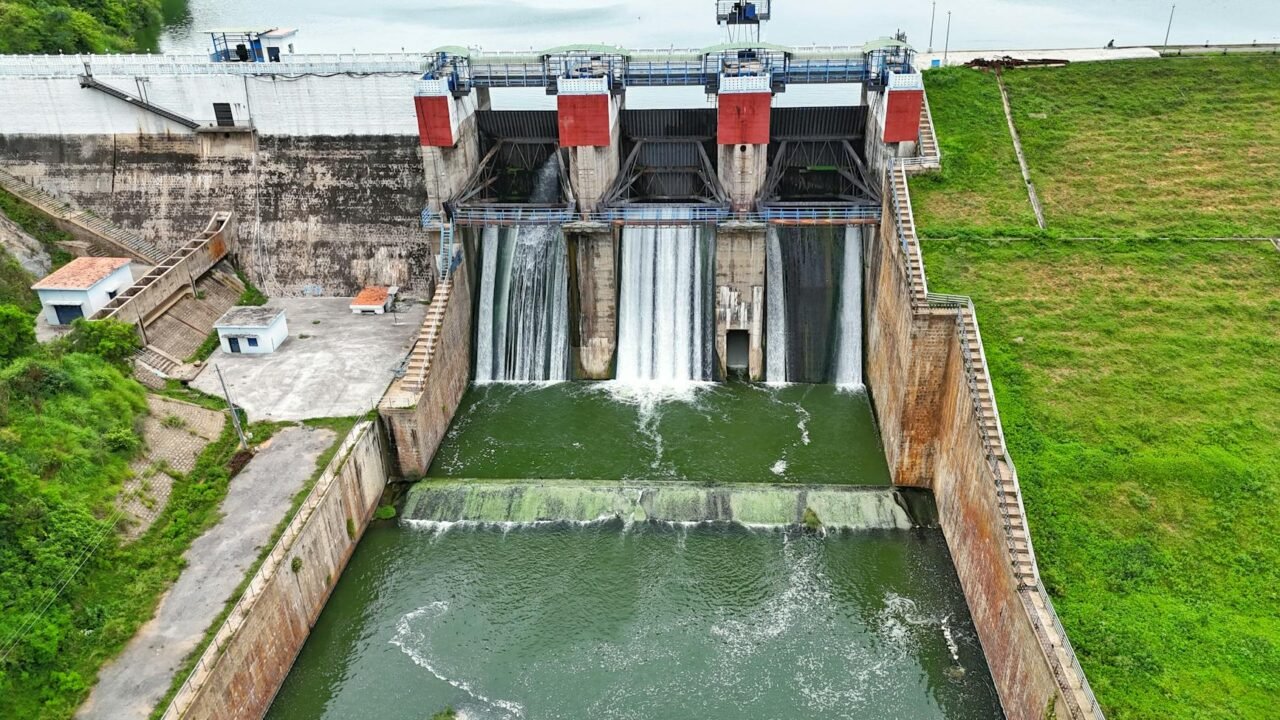
Work on numerous hydropower projects across Jammu and Kashmir has seen a significant acceleration in the year following India‘s decision to place the Indus Waters Treaty (IWT) in abeyance. This strategic push aims to harness the region’s vast untapped hydropower potential, a move that has gained considerable momentum in the wake of geopolitical developments.
The Union Territory is currently witnessing construction activities on several key projects. Among these, the Parnai project is slated for completion by December 2027, while the Karnah project is scheduled to be finished by June 2026. Both are being developed within the Union Territory’s sector. Information reaching TahirRihat.com suggests that other major undertakings, including the Pakaldul, Kiru, Kwar, and Ratle projects, are progressing as joint ventures between NHPC Limited and the J&K Power Development Corporation Limited. These projects have target completion dates of December 2026 for Pakaldul and Kiru, March 2028 for Kwar, and August 2029 for Ratle. Furthermore, three additional projects—Boniyar, Chandanwari Uri, and Girjan ki Gali—have been allocated to the private sector and are currently in the planning stages.
During a recent session of the Jammu and Kashmir Assembly, government officials confirmed that construction on these ongoing projects has intensified since the Indus Waters Treaty was put in abeyance. This development underscores a renewed focus on infrastructure development and energy security for the region.
Jammu and Kashmir possesses an estimated hydropower potential of approximately 18,000 megawatts (MW), with nearly 15,000 MW having been identified. However, to date, only about 3,540.15 MW, representing roughly 24 percent of the potential, has been harnessed. This existing capacity is distributed across 13 projects in the UT sector totaling 1,197.4 MW, six projects in the central sector with a combined capacity of 2,250 MW, and 12 projects in the private sector amounting to 92.75 MW. The government has articulated a comprehensive roadmap for the next decade, with the objective of nearly tripling the installed hydropower capacity by 2035. This ambitious plan includes generating an additional 3,063.5 MW from six projects currently under construction and another 4,507 MW from eight projects that are in various stages of tendering, award, Detailed Project Report (DPR) preparation, and clearance processes. The private sector is also expected to contribute an estimated 100–150 MW during this period, pushing the total projected installed capacity to around 11,000 MW by 2035.
A draft of the J&K Hydel Policy 2025 has been formulated, drawing upon past experiences and incorporating best practices from neighboring states. A key focus of this policy is the development of projects on smaller rivers and streams, with an emphasis on encouraging greater private sector participation in the hydropower sector. This approach is anticipated to stimulate socio-economic improvements within local communities and create employment opportunities during both the construction and operational phases of these projects.
Among the projects progressing through the pipeline, the Sawlakote project, with a substantial capacity of 1,856 MW, has secured most of its necessary clearances, with forest approval reported to be at an advanced stage. The Detailed Project Report for the Uri-I Stage-II project, which will have a capacity of 240 MW, has been approved, and the tendering process for its main works is currently underway. Similarly, the DPR for the Dulhasti Stage-II project, designed to generate 260 MW, has received clearance, while the Kirthai-II project, with an 820 MW capacity, is undergoing the clearance process. The DPR for the Kirthai-I project, which is projected to have a capacity of 390 MW, is under appraisal, with approvals in progress.
In parallel, the tendering process for the New Ganderbal project, which will have a capacity of 93 MW, has been concluded. Fresh tenders are anticipated for the Lower Kalnai project, a 48 MW undertaking, while the Burser project, a significant 800 MW initiative, is currently awaiting necessary clearances. The Indus Waters Treaty, a landmark agreement between India and Pakistan, delineates the allocation of waters from the Indus, Jhelum, and Chenab rivers to Pakistan, while granting India rights over the Ravi, Beas, and Sutlej rivers. India’s decision to place the treaty in abeyance followed a significant terror attack in Pahalgam that resulted in the deaths of 26 individuals.

Tahir Rihat (also known as Tahir Bilal) is an independent journalist, activist, and digital media professional from the Chenab Valley of Jammu and Kashmir, India. He is best known for his work as the Online Editor at The Chenab Times.



Leave a Reply