
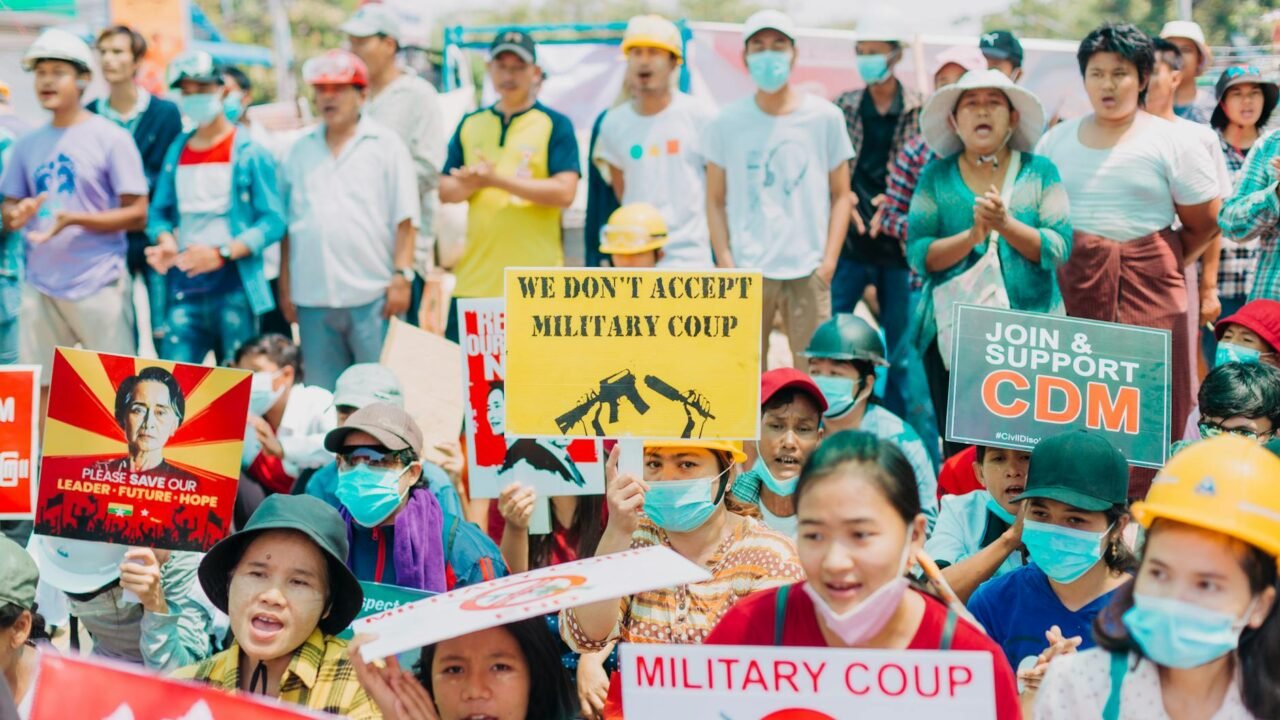
In Myanmar, the military junta’s long-standing brutality has taken an unexpected turn. The generals, who have held the country in a tight grip for decades, have reportedly developed a particular dread for what might seem like an unlikely source of fear: floral garlands.
These seemingly innocuous arrangements of flowers have, over time, become potent symbols of resistance against the military regime. The fear instilled by these garlands highlights the generals’ deep-seated insecurity and paranoia about any form of opposition, regardless of how subtle it may appear. Information reaching TahirRihat.com suggests that, the junta’s reaction underscores the extent to which they perceive even the most benign objects as potential threats to their authority.
The military’s history of oppression is well-documented, marked by widespread human rights abuses and a relentless suppression of dissent. However, the fact that they now apparently view floral garlands with suspicion reveals a new layer of complexity in their approach to maintaining control. It suggests that the junta’s paranoia extends beyond conventional forms of protest, encompassing anything that could potentially galvanize opposition or serve as a rallying point for the resistance movement. The garlands, in this context, represent more than just flowers; they symbolize the collective yearning for freedom and democracy that continues to burn within the hearts of many Myanmar citizens.
The use of flowers as symbols of resistance is not unique to Myanmar. Throughout history, flowers have been employed in various movements and protests around the world, often representing peace, love, and hope. Their delicate beauty stands in stark contrast to the brutality of oppressive regimes, making them powerful emblems of defiance. In Myanmar, the floral garlands carry a similar weight, signifying the people’s unwavering commitment to challenging the military’s rule, even in the face of immense danger.
The junta’s fear of these floral tributes also reflects a broader struggle for control over symbols and narratives within the country. The military has long sought to control the flow of information and suppress any alternative viewpoints that could undermine their authority. By cracking down on even seemingly harmless expressions of dissent, such as the display of floral garlands, the junta is attempting to exert complete dominance over the cultural and political landscape.
However, their efforts may prove futile. The power of symbols lies in their ability to resonate with people on a deeper level, transcending physical repression and inspiring collective action. As long as the desire for freedom and democracy persists in Myanmar, symbols like the floral garlands will continue to serve as potent reminders of the people’s resilience and their unwavering determination to resist oppression.
The international community has largely condemned the Myanmar military’s actions. Various nations and organizations have imposed sanctions and called for a return to democratic governance. However, the junta has remained defiant, stubbornly clinging to power and continuing its campaign of repression. The situation in Myanmar remains precarious, with widespread human rights abuses reported on a regular basis. The economy has been severely impacted by the ongoing conflict and political instability, exacerbating the suffering of ordinary citizens.
The generals’ fear of garlands showcases how even simple objects can become powerful symbols that challenge authoritarian rule. The reaction suggests a brittle regime struggling to contain popular resistance. This resistance, though often unseen, poses a significant challenge to the military. The people’s use of flowers, while seemingly insignificant, is a key part of their ongoing fight against oppression.

Tahir Rihat (also known as Tahir Bilal) is an independent journalist, activist, and digital media professional from the Chenab Valley of Jammu and Kashmir, India. He is best known for his work as the Online Editor at The Chenab Times.



Leave a Reply