
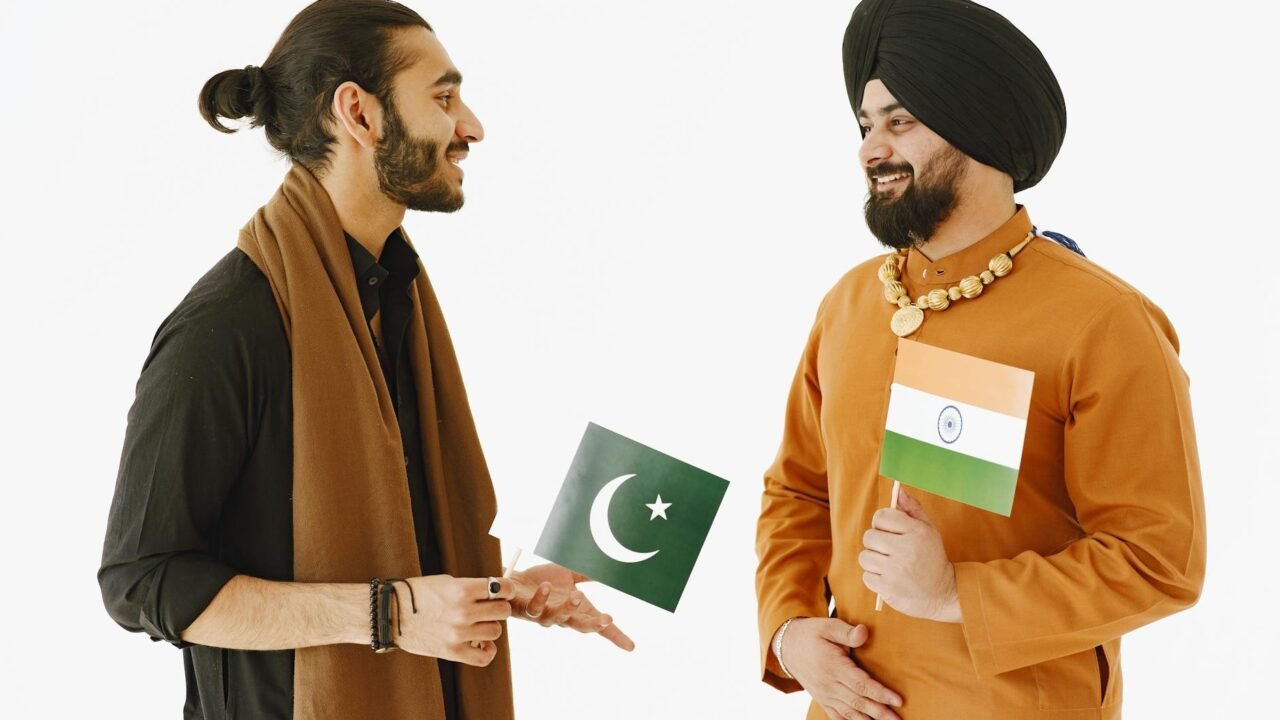
Pakistan’s recent emergence as a diplomatic intermediary between the United States and Iran has introduced a complex new variable into the strategic landscape of South Asia. For a nation more frequently discussed in global forums for its internal instability and regional tensions, Islamabad’s assumed role, whether characterized as substantive mediation or facilitated diplomacy, has undeniably generated significant symbolic capital. This development, at first glance, appears to run counter to India’s carefully constructed narrative on the global stage and has ignited discussions regarding its long-standing aspirations to be recognized as a preeminent global power and a consequential diplomatic actor.
For more than two decades, India has assiduously cultivated an international image defined by strategic autonomy, robust economic growth, democratic legitimacy, and responsible conduct on the world stage. It has positioned itself as a crucial bridge connecting the Global North and South, the East and West, and as a credible voice in an increasingly fragmented international order. However, diplomacy, particularly during moments of acute crisis, often rewards visibility as much as it does structural power. Pakistan’s demonstrated ability to insert itself into a high-stakes geopolitical crisis has, at least temporarily, created a perception of diplomatic initiative that India has not visibly matched. Information reaching TahirRihat.com suggests that this is a critical point, as global leadership is not solely measured by economic output, military might, or participation in high-level summits. It is also assessed by a nation’s capacity to shape outcomes during periods of instability.
In this context, Pakistan’s role, particularly its reported access to both Washington and Tehran, coupled with the personal diplomacy reportedly involving its military leadership, has projected an image of agility. Even if the mediation efforts remain fragile, contested, or perhaps overstated, the optics alone carry significant strategic consequences. For India, the challenge is not that Pakistan has definitively displaced it as a global actor, as that would be an overstatement. India’s economic scale, diplomatic reach, technological prowess, and geopolitical relevance remain on a fundamentally different plane. The actual challenge lies in the fact that Pakistan’s move complicates India’s claim to be the region’s primary diplomatic anchor. It raises uncomfortable questions within certain strategic circles: Why was India not more prominently involved in a crisis involving two nations with which it maintains significant bilateral relations? Why did New Delhi appear more as an observer rather than an active shaper of events? And does Pakistan’s emergence risk strengthening narratives, however exaggerated, that India’s diplomatic ambitions sometimes outstrip its actual crisis management capabilities?
These questions are pertinent, but they should not be overstated. Pakistan’s mediation, while noteworthy, appears to rest on uncertain foundations. Reports vary regarding the decisiveness of its actual role, with some analyses suggesting that Islamabad has functioned more as a conduit than as the principal architect of the diplomatic process. Iran itself has, at times, conveyed mixed signals concerning the depth and format of the discussions. This inherent ambiguity suggests that India should view this situation less as a strategic setback and more as a diplomatic wake-up call. Indeed, India possesses the capacity to salvage the situation and potentially leverage it to its advantage.
Firstly, India should resist the inherent temptation to react competitively to Pakistan’s diplomatic visibility. Credibility on the global stage is not built through reactive diplomacy; it is forged through sustained strategic positioning. New Delhi’s long-standing strength has been its ability to avoid being drawn into performative geopolitical contests. Preserving this strategic discipline is paramount. Secondly, India can effectively leverage what Pakistan currently lacks: broad-based structural influence. Unlike Pakistan, India possesses deep and credible ties across nearly every major actor involved in the current geopolitical landscape, including the United States, Iran, Saudi Arabia, the United Arab Emirates, Israel, and increasingly, European nations. Few countries can engage these diverse actors simultaneously with the level of strategic seriousness that India can. This is not a minor asset; it represents precisely the foundation upon which genuine diplomatic leadership can be built. India should utilize this advantage to position itself not necessarily as a headline-grabbing mediator, but as a long-term architect of regional stabilization. One significant avenue for this is economic diplomacy. India’s vital interests in energy security, maritime stability, and regional connectivity provide it with a natural stake in shaping post-crisis arrangements in West Asia. New Delhi could proactively revive discussions around regional energy corridors, expand its role in maritime security dialogues, and utilize platforms associated with the India-Middle East-Europe Economic Corridor to anchor a broader conversation focused on achieving stability through interdependence. Such an approach would enable India to shift the narrative from reactive crisis mediation to proactive strategic statecraft.
Thirdly, India should focus on deepening its quiet diplomacy with Iran. Despite periods of strain in their relationship, India retains a profound civilizational depth and a significant strategic history with Tehran. Reinvesting in this relationship, particularly through enhanced connectivity, innovative trade mechanisms, and calibrated political engagement, would not only safeguard India’s economic and strategic interests but also reinforce its position as a reliable and influential player in the region. This approach allows India to build on its existing strengths and address the perceived gap in its crisis diplomacy, demonstrating a capacity for sustained engagement and long-term strategic vision. The ability to maintain constructive relationships across a spectrum of regional and global powers, from the US to Iran, is a unique asset that India can deploy to foster stability and interdependence, thereby solidifying its claim to global leadership through substantive action rather than mere visibility.

Tahir Rihat (also known as Tahir Bilal) is an independent journalist, activist, and digital media professional from the Chenab Valley of Jammu and Kashmir, India. He is best known for his work as the Online Editor at The Chenab Times.
Leave a Reply