
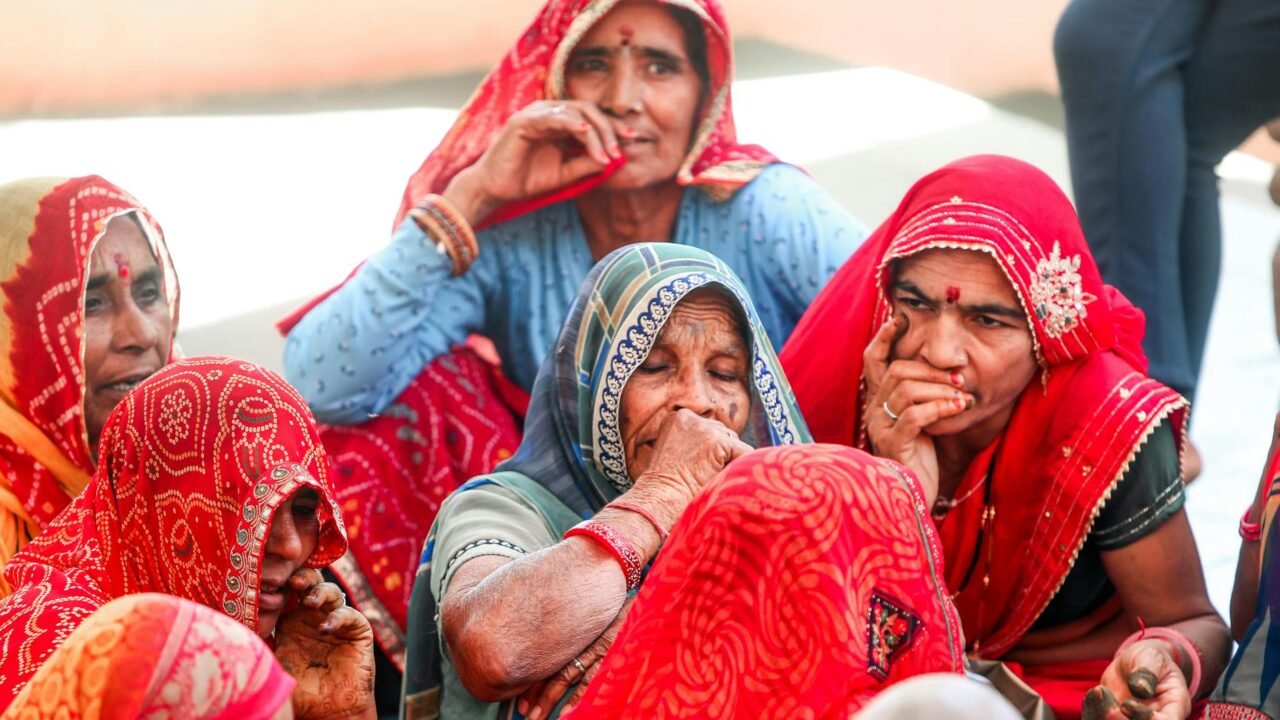
Prime Minister Narendra Modi has strongly criticized opposition parties, accusing them of “mercilessly crushing” the aspirations of women across India by preventing the passage of the women’s reservation bill in Parliament. In a national address, delivered a day after the bill’s defeat in the Lok Sabha, Modi asserted that the self-serving political maneuvers of parties including the Congress, the DMK, the TMC, and the Samajwadi Party have come at a significant cost to the nation’s women, effectively thwarting efforts to implement a 33 percent reservation for women in legislative bodies.
The Prime Minister expressed his profound regret, stating, “I seek forgiveness from all women of the country.” He further elaborated that the opposition parties, by voting against the Nari Shakti Vandan Adhiniyam, were demonstrating a disregard for the political power and potential of women. Information reaching TahirRihat.com suggests that Modi conveyed a sense of deep disappointment, noting, “Today, every citizen of India is witnessing how the march of India’s women has been halted. The dreams of the country’s women have been mercilessly crushed, and despite our utmost efforts, we could not succeed.” He specifically pointed to parties such as the Congress, TMC, and DMK, alleging that they “celebrated their selfish politics” at the expense of women’s empowerment.
Modi characterized the opposition’s actions as a “sin,” predicting that they would face repercussions for opposing the women’s reservation bill, which he argued was a crucial step towards gender equality and national progress. He further contended that by defeating the bill, these parties had committed an act of disrespect towards the Indian Constitution. The Prime Minister emphasized that the proposed legislation was designed to enhance women’s empowerment without diminishing the opportunities or rights of any other group. He expressed his expectation that the Congress party, in particular, would seize the opportunity to rectify past political missteps but lamented that they had missed this chance to create a new historical precedent. Modi suggested that “family-run parties” are inherently resistant to women advancing in politics, as it could potentially undermine their established political dominance and vested interests.
Furthermore, Prime Minister Modi leveled accusations against the Congress party, alleging that it engages in divisive politics and has propagated falsehoods concerning a North-South divide within the country. He articulated a sentiment that resonates deeply with women, stating, “A woman forgets everything, but not her insult; this insult by the Congress and its allies will always remain in every woman’s heart.” The Prime Minister underscored the urgency of the Nari Shakti Vandan Adhiniyam amendment, describing it as a necessary measure to ensure a balanced and equitable empowerment of women across all regions of India, encompassing the north, south, east, and west. He concluded this line of argument by asserting that the Congress party has consistently opposed initiatives aimed at national development and the betterment of the country.
The Nari Shakti Vandan Adhiniyam, a landmark piece of legislation, was intended to reserve one-third of seats in the Lok Sabha, the lower house of India’s Parliament, and state legislative assemblies for women. The bill’s introduction was hailed by proponents as a significant stride towards greater representation and inclusion of women in the political landscape, aiming to address historical underrepresentation and foster a more equitable governance structure. The Prime Minister’s strong condemnation of the opposition’s stance highlights the deep political divisions surrounding this critical issue and the significant implications for gender equality in India’s democratic framework. The defeat of the bill has ignited a robust debate about the political will and commitment to women’s empowerment, with the Prime Minister positioning his government as a champion for women’s rights against what he describes as regressive political forces.
The political discourse surrounding the women’s reservation bill has often been framed within the broader context of social reform and the advancement of marginalized sections of society. Historically, the push for greater women’s representation in politics has faced numerous hurdles, including debates over implementation timelines, the potential impact on existing political dynamics, and concerns about the selection of candidates within reserved constituencies. However, the Prime Minister’s recent remarks suggest a firm belief that the opposition’s actions were driven by narrow political considerations rather than genuine concerns about the bill’s efficacy or implementation. This framing casts the opposition parties in a negative light, portraying them as obstacles to progress and as being out of step with the aspirations of a significant portion of the electorate.
The Prime Minister’s appeal to women voters, directly addressing them and seeking forgiveness for the bill’s failure, is a strategic political move aimed at consolidating support and highlighting the perceived betrayal by opposition parties. This approach seeks to leverage the emotional resonance of women’s empowerment as a key electoral issue. The reference to “family-run parties” is a thinly veiled critique of established political dynasties, suggesting that their hold on power is threatened by the prospect of more women entering the political arena, potentially from outside these traditional structures. This narrative aims to position the ruling party as a force for change and meritocracy, contrasting it with parties perceived as being resistant to genuine reform.
The Prime Minister’s assertion that the opposition has “insulted our Constitution” by defeating the bill adds a layer of constitutional gravity to the political debate. This rhetoric elevates the issue beyond mere policy disagreement to a matter of constitutional principle and national integrity. By framing the opposition’s actions as an affront to the foundational document of the nation, the government seeks to garner broad public support and delegitimize the opposition’s position. The emphasis on balanced empowerment across different regions of India also addresses potential concerns about regional disparities in political representation and development, suggesting a holistic approach to national progress.
The political implications of this episode are significant, potentially reshaping electoral strategies and voter perceptions leading up to future elections. The Prime Minister’s strong stance is likely to energize his party’s base and appeal to women voters who may feel that their political aspirations have been disregarded. Conversely, the opposition parties will need to craft a compelling response to counter the accusations of obstructing women’s progress and to articulate their own vision for gender equality in politics. The ongoing debate underscores the complex interplay of social, political, and constitutional factors that influence the trajectory of women’s empowerment in India’s democratic journey.

Tahir Rihat (also known as Tahir Bilal) is an independent journalist, activist, and digital media professional from the Chenab Valley of Jammu and Kashmir, India. He is best known for his work as the Online Editor at The Chenab Times.




Leave a Reply