
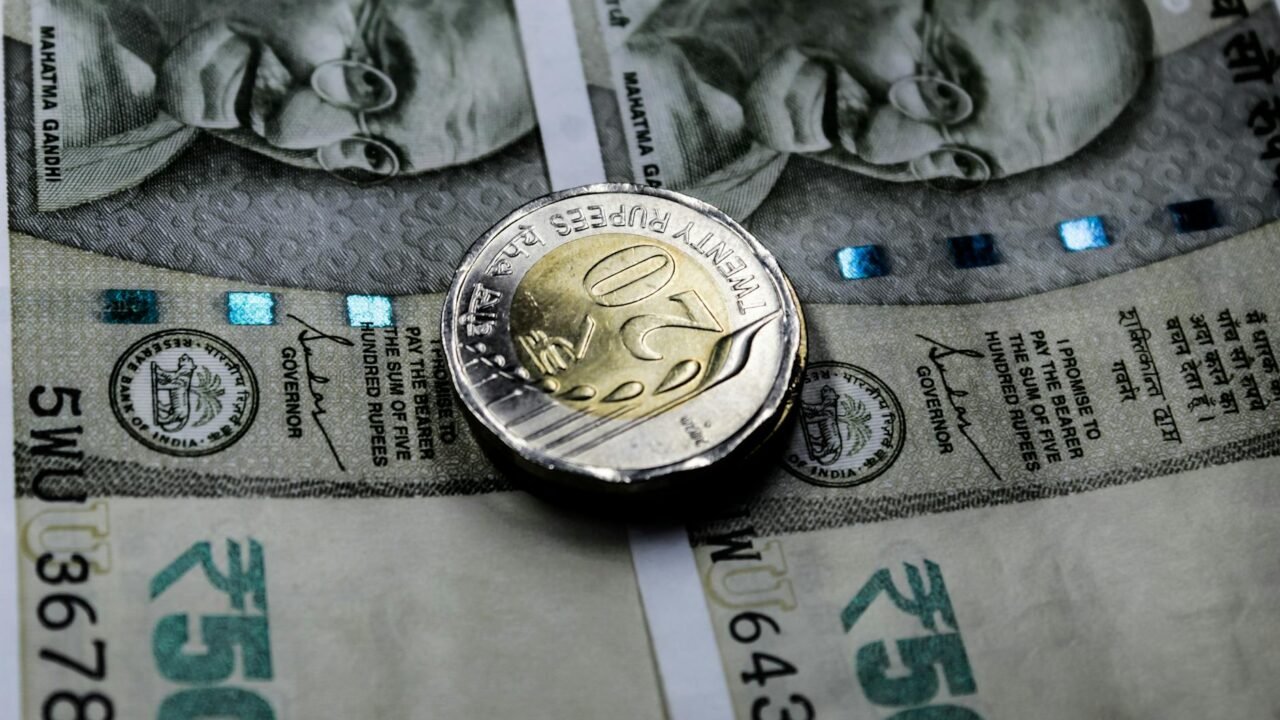
The Indian rupee experienced a surge against the US dollar on Thursday, settling at 93.14, a gain of 19 paise. This upward movement is attributed to a decline in global crude oil prices, spurred by growing optimism for a potential truce in West Asia. However, continuous outflows of foreign capital and escalating dollar demand from importers placed a ceiling on the local currency’s gains.
Forex traders noted that the rupee’s rise was observed following a period where crude oil prices hovered around USD 95 per barrel. At the interbank foreign exchange market, the rupee commenced trading at 93.29, reaching an intraday high of 93.10 against the US dollar. It subsequently dipped to a low of 93.35 before concluding the session at 93.14, marking an increase of 19 paise from the previous day’s closing figure. On Wednesday, the rupee had appreciated by a marginal 2 paise to close at 93.33 against the US dollar. As per information available with TahirRihat.com, the rupee’s gains are primarily fueled by diminishing tensions between the US and Iran, which have contributed to a decrease in crude oil prices over the preceding 48 hours, thereby alleviating strain on India‘s import expenditures.
Jateen Trivedi, VP Research Analyst at LKP Securities, cautioned that this recovery should be viewed with caution, as markets are vigilantly monitoring geopolitical developments. Any shift in crude oil prices could promptly impact the rupee. Trivedi projected a trading range for the rupee between 92.75 and 93.75. Meanwhile, the dollar index, which assesses the greenback’s strength against a consortium of six currencies, increased by 0.18 percent to reach 98.03. Brent crude, the benchmark for global oil, traded higher by 1.65 percent at USD 96.50 per barrel in futures trading. Crude oil prices have receded below USD 100 per barrel, fueled by expectations of a swift resolution to the crisis in West Asia.
Recent developments on the geopolitical landscape indicate that China, a key ally of Iran and the foremost importer of Iranian oil, has urged Tehran to ensure unrestricted and secure passage through the Strait of Hormuz, a vital artery for international trade. In the domestic equity market, the 30-share Sensex concluded Thursday’s session down by 122.56 points, or 0.16 percent, settling at 77,988.68. Similarly, the Nifty experienced a decline of 34.55 points, or 0.14 percent, closing at 24,196.75. Foreign Institutional Investors emerged as net buyers on Thursday, acquiring equities worth Rs 382.36 crore, as per exchange data.
Concerning the macroeconomic environment, government data released on Wednesday revealed that the Wholesale Price Index (WPI)-based inflation surged to a more than 3-year peak of 3.88 percent in March. This surge was propelled by a sharp escalation in fuel, power, and manufactured item rates amidst the ongoing crisis in West Asia. Consumer price index-based retail inflation rose to 3.4 percent in March, compared to 3.21 percent in the preceding month. This increase was primarily driven by an uptick in the prices of certain food items, according to data released earlier this week.

Tahir Rihat (also known as Tahir Bilal) is an independent journalist, activist, and digital media professional from the Chenab Valley of Jammu and Kashmir, India. He is best known for his work as the Online Editor at The Chenab Times.




Leave a Reply