
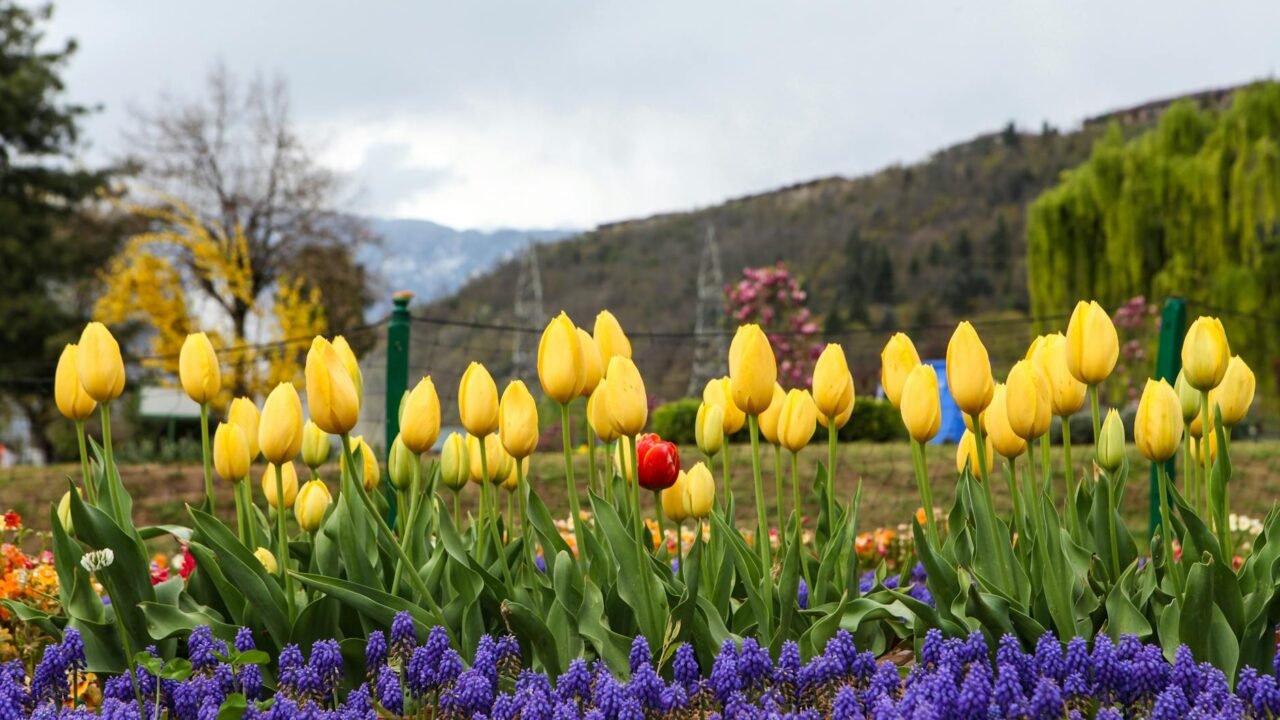
The Indira Gandhi Memorial Tulip Garden in Srinagar, a popular tourist destination in the Kashmir Valley during the spring, is scheduled to close to the public on Thursday, marking the end of its annual bloom season. Authorities made the decision based on the recommendation of a team of experts who assessed the current state of the tulip bloom.
The garden’s closure follows a season that began unusually early. It was opened to the public on March 16 by then Jammu and Kashmir Chief Minister Omar Abdullah, approximately a week ahead of the anticipated schedule. This early opening was prompted by an unseasonal rise in temperature, which accelerated the blooming process of the tulips.
The Indira Gandhi Memorial Tulip Garden, overlooking the Dal Lake, is an integral part of Srinagar’s tourism landscape. Originally conceived to extend the tourist season beyond the traditional summer months, the garden has succeeded in attracting visitors during the spring season. The establishment of the garden in 2008 by then Chief Minister Ghulam Nabi Azad, was aimed at drawing tourists to the valley during the quieter spring period, adding another dimension to Kashmir’s appeal as a year-round destination.
Over the years, the garden has expanded in both size and variety. This year, visitors had the opportunity to view more than 70 distinct varieties of tulips. The floriculture department has been increasing the density of bulbs planted in the garden, enhancing the visual impact and creating a richer tapestry of color.
The garden’s operations were affected in the past due to security concerns. Following a terror attack in Pahalgam in April of the previous year, which resulted in the deaths of 26 people, the garden, along with 43 other tourist destinations, was temporarily closed. Subsequently, a security audit was conducted, and the garden reopened this year.
The tulip garden plays an important role in boosting the local economy, particularly the tourism sector. According to official figures, tourism contributes significantly to the gross domestic product (GDP) of Jammu and Kashmir. In 2022, tourism accounted for approximately 7% of the region’s GDP, making it a crucial source of income and employment for many residents.
The Jammu and Kashmir government has been actively promoting tourism through various initiatives, focusing on infrastructure development and marketing campaigns. The aim is to showcase the region’s natural beauty and cultural heritage to a wider audience, both domestic and international. Other gardens and tourist spots are also being prepared for the upcoming summer season, anticipating a continued influx of tourists.
According to data from the Department of Tourism, Jammu and Kashmir, the region witnessed a record number of tourist arrivals in 2023. More than 20 million tourists visited the Union Territory, indicating a strong resurgence in tourism activity. This growth can be attributed to several factors, including improved security conditions, enhanced infrastructure, and effective promotional efforts.
The closure of the tulip garden signals the transition from the spring bloom to the summer tourist season in Kashmir. The region now prepares itself for the next wave of visitors, who will be drawn to the valley by its cool climate, scenic landscapes, and opportunities for adventure tourism.
Other gardens and parks in the region will remain open, offering alternatives for tourists. These include the Mughal Gardens, such as Shalimar Bagh, Nishat Bagh, and Chashme Shahi, which are known for their historical significance and meticulously designed landscapes. These gardens, built during the Mughal era, continue to attract visitors with their unique blend of Persian and Indian architectural styles.
The tourism sector in Jammu and Kashmir has faced challenges in recent decades, including political instability and security concerns. However, the region has demonstrated resilience and continues to adapt to changing conditions. The government is committed to creating a safe and welcoming environment for tourists, implementing measures to ensure their safety and security.
In addition to traditional tourism activities, there is a growing interest in adventure tourism in Jammu and Kashmir. The region offers opportunities for trekking, mountaineering, skiing, and river rafting. The government is promoting these activities to attract a different segment of tourists who are looking for more active and adventurous experiences.
We are closely monitoring the tourism trends in Jammu and Kashmir and providing updates on developments in the region. Our goal is to offer accurate and reliable information to our readers, enabling them to make informed decisions about their travel plans. While we aim to provide the most current information, we advise tourists to check with official sources for the latest updates and travel advisories.
The closure of the tulip garden marks the end of one chapter in Kashmir’s tourism story, but it also signals the beginning of another. As the region prepares for the summer season, we anticipate continued growth in tourism and a positive impact on the local economy.

Tahir Rihat (also known as Tahir Bilal) is an independent journalist, activist, and digital media professional from the Chenab Valley of Jammu and Kashmir, India. He is best known for his work as the Online Editor at The Chenab Times.





Leave a Reply