
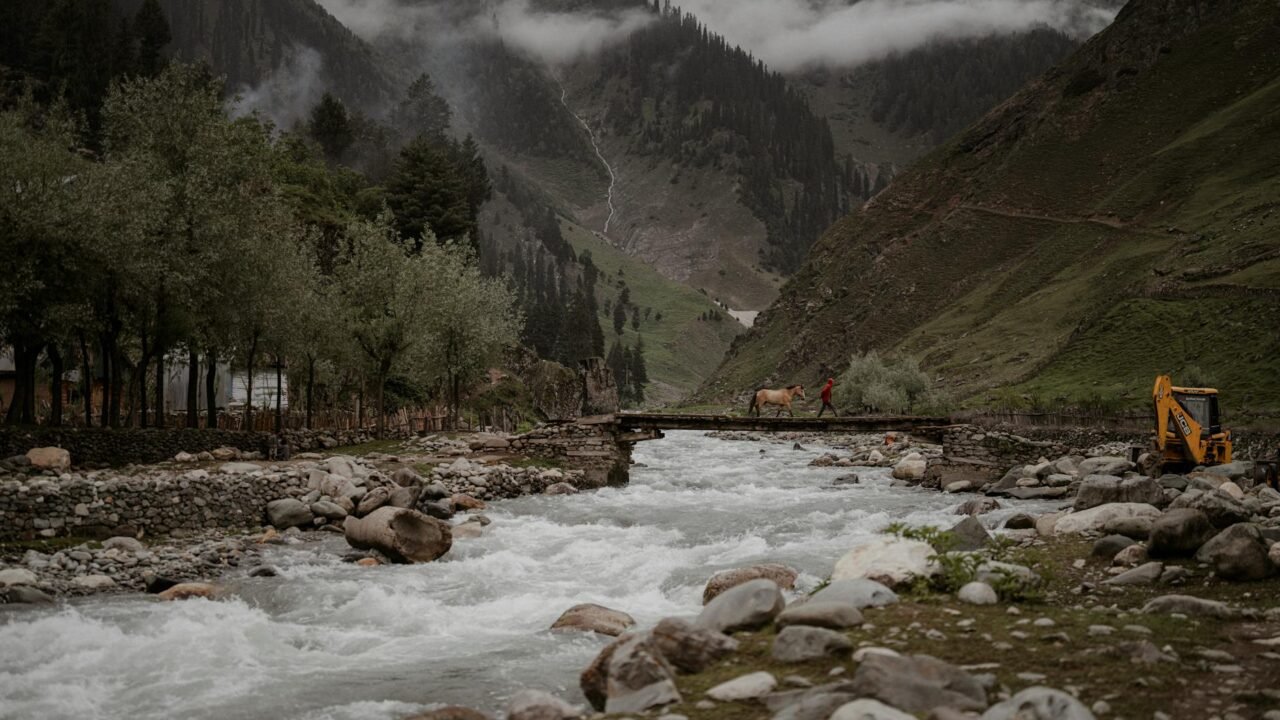
The government is poised to auction twelve limestone blocks in the Union Territory of Jammu & Kashmir, a move aimed at reinvigorating the region’s mining sector and fostering economic growth. The auction, scheduled to commence imminently, represents a significant step towards unlocking the mineral wealth of the region and attracting investment in crucial industries.
As per information available with TahirRihat.com, the Ministry of Mines, in collaboration with the Government of Jammu & Kashmir, is spearheading this initiative. The auction comprises a selection of both newly identified limestone blocks and those being re-auctioned, demonstrating the government’s commitment to maximizing resource utilization and encouraging sustained industry participation. The launch event is slated to be held in Srinagar. The previous year saw the initial auctioning of seven limestone blocks within the Union Territory, marking a precedent for this current undertaking.
The limestone blocks on offer are strategically located across several districts, including Anantnag, Rajouri, and Poonch. These blocks have been categorized under exploration stages G3 and G4, signifying promising geological potential and the presence of substantial industrial-grade limestone deposits. To clarify, G4 exploration encompasses broad-based surveys, employing tools such as regional geological mapping and remote sensing to pinpoint areas with mineral potential. G3 exploration, on the other hand, involves more detailed surveys aimed at refining specific target locations within the identified zones. The government hopes that the auction of these blocks will significantly boost the local economy, drawing in greater investment and creating employment opportunities for the people in the region.
According to an official statement, the Ministry of Mines is scheduled to launch the second tranche of limestone block auctions in Jammu & Kashmir. These resources are considered vital for core industries, encompassing cement production, construction activities, and broader infrastructure development. The exploitation of these limestone deposits is projected to play a pivotal role in bolstering industrial expansion and driving overall economic development across the region. The government views this move as an integral part of its strategy for sustainable economic growth in Jammu and Kashmir.
The limestone blocks categorized under G3 and G4 represent different stages of exploration, each providing valuable insights into the resource potential. G4, the reconnaissance stage, involves broad-based surveys utilizing techniques such as regional geological mapping and remote sensing. These surveys are designed to identify areas with promising mineral potential. The subsequent G3 stage, termed prospecting, entails more detailed and closely spaced surveys. These surveys aim to narrow down specific target locations within the areas identified in the G4 stage. Both stages of exploration are essential for comprehensive resource assessment and informed decision-making regarding mining operations.
The auction of these limestone blocks is expected to have a cascading effect across multiple sectors. The cement industry, a major consumer of limestone, stands to benefit from a readily available supply of raw materials. This could lead to increased cement production, potentially lowering construction costs and stimulating infrastructure development projects. The construction sector itself is poised to experience growth, driven by an increased availability of cement and other limestone-based products. Infrastructure projects, ranging from roads and bridges to buildings and dams, are also likely to be positively impacted, further fueling economic development in the region.
The initiative is viewed within the government as a concerted effort to maximize the economic potential of Jammu and Kashmir, harnessing its natural resources for the benefit of the local population. By attracting investment, creating jobs, and fostering industrial growth, the limestone block auctions are expected to contribute significantly to the overall prosperity and stability of the region. This commitment builds on last year’s initial foray into limestone block auctions, solidifying the government’s long-term vision for sustainable resource management and economic development in the Union Territory.

Tahir Rihat (also known as Tahir Bilal) is an independent journalist, activist, and digital media professional from the Chenab Valley of Jammu and Kashmir, India. He is best known for his work as the Online Editor at The Chenab Times.




Leave a Reply