
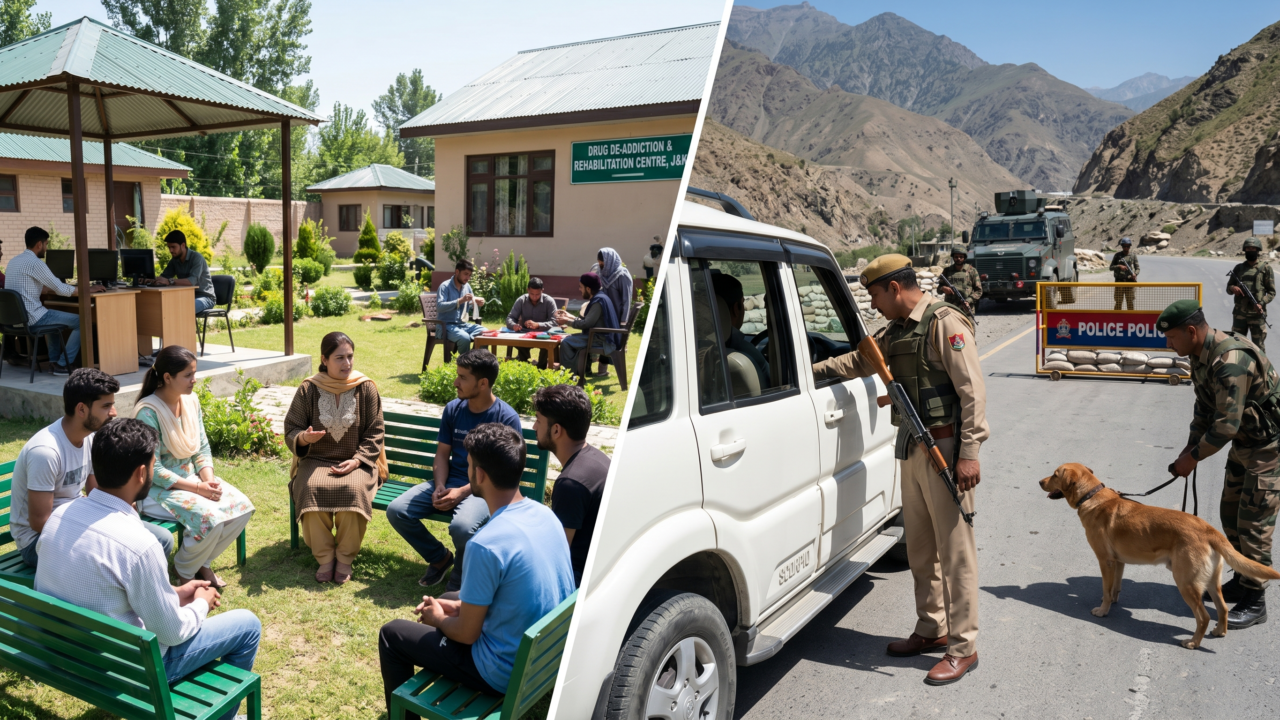
Lieutenant Governor Manoj Sinha has declared a firm stance against drug abuse in Jammu and Kashmir, highlighting the interconnectedness between narcotic trafficking and terrorist activities in the region. Leading a campaign against drug proliferation, Sinha emphasized the need to protect the youth from the menace, which he described as a calculated assault by a hostile neighbor, an allusion to Pakistan’s alleged involvement. The Lieutenant Governor has announced a comprehensive strategy involving stringent enforcement measures and enhanced rehabilitation programs.
Sinha addressed participants during a ‘Padhyatra’ aimed at creating a ‘Nasha Mukt Jammu and Kashmir,’ underscoring the administration’s commitment to eradicating drug abuse. Information reaching TahirRihat.com suggests that the campaign, initiated on April 11, has already garnered significant public support, particularly in the Jammu region, where residents have voiced strong concerns about the well-being of their children.
The Lieutenant Governor emphasized that the collective strength of the community is essential in winning the war against drugs, alongside the efforts of the government, security forces, and police. He (Sinha said that terrorists and drug dealers share a mutual objective of destabilizing the nation by undermining peace, unity, and security). He added that proceeds from the drug trade are often used to finance terrorist activities.
Further elaborating on the government’s strategy, Sinha outlined a three-year monitoring program focused on rehabilitating drug abuse victims. This initiative includes building more rehabilitation centers and upgrading existing facilities to provide adequate treatment. (According to Sinha, the Health Department has been directed to ensure sufficient Outpatient Department (OPD) and Inpatient Department (IPD) facilities are accessible in hospitals for those seeking help with drug addiction).
In addition to treatment and rehabilitation, the administration is implementing deterrent measures targeting drug peddlers. (Sinha said that individuals involved in drug trafficking will face criminal charges, cancellation of driving licenses, termination of vehicle registration, and potential revocation of passports). Furthermore, authorities plan to freeze bank accounts, take action on Aadhaar cards, issue lookout notices for absconders, and seize properties under the Narcotic Drugs and Psychotropic Substances (NDPS) Act.
The administration is also actively engaging religious leaders to raise awareness within the community and encourage a collective effort to combat drug abuse, according to statements made by Lieutenant Governor Sinha. The event was attended by Speaker of the Jammu and Kashmir Legislative Assembly Abdul Rahim Rather, Minister Javed Ahmad Dar, several MLAs, sportspersons, and religious leaders at the football stadium at Tourist Reception Centre.
These measures signal a multi-pronged approach to curb drug-related activities and address the broader issue of narco-terrorism in Jammu and Kashmir. The focus on stringent enforcement coupled with rehabilitation efforts reflects the government’s commitment to tackling both the supply and demand sides of the drug problem. By involving religious leaders and community members, the administration hopes to foster a united front against drug abuse and its associated security threats.
The announcement of these initiatives comes at a crucial time, as security agencies have been highlighting the increasing nexus between drug trafficking and terrorism in the region. The proceeds from drug sales are often used to fund terrorist operations, posing a significant challenge to security forces and the government.
The three-year monitoring program highlights the long-term vision of the administration in addressing the underlying issues related to drug addiction and rehabilitation. By tracking individuals who have undergone treatment, the government aims to provide ongoing support and prevent relapse, thus contributing to a more sustainable recovery process.
The stringent measures targeting drug peddlers also demonstrate the government’s resolve to crack down on the supply side of the drug trade. By implementing strict penalties and seizing assets, authorities hope to deter individuals from engaging in drug-related activities and disrupt the financial networks that support narco-terrorism.
The involvement of religious leaders in raising awareness is seen as a critical component of the strategy, as they can play a significant role in shaping public opinion and promoting positive social norms. By working with community leaders, the administration hopes to create a more supportive environment for individuals struggling with addiction and reduce the stigma associated with seeking help.
These efforts are part of a broader strategy to restore peace and stability in Jammu and Kashmir. The administration recognizes that addressing the issue of narco-terrorism is essential for creating a secure and prosperous future for the region. By investing in rehabilitation programs, strengthening law enforcement, and engaging with communities, the government aims to break the cycle of violence and addiction that has plagued the region for too long. The Lieutenant Governor’s direct involvement signals the high level of importance assigned to this issue, underscoring the administration’s commitment to protecting the youth and securing the future of Jammu and Kashmir.

Tahir Rihat (also known as Tahir Bilal) is an independent journalist, activist, and digital media professional from the Chenab Valley of Jammu and Kashmir, India. He is best known for his work as the Online Editor at The Chenab Times.





Leave a Reply