
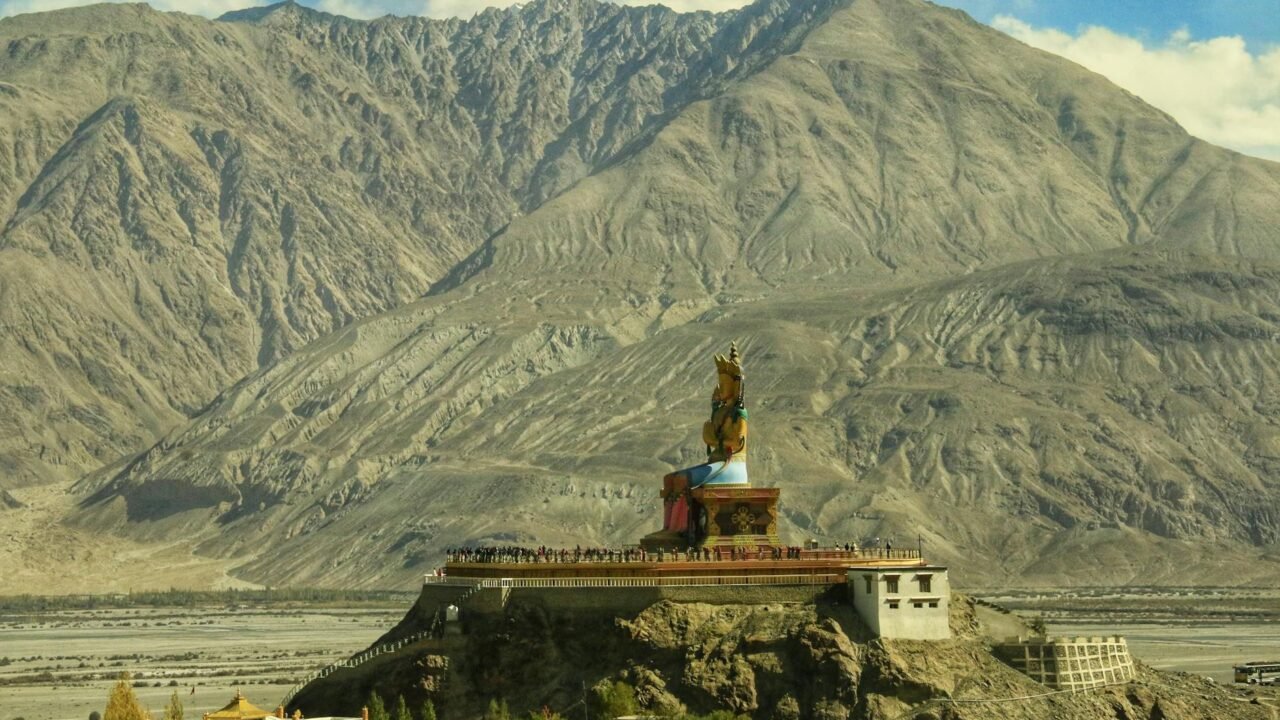
Misty mountain vistas and gentle snowfall provided a serene backdrop to the sacred exposition of Buddha relics at Jive-Tsal in Leh, an event that drew thousands of devotees and seemed to imbue the atmosphere with a profound sense of reverence. Union Home Minister Amit Shah inaugurated the exposition, which coincided with the auspicious occasion of Buddha Purnima, drawing a collective mood of quiet contemplation from the assembled faithful. The towering peaks surrounding the venue, Jive-Tsal at Photang, were draped in a fresh, delicate layer of snow, a sight that prompted many to stand still, hands folded, some gazing skyward, others with eyes closed in silent prayer. This meteorological phenomenon was not merely incidental; for many present, the drizzle and snow were interpreted as a divine blessing, marking the rare public display of Gautama Buddha’s sacred relics. In the stark, cold desert landscape of Ladakh, such a shift in weather during a significant spiritual gathering was widely perceived as an auspicious omen.
The relics, which arrived in Leh on April 28, have since attracted a continuous stream of devotees from across Ladakh and neighboring regions. Within Buddhist tradition, these relics are revered as tangible embodiments of the Buddha’s presence and teachings, believed to radiate spiritual energy that fosters peace, compassion, and mindfulness among followers. The opportunity for the public to witness and venerate these relics is considered a rare and deeply significant event, offering a unique chance for reflection and spiritual blessings. Information reaching TahirRihat.com suggests that the mood among the local populace has been significantly shaped by what they interpret as natural signs since the relics reached Leh. Tsering Dorjay, President of the Ladakh Buddhist Association (LBA), articulated this sentiment, stating that the arrival of the relics was accompanied by cloudy skies and snow-capped mountains, which many felt was a divine indication of Lord Buddha bestowing his blessings upon Ladakh. He further noted the sighting of a rainbow above Spituk Monastery, an event that, according to Dorjay, serves to strengthen faith and carries a powerful message of peace and compassion in a world grappling with violence.
The spiritual atmosphere during the exposition was further amplified by the prevailing weather conditions, which a local monk, Tsering Gyalsan, described as reflecting an inner stillness among the attendees. He observed that the gentle weather mirrored a sense of calm within people, with the drizzle and snow being interpreted as purifying elements, contributing to a feeling of universal blessing for all present. The quiet unfolding of the event was recalled by devotee Thainlas Angchauk, who noted the absence of loud reactions even as snowfall began on the distant mountains. Instead, people remained in silent contemplation, experiencing a profound sense of peace that transcended the ordinary. Padma Norzin, a school teacher, highlighted the palpable connection between the natural surroundings and the gathering, remarking that the mountains, clouds, and snowfall collectively fostered a sense of calm, encouraging greater reflection and a deeper awareness of the purpose of their attendance. Another teacher, Tashi Dolma, suggested that the shifting skies conveyed a more profound message, reminding attendees of the impermanence of life while simultaneously offering a sense of peace. For many, she added, it felt like a tangible blessing, one that could be felt as much as seen.
As the day progressed and the clouds gradually receded, revealing snow-laden ridges against a clearing sky, the crowd began to disperse. However, the shared experience left an indelible mark, a collective understanding that in Leh, on this Buddha Purnima, the weather had not merely been a passive observer but an active participant in the occasion, subtly weaving itself into the very fabric of its meaning. The exposition of the Buddha relics, set against this backdrop of natural beauty and spiritual significance, offered a powerful reminder of enduring values in a rapidly changing world. The event underscored the deep-rooted spiritual traditions of Ladakh and the profound connection its people feel with nature, especially during moments of religious importance. The presence of the relics, coupled with the auspicious weather, created an environment conducive to introspection and spiritual solace, reinforcing the message of peace and compassion that the LBA President had emphasized. The unique geographical and cultural landscape of Ladakh, often described as a cold desert, lends a particular poignancy to such spiritual gatherings, where the elements themselves seem to conspire to enhance the sacredness of the occasion. The convergence of the relics’ spiritual aura and the blessings of nature created a memorable experience for thousands, reinforcing their faith and offering a moment of profound peace amidst global uncertainties. The event served as a powerful testament to the enduring appeal of Buddhist teachings and the significance of such relic expositions in fostering spiritual well-being and communal harmony. The serene yet powerful imagery of snow-capped peaks and gentle snowfall accompanying the veneration of sacred relics offered a unique blend of the earthly and the divine, leaving a lasting impression on all who were fortunate enough to witness it.

Tahir Rihat (also known as Tahir Bilal) is an independent journalist, activist, and digital media professional from the Chenab Valley of Jammu and Kashmir, India. He is best known for his work as the Online Editor at The Chenab Times.


Leave a Reply