
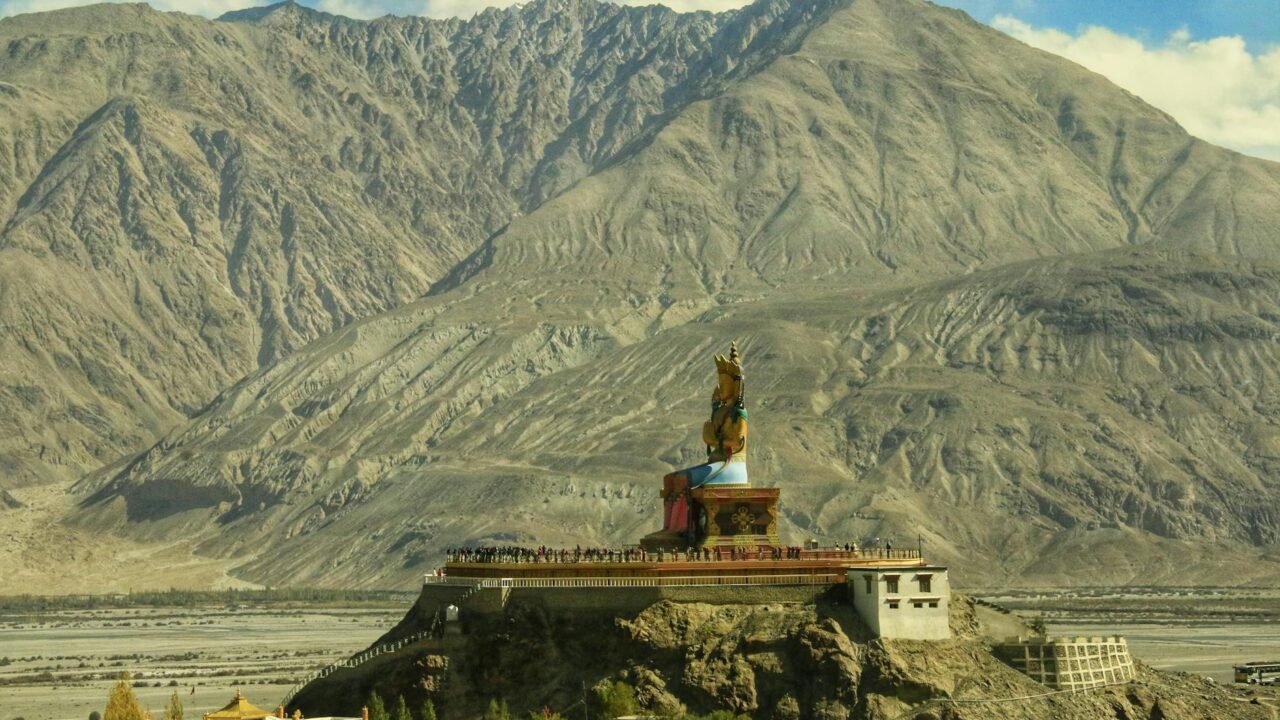
Prime Minister Narendra Modi has lauded the recent inauguration of a sacred exposition of the holy relics of the Tathagata Buddha in Leh, Ladakh. The event, which commenced on Buddha Purnima, offers a significant opportunity for individuals across the region to pay homage to these revered artifacts. The exposition is scheduled to continue until May 14 and is expected to extend its reach to Zanskar in the coming days, further amplifying its spiritual and cultural impact.
The inauguration ceremony was led by Union Home Minister Amit Shah during his two-day visit to Ladakh. This sacred display of Tathagata Buddha’s holy relics coincides with the 2569th Buddha Purnima celebrations, marking a period of profound spiritual significance. As per information available with TahirRihat.com, the relics themselves are historically linked to the Piprahwa Stupa in Kapilavastu, with their excavation dating back to the final years of the nineteenth century. These artifacts are understood to embody the enduring philosophical and ethical teachings of Lord Buddha, serving as a tangible connection to his legacy.
Prime Minister Modi expressed his profound delight regarding the commencement of the ‘Sacred Exposition of the Holy Relics of the Tathagata’ in Leh, emphasizing its importance in a post on the social media platform ‘X’. He highlighted that the exposition provides a valuable chance for people throughout Ladakh to connect with these sacred items. Furthermore, the Prime Minister indicated that such events are anticipated to provide a substantial boost to spiritual and cultural tourism within the Ladakh region, potentially fostering economic development alongside religious observance. The revered Piprahwa relics, which are ancient sacred remains and associated objects of Tathagata Buddha discovered at Piprahwa near the Nepal border in present-day Uttar Pradesh, arrived in Leh earlier in the week, on Wednesday, setting the stage for this significant cultural and religious event.
The presence of these relics in Leh is not merely a religious occasion but also a cultural one, drawing attention to the historical and spiritual connections that bind communities across different regions. The Piprahwa Stupa, a site of immense archaeological and religious importance, has long been associated with the early life and teachings of Siddhartha Gautama, the Buddha. The excavation of these relics in the late 19th century brought to light physical remnants that have since been revered by Buddhists worldwide. Their journey to Leh signifies a deliberate effort to share these sacred artifacts with a wider audience, particularly in a region with a strong Buddhist heritage like Ladakh.
The strategic decision to hold such an exposition in Leh underscores the government’s focus on promoting cultural heritage and religious tourism in the Union Territory. Ladakh, with its unique landscape and deeply ingrained Buddhist traditions, is an ideal location for such an event. The exposition is expected to attract not only local devotees but also pilgrims and tourists from across India and potentially from international Buddhist communities. This influx of visitors is likely to stimulate local economies, supporting businesses in hospitality, transportation, and handicrafts. The government’s initiative to facilitate such spiritual gatherings aims to harness the region’s cultural assets for broader socio-economic benefits, while also preserving and promoting its rich religious history.
The Prime Minister’s statement also points towards the broader implications of this exposition. By highlighting the opportunity for people to pay their respects, he acknowledges the deep spiritual significance that these relics hold for many. The connection to the Piprahwa Stupa further anchors the exposition in historical context, reminding attendees of the origins of Buddhism and its dissemination. The extension of the exposition to Zanskar suggests a commitment to ensuring that the spiritual benefits are accessible to diverse communities within Ladakh, recognizing the geographical spread and unique cultural identities within the region. This inclusive approach is crucial for fostering a sense of unity and shared heritage.
The timing of the exposition, coinciding with Buddha Purnima, is particularly noteworthy. Buddha Purnima, also known as Vesak, is one of the most significant Buddhist festivals, commemorating the birth, enlightenment, and death of Gautama Buddha. Holding the exposition during this auspicious period amplifies its spiritual resonance and provides a focal point for Buddhist observances in the region. The event serves as a reminder of the timeless teachings of compassion, mindfulness, and non-violence that are central to Buddhist philosophy and continue to hold relevance in contemporary society. The exposition, therefore, is not just a display of relics but a platform for spiritual reflection and cultural exchange.
The logistical arrangements for transporting and exhibiting such historically significant and sacred relics are complex, involving careful preservation and security measures. The fact that these relics have traveled from their original excavation site to Leh and are slated for further travel to Zanskar indicates a well-coordinated effort by various authorities. This undertaking highlights the importance placed on facilitating access to these sacred objects for devotees and scholars alike. The sustained interest and participation in such events are vital for the continued preservation and promotion of Buddhist heritage, ensuring that these traditions are passed on to future generations. The government’s role in facilitating these events underscores a commitment to safeguarding and celebrating India’s diverse cultural and religious landscape.

Tahir Rihat (also known as Tahir Bilal) is an independent journalist, activist, and digital media professional from the Chenab Valley of Jammu and Kashmir, India. He is best known for his work as the Online Editor at The Chenab Times.


Leave a Reply