
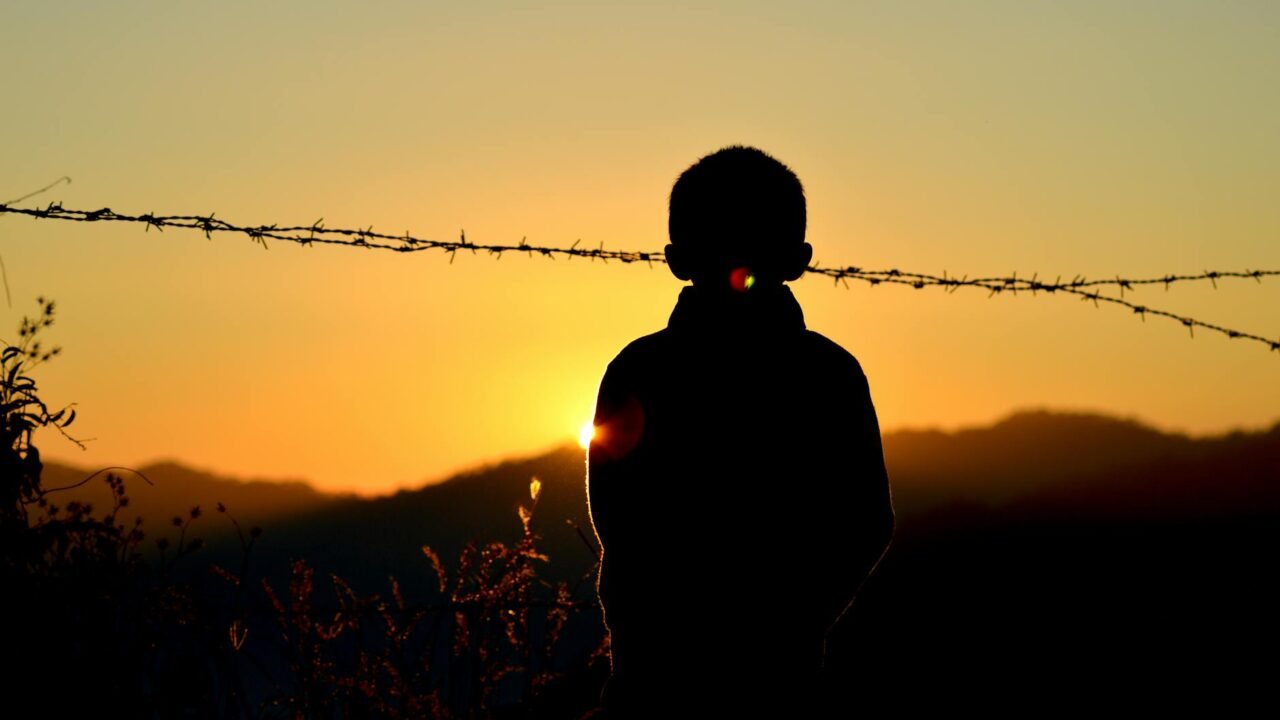
Three years after a wave of riots convulsed the northeastern Indian state of Manipur, the region remains a landscape of disarray, marked by persistent division and a fragile peace. The aftermath of the violence has left deep scars, with barbed wire fences and armed checkpoints becoming commonplace, a stark illustration of the ongoing tensions that even hindered access for journalists prior to the most recent clashes.
The state, nestled between Myanmar and Bangladesh, has a complex ethnic tapestry, primarily comprising the Meitei majority and the Kuki minority. These communities, once coexisting, have been driven apart by a conflict that erupted with devastating force. The roots of the unrest are multifaceted, involving land disputes, historical grievances, and more recently, concerns over illegal immigration and drug trafficking, which have fueled animosity and suspicion between the groups.
Information reaching Tahir Rihat suggests that the current situation is a grim testament to the failure of authorities to fully restore order and foster reconciliation. The physical barriers erected across the state are not merely obstacles to movement but also potent symbols of the deep societal fissures that have opened up. These checkpoints, manned by security forces, underscore the volatile nature of the region and the ever-present threat of renewed conflict.
The violence that tore through Manipur in the past left a trail of destruction, displacing thousands and claiming numerous lives. Homes were burned, villages were razed, and a climate of fear permeated daily life. Even as the immediate conflagration subsided, the underlying issues remained unresolved, festering and contributing to the ongoing instability. The state government has struggled to implement effective measures that could bridge the divide and address the core concerns of both communities.
The recent clashes, alluded to in the context of reporting difficulties, indicate that the situation has not improved and may have even deteriorated. The ongoing presence of armed personnel and the erection of barriers point to a security apparatus that is constantly on alert, anticipating potential outbreaks of violence. This perpetual state of high alert reflects the deep-seated mistrust that has taken hold.
The economic and social fabric of Manipur has been severely impacted. Businesses have been disrupted, livelihoods have been destroyed, and the overall development of the state has been significantly hampered. The uncertainty and insecurity have deterred investment and created an environment unconducive to progress. The long-term consequences of this protracted period of unrest are likely to be felt for years to come, affecting generations.
Efforts at mediation and dialogue have often fallen short, unable to overcome the entrenched positions and the profound sense of alienation experienced by various groups. The political landscape of Manipur is also deeply intertwined with these ethnic tensions, with different parties often seen as aligning with or favoring specific communities, further exacerbating the divisions. The central government in New Delhi has also been involved in trying to manage the crisis, but a lasting solution has remained elusive.
The international dimension of the conflict, given Manipur’s border with Myanmar, adds another layer of complexity. Concerns about cross-border movements, insurgent groups, and the flow of illicit substances have been cited as contributing factors to the internal strife. The porous nature of the border makes it challenging to control these elements, which in turn can fuel local tensions.
The resilience of the people of Manipur is being tested daily. Many are living in a state of constant anxiety, uncertain about their safety and their future. The physical manifestations of the conflict, such as the barbed wire and checkpoints, serve as a constant reminder of the fragility of peace and the deep chasm that separates communities. The hope for a return to normalcy and a unified Manipur remains, but the path forward is fraught with challenges, requiring sustained political will, genuine reconciliation efforts, and a commitment to addressing the root causes of the conflict.
The ongoing disarray in Manipur highlights a critical failure in conflict resolution and governance. The state’s continued struggle with violence and division serves as a somber case study of how ethnic and political fault lines, if left unaddressed, can lead to prolonged instability and human suffering. The international community and national observers alike are watching closely, hoping for a breakthrough that can bring lasting peace to this troubled region of India.

Tahir Rihat (also known as Tahir Bilal) is an independent journalist, activist, and digital media professional from the Chenab Valley of Jammu and Kashmir, India. He is best known for his work as the Online Editor at The Chenab Times.


Leave a Reply