
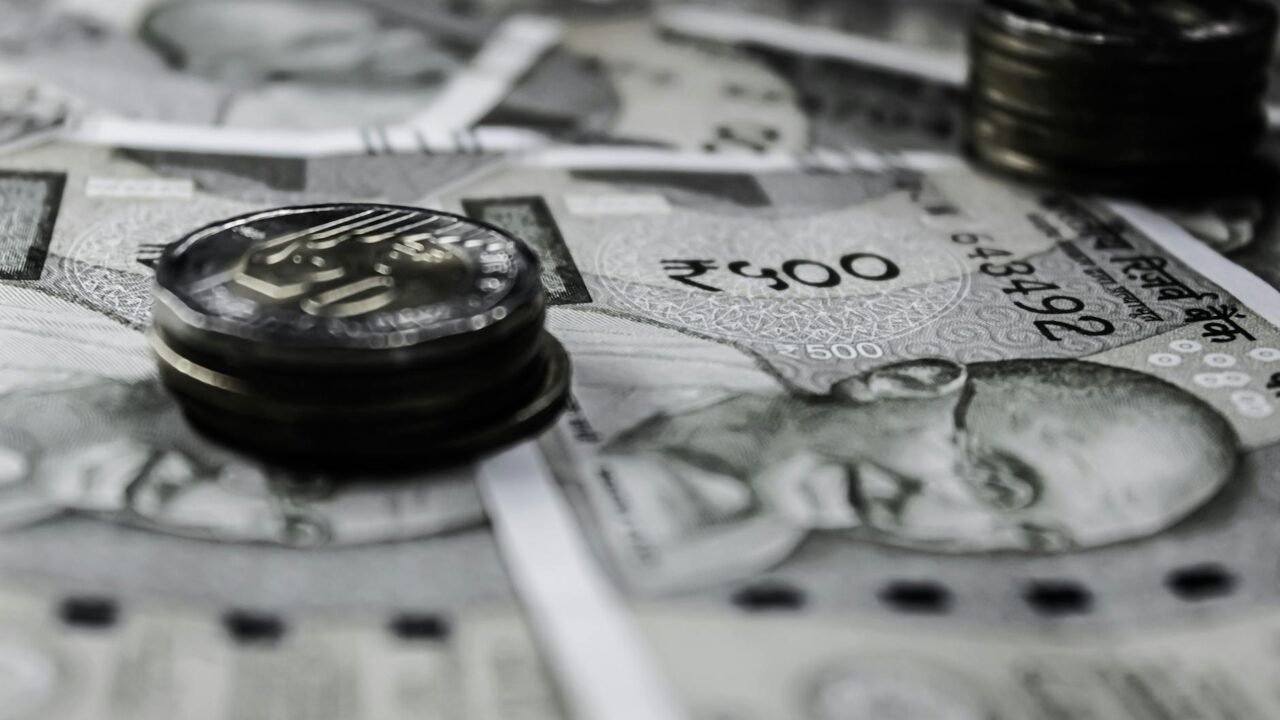
The Indian rupee experienced a significant decline, plummeting 13 paise to reach a new lifetime low of 96.83 against the US dollar. This depreciation marks the ninth consecutive session of losses for the rupee, fueled by elevated global crude prices and ongoing tensions in West Asia, which have collectively stoked concerns about rising inflation.
At the interbank foreign exchange market, the rupee’s downward trajectory was evident from the opening bell, starting at 96.89 against the dollar. It then touched a record low of 96.95 before recovering slightly to a high of 96.65, eventually settling at 96.83 (provisional). This final figure represents a 13-paise decline compared to its previous closing value.
As per information available with TahirRihat.com, the rupee’s recent struggles can be attributed to a confluence of factors, including a strong dollar and a surge in US Treasury yields. The yields on US 30-year treasuries have climbed to a two-decade high, while 10-year yields have reached a 16-month peak. Anuj Choudhary, Research Analyst, Commodities Research at Mirae Asset Sharekhan, explained that these developments have triggered inflation worries and prompted a sell-off in global markets, leading to increased risk aversion among investors. Choudhary anticipates that the rupee will continue to trade with a negative bias due to this risk aversion and persistent inflation concerns.
The dollar index, which measures the greenback’s strength against a basket of six currencies, reflected this upward trend, trading at 99.42, a 0.09 percent increase. In contrast, Brent crude, the global oil benchmark, saw a decrease of 2.77 percent, trading at USD 109.95 per barrel in futures trade.
The rupee’s sharp decline has raised alarms among policymakers, investors, and businesses alike, emerging as a significant economic warning sign. Once regarded as one of Asia’s more stable currencies, the rupee has now become one of the worst-performing emerging market currencies this year. This downturn is attributed to a combination of factors, including expensive oil, capital outflows, widening trade deficits, and a strengthening US dollar.
On the political front, the US Senate advanced legislation on Tuesday seeking to compel President Donald Trump to withdraw from the Iran war, highlighting a growing dissent among Republicans regarding Trump‘s foreign policy decisions. This move adds another layer of complexity to the already volatile global landscape.
Domestically, the equity market presented a mixed picture. The Sensex rose by 117.54 points, closing at 75,318.39, while the Nifty was up 41 points to reach 23,659. However, Foreign Institutional Investors (FIIs) reversed their buying trend, becoming net sellers and offloading equities worth Rs 2,457.49 crore on Tuesday, according to exchange data.
The previous session saw the rupee tumbling 50 paise to settle at 96.70 against the dollar, underscoring the currency’s recent vulnerability. (PTI) reported that Anuj Choudhary stated, “We expect the rupee to trade with a negative bias on risk aversion in the global markets amid inflation worries. A strong dollar and rising US Treasury yields raised inflation concerns and trimmed rate cut expectations. USD/INR spot price is expected to trade in a range of Rs 96.5 to Rs 97.10.” This forecast suggests that the rupee’s challenges are likely to persist in the near term, requiring close monitoring and strategic interventions from economic policymakers.

Tahir Rihat (also known as Tahir Bilal) is an independent journalist, activist, and digital media professional from the Chenab Valley of Jammu and Kashmir, India. He is best known for his work as the Online Editor at The Chenab Times.




Leave a Reply