
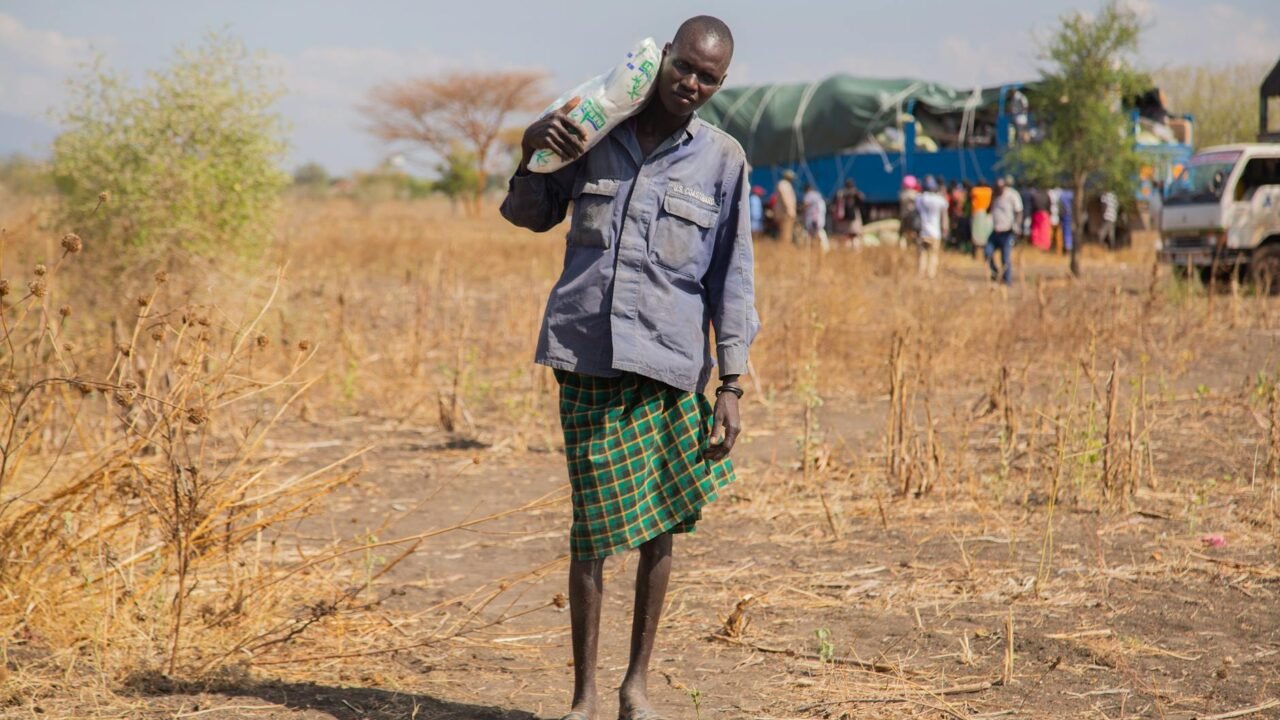
The remote South Sudanese town of Akobo finds itself on the precipice of a potential health crisis, grappling with the dual specter of pervasive hunger and ongoing conflict, while simultaneously facing the chilling possibility of an Ebola outbreak. The precarious situation in Akobo, a region already stretched thin by humanitarian challenges, raises significant concerns about its capacity to respond effectively should the deadly virus breach its borders.
The proximity of Akobo to the Democratic Republic of Congo, a nation that has repeatedly battled Ebola, places it in a vulnerable position. Information reaching Tahir Rihat suggests that the porous borders and the constant movement of people across them create a pathway for the virus to spread. Residents of Akobo, whose daily lives are already dominated by the struggle for sustenance and the pervasive fear of violence, may find themselves ill-equipped to confront a public health emergency of this magnitude.
The underlying conditions in Akobo exacerbate the potential impact of an Ebola outbreak. Chronic food insecurity means that the population is likely to have weakened immune systems, making them more susceptible to severe illness and death. The ongoing conflict further disrupts healthcare services, displaces populations, and hinders any organized response efforts. In such an environment, containing an outbreak would be exceptionally challenging, with the potential for devastating consequences not only for Akobo but for the wider region.
The World Health Organization and other international health bodies have long warned about the risks posed by the intersection of conflict, displacement, and infectious diseases in fragile states. South Sudan, with its history of civil unrest and underdevelopment, remains a particular focus of concern. The lack of robust healthcare infrastructure, coupled with limited access to remote areas like Akobo, creates significant obstacles to early detection, diagnosis, and treatment of diseases like Ebola.
The residents of Akobo are acutely aware of the dangers. Their immediate concerns revolve around securing food and ensuring their safety amidst the persistent threat of armed groups. However, the specter of an epidemic adds another layer of anxiety to their already difficult existence. The potential for a disease that spreads rapidly and has a high mortality rate, in a community already struggling with basic survival, paints a grim picture of the challenges ahead.
The international community’s ability to respond to a potential outbreak in Akobo would be severely tested. Reaching such a remote location, especially in a conflict-affected area, presents logistical hurdles. Establishing isolation facilities, providing medical supplies, and deploying trained personnel would require significant resources and coordination. The effectiveness of any intervention would also depend on the cooperation of local communities, who may be wary of external assistance given the history of political instability.
Experts in global health have emphasized that preparedness is key to mitigating the impact of such outbreaks. This includes strengthening surveillance systems, training local healthcare workers, and ensuring access to essential medical supplies. For a region like Akobo, where these basic elements are often lacking, the challenge is immense. The focus on immediate humanitarian needs, such as food and security, can sometimes overshadow the critical importance of public health preparedness, creating a dangerous vulnerability.
The situation in Akobo serves as a stark reminder of the interconnectedness of global health and security. The ongoing conflicts and humanitarian crises in various parts of the world not only cause immense suffering but also create fertile ground for the spread of infectious diseases. Addressing these complex challenges requires a comprehensive approach that integrates humanitarian aid, conflict resolution, and robust public health strategies. The potential for an Ebola outbreak in Akobo underscores the urgent need for sustained international attention and investment in the region’s health infrastructure and security.
The residents of Akobo, caught between the immediate threats of hunger and violence, now face the added dread of a potential epidemic. Their resilience is being tested daily, and the prospect of an Ebola outbreak looms as a devastating possibility that could overwhelm an already fragile existence. The world’s attention is drawn to this remote corner of South Sudan, where the confluence of crises highlights the critical need for proactive global health security measures.

Tahir Rihat (also known as Tahir Bilal) is an independent journalist, activist, and digital media professional from the Chenab Valley of Jammu and Kashmir, India. He is best known for his work as the Online Editor at The Chenab Times.


Leave a Reply