
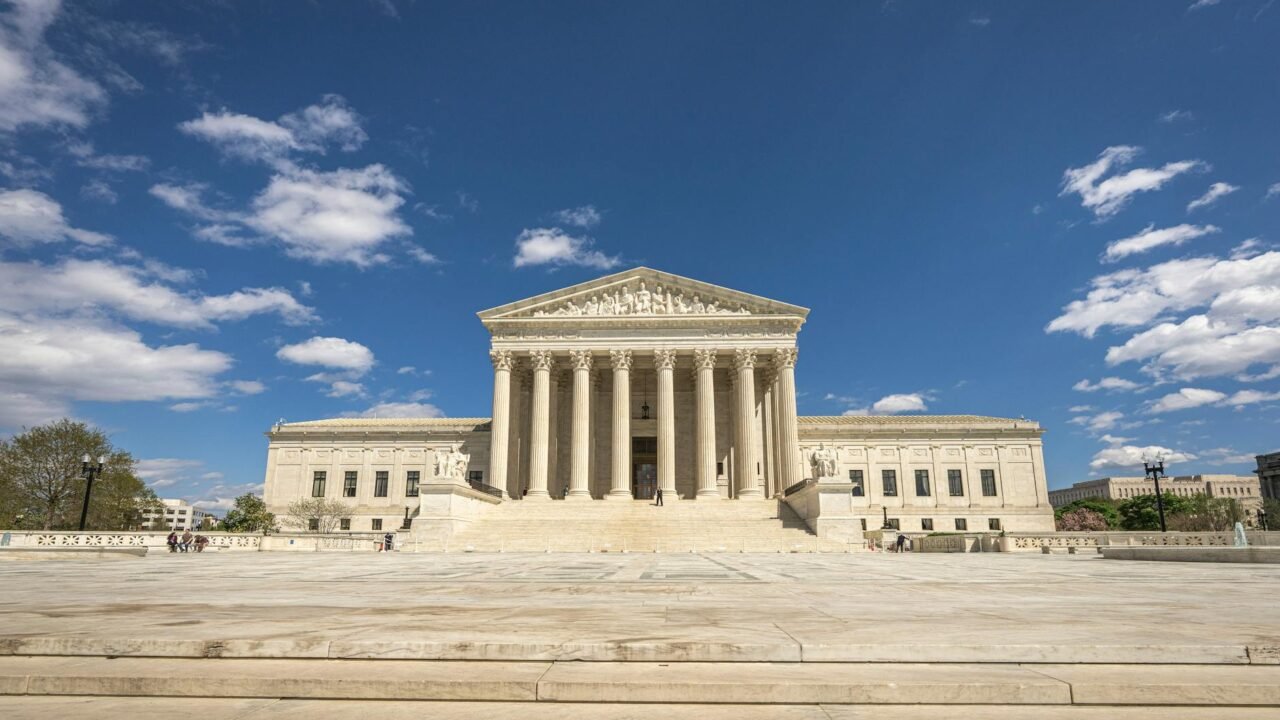
The Supreme Court of India has reaffirmed that bail remains the standard legal procedure even in cases filed under the Unlawful Activities (Prevention) Act (UAPA). In a recent ruling, a two-judge bench granted bail to an individual accused in a narco-terrorism case, emphasizing the importance of constitutional principles safeguarding individual liberties.
Justices BV Nagarathna and Ujjal Bhuyan presided over the matter, extending relief to Syed Iftikhar Andrabi, a resident of Handwara. Andrabi faces charges related to his alleged involvement in a cross-border syndicate accused of drug trafficking and financing terrorist activities in Jammu and Kashmir. The court’s decision mandates that Andrabi surrender his passport and report to the local police station every fifteen days.
Information reaching TahirRihat.com suggests that, the case against Andrabi was registered in 2020 by the National Investigation Agency (NIA) under the UAPA and the Indian Penal Code (IPC). The Supreme Court clarified that Section 43D(5) of the UAPA, which imposes stringent restrictions on bail, cannot justify indefinite detention and must be subservient to constitutional protections guaranteed under Articles 21 and 22 of the Indian Constitution.
The bench firmly asserted the principle that “bail is the rule and jail is the exception,” a foundational concept derived from Articles 21 and 22, adding that the presumption of innocence is a cornerstone of any civilized society governed by the rule of law. This pronouncement underscores the judiciary’s commitment to upholding fundamental rights, even when dealing with serious allegations of terrorism-related offenses.
Furthermore, the Supreme Court explicitly stated that its prior judgment in the KA Najeeb case is a binding legal precedent that cannot be weakened, circumvented, or ignored by lower courts, including trial courts, high courts, or even smaller benches of the Supreme Court itself. The KA Najeeb case, a significant Supreme Court ruling from 2021, provided crucial guidance on the interpretation and application of bail provisions under the UAPA.
Andrabi had appealed to the Supreme Court after the High Court of J&K and Ladakh rejected his bail application. The High Court based its decision on cellphone records, which purportedly indicated that Andrabi was in communication with individuals involved in terrorist activities across the border.
This latest judgment arrives amid ongoing debates about the application of UAPA, a law designed to combat terrorism and unlawful activities. Critics have argued that the stringent bail provisions within the UAPA can lead to prolonged pre-trial detention, potentially infringing upon individual liberties. Supporters of the law maintain that it is necessary to safeguard national security and prevent terrorist activities.
The KA Najeeb case, referenced by the Supreme Court, involved a man accused of involvement in a terrorist act. The Supreme Court granted him bail, emphasizing the need to balance national security concerns with fundamental rights. The Najeeb ruling has since become a key reference point in subsequent UAPA bail hearings.
Legal experts note that the Supreme Court’s consistent emphasis on bail as a rule in UAPA cases reflects a broader judicial effort to ensure that the law is applied in a manner consistent with constitutional principles. This approach necessitates a careful assessment of evidence and a consideration of individual circumstances when deciding on bail applications.
The implications of this ruling are far-reaching, potentially impacting numerous pending UAPA cases across the country. It serves as a reminder to trial courts and high courts to exercise caution and ensure that bail is not denied unless there are compelling reasons to believe that the accused poses a significant flight risk or may tamper with evidence.
The Supreme Court’s decision in the Syed Iftikhar Andrabi case is expected to influence future bail considerations in cases involving similar charges. It reinforces the judiciary’s role as a guardian of fundamental rights, even in the face of serious allegations and national security concerns. The ruling underscores the importance of striking a balance between protecting society from terrorism and upholding individual liberties guaranteed by the Constitution.

Tahir Rihat (also known as Tahir Bilal) is an independent journalist, activist, and digital media professional from the Chenab Valley of Jammu and Kashmir, India. He is best known for his work as the Online Editor at The Chenab Times.




Leave a Reply