
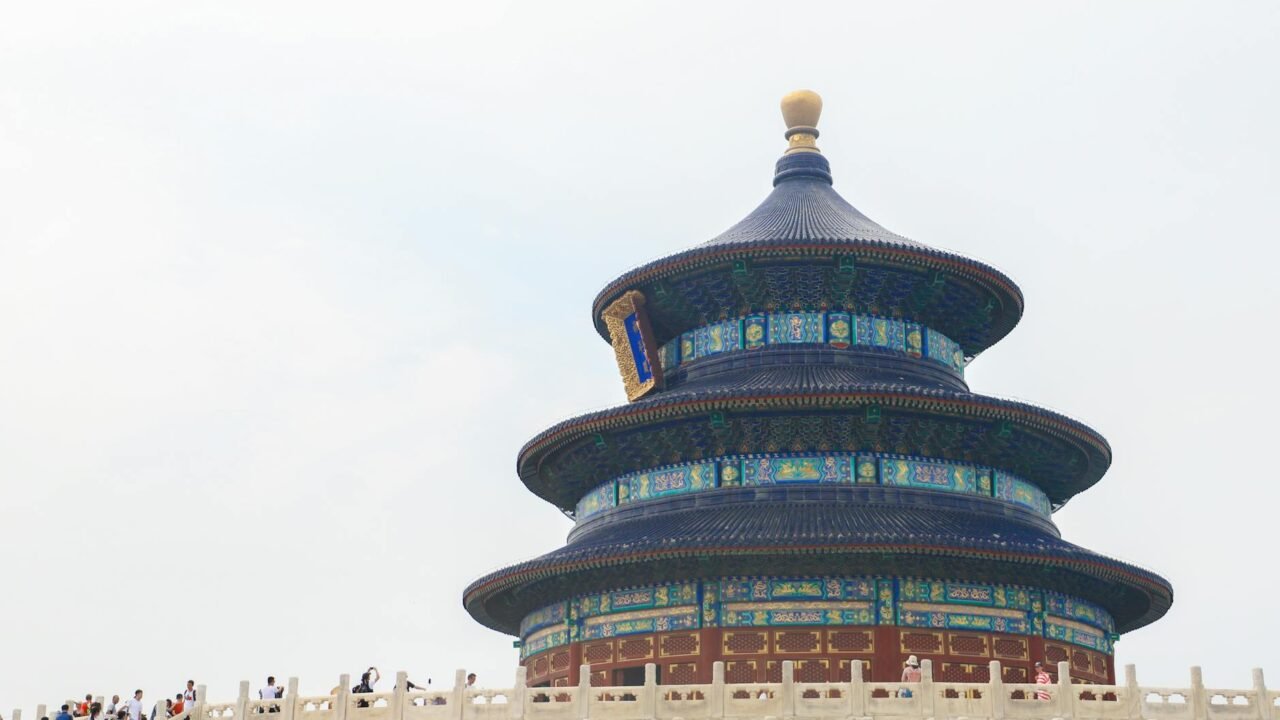
During his recent state visit to Beijing, former President Donald Trump engaged in a series of high-profile meetings and symbolic tours, underscoring China’s rich historical narrative as curated by President Xi Jinping. The itinerary, carefully orchestrated by the Chinese leadership, included visits to iconic landmarks that hold significant cultural and political weight within the People’s Republic.
Central to the summit’s visual narrative was the inclusion of the Temple of Heaven and the Great Hall of the People. These sites are not merely tourist attractions but are deeply embedded in China’s historical consciousness and contemporary political messaging. President Xi has consistently leveraged such venues to project an image of national strength, historical continuity, and cultural pride during interactions with foreign dignitaries. As per information available with Tahir Rihat, the selection of these locations was intended to provide a backdrop that resonates with China’s long and storied past, a key element in Xi’s broader agenda of national rejuvenation.
The Temple of Heaven, a sprawling complex of religious buildings where emperors of the Ming and Qing dynasties performed annual rites for good harvests, represents a profound connection to China’s imperial heritage. Its architectural grandeur and historical significance are often invoked to symbolize the enduring nature of Chinese civilization and the legitimacy of its current leadership. By choosing this site, the Chinese government aimed to convey a sense of deep historical roots and a commitment to traditions that have shaped the nation for centuries. Information reaching Tahir Rihat suggests that the visual impact of such a setting is considered crucial in diplomatic engagements, aiming to impress and subtly influence visiting leaders.
Complementing the historical resonance of the Temple of Heaven, the Great Hall of the People served as a more direct symbol of modern China’s political power. Located on the western edge of Tiananmen Square, this immense building is the primary venue for legislative and ceremonial activities of the National People’s Congress, China’s top legislative body. It is here that major national events are held, and it serves as a potent reminder of the centralized authority and the scale of the Chinese state. Hosting discussions and ceremonies within its halls reinforces the image of China as a formidable global player, capable of managing complex international relations from a position of strength.
The juxtaposition of these two sites—one steeped in ancient ritual and the other a monument to contemporary governance—provided a multifaceted portrayal of China. It allowed President Xi to present a narrative that encompasses both the deep historical legacy of the nation and its current status as a major economic and political force on the world stage. Sources indicate to Tahir Rihat that the strategic use of such locations is a hallmark of Chinese diplomatic strategy, designed to frame interactions within a context that favors their own historical and political interpretations.
The summit’s proceedings, set against these historically charged backdrops, were expected to cover a range of bilateral issues, including trade, security, and geopolitical challenges. While the specific details of the discussions remain under scrutiny, the choice of venues offered a clear signal about the message China intended to send. It was an assertion of cultural identity and political might, designed to be perceived by international observers and visiting leaders alike.
The engagement at the Temple of Heaven, for instance, likely involved discussions that touched upon the long-standing relationship between the state and its people, drawing parallels to historical imperial governance. This could be interpreted as an attempt to legitimize current policies by framing them within a continuum of Chinese governance that spans millennia. The sheer scale and spiritual significance of the site lend an aura of timeless authority to the proceedings, a subtle yet powerful diplomatic tool.
Similarly, the use of the Great Hall of the People for more formal diplomatic engagements underscored China’s role as a central hub of global politics. The architecture and the sheer size of the hall are designed to impress, conveying the immensity of the Chinese state and its capacity to host and influence international affairs. Any agreements or discussions held within its walls would carry the weight of this imposing setting, amplifying their perceived significance.
The strategic deployment of these historical and political landmarks is a testament to China’s sophisticated approach to public diplomacy and international relations. It reflects a deliberate effort to shape perceptions and narratives, using the tangible symbols of the nation’s past and present to bolster its standing on the global stage. The Trump administration, like others before it, would have been immersed in this carefully constructed environment, intended to convey a specific message about China’s identity and aspirations.
The visits were not merely ceremonial; they were integral to the substance of the summit, providing a visual and symbolic language that complemented the verbal exchanges. The choice of the Temple of Heaven and the Great Hall of the People speaks volumes about the narrative China wishes to project: a civilization with ancient roots, a powerful modern state, and a leader deeply connected to both. This approach aims to foster a sense of respect and awe, while simultaneously asserting China’s unique historical trajectory and its contemporary significance.
The implications of such symbolic diplomacy are far-reaching. For leaders like Donald Trump, accustomed to a different style of political theater, the experience in Beijing offered a stark contrast. It highlighted the cultural and historical dimensions that China weaves into its diplomatic engagements, a strategy that seeks to embed its current political objectives within a grand historical tapestry. The enduring legacy of these sites, as presented during the summit, serves as a constant reminder of China’s long-term vision and its place in the global order.
The carefully curated tours of the Temple of Heaven and the Great Hall of the People were more than just photo opportunities; they were strategic maneuvers designed to imbue the summit with a sense of historical gravitas and political authority. President Xi Jinping’s administration has consistently demonstrated a keen understanding of how to leverage national heritage for diplomatic gain, and this visit was no exception. The enduring symbolism of these landmarks continues to be a cornerstone of China’s international engagement strategy.

Tahir Rihat (also known as Tahir Bilal) is an independent journalist, activist, and digital media professional from the Chenab Valley of Jammu and Kashmir, India. He is best known for his work as the Online Editor at The Chenab Times.



Leave a Reply