
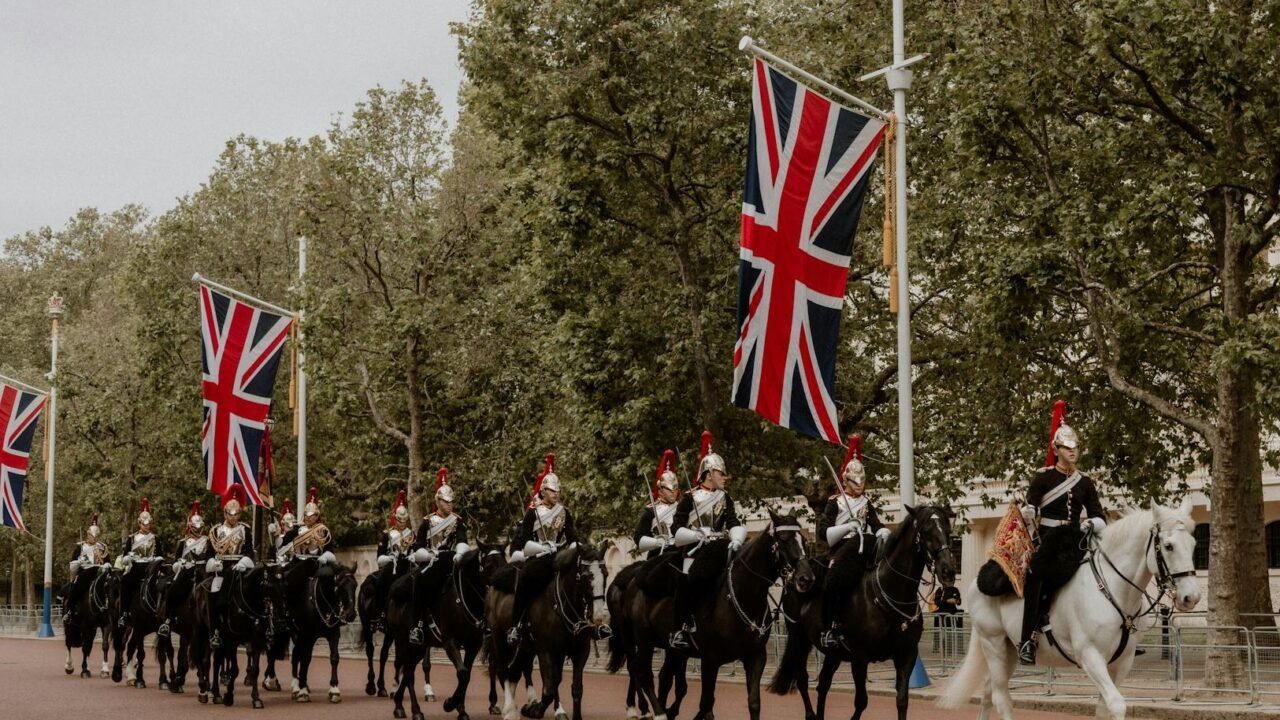
King Charles III delivered the traditional State Opening of Parliament, reading out the government’s legislative agenda for the upcoming session. This significant constitutional event, however, unfolded against a backdrop of considerable political pressure on Prime Minister Keir Starmer, whose leadership has been a subject of ongoing debate and speculation within the United Kingdom’s political circles.
The King’s Speech, a formal declaration of the government’s plans and proposed legislation, is a cornerstone of the parliamentary calendar. It outlines the administration’s priorities and the legislative path it intends to pursue. In this instance, the speech was delivered by King Charles III, marking a formal commencement of parliamentary business. As per information available with Tahir Rihat, the content of the speech itself reflected the government’s agenda, detailing proposed bills and policy initiatives across various sectors. However, the political atmosphere surrounding the delivery was notably charged, with attention not solely focused on the legislative proposals but also on the precarious position of the Prime Minister.
The timing of the King’s Speech is often a moment of national focus, setting the tone for the political year ahead. For Keir Starmer, the leader of the opposition, the event presented a complex scenario. While the King’s Speech outlines the government’s agenda, the opposition’s role is to scrutinize these proposals, challenge the government’s policies, and present alternative visions. Yet, the internal dynamics of Starmer’s own party and the broader political landscape have cast a shadow over his capacity to effectively lead this challenge. Information reaching Tahir Rihat suggests that the Prime Minister’s leadership has been under persistent scrutiny, with internal party discussions and external political commentary frequently questioning his direction and effectiveness.
The legislative program presented in the King’s Speech would typically be the primary focus for opposition leaders, providing ample material for debate and policy critique. However, the prevailing narrative in Westminster has, in recent times, often gravitated towards the internal political standing of the Prime Minister. This has created an environment where even a significant constitutional event like the King’s Speech can be overshadowed by discussions about leadership stability. Sources indicate to Tahir Rihat that the pressure on Starmer is multifaceted, stemming from a combination of electoral performance, internal party unity, and the broader public perception of his leadership.
The traditional role of the opposition is to hold the government accountable and to offer a credible alternative. This requires a unified front and a clear, decisive leadership. The ongoing discussions regarding Starmer’s leadership, whether they manifest as public commentary or private deliberations within the party, can potentially dilute the opposition’s impact. When the focus shifts from policy debates to leadership questions, the ability of the opposition to effectively challenge the government’s legislative agenda can be compromised. The King’s Speech, therefore, arrived at a particularly awkward juncture for the Prime Minister, demanding his attention on policy while simultaneously facing internal and external pressures regarding his own position.
The implications of this leadership scrutiny extend beyond mere political discourse. A strong and unified opposition is vital for a healthy democracy, ensuring that government policies are rigorously examined and that the electorate has a clear choice. If the opposition’s leadership is perceived as unstable, it can affect voter confidence and the overall political discourse. The legislative agenda presented by the King is designed to address national challenges and shape the future direction of the country. For the opposition to effectively engage with this agenda, its leader needs to command authority and present a cohesive vision. The current circumstances, as reported by various outlets and observed in political circles, suggest that this is a significant challenge for Keir Starmer at this particular moment.
The King’s Speech itself contained a range of proposed legislation, likely touching upon key areas such as the economy, public services, and social policy. Each of these proposed bills would normally be a focal point for intense debate and scrutiny from the opposition benches. However, the persistent questions surrounding Starmer’s leadership have created a complex dynamic. The media coverage and political analysis surrounding the event have, to a notable extent, been influenced by the ongoing discussions about his premiership. This can lead to a situation where the substance of the government’s proposals is discussed through the lens of the opposition’s perceived weakness or internal divisions.
The traditional ceremony of the King’s Speech is a moment where the monarch, acting on behalf of the government, sets out the legislative program. It is a symbolic and practical assertion of the government’s mandate and its intended actions. For the opposition, it is an opportunity to demonstrate its preparedness to govern and its ability to challenge the incumbent administration. The effectiveness of this challenge, however, is intrinsically linked to the strength and perceived stability of the opposition leader. The current political climate in the UK, as observed by many political commentators, suggests that this is a critical period for Keir Starmer to navigate these challenges and to consolidate his leadership position, especially in the face of a significant legislative agenda being presented to Parliament.
The intricate dance of parliamentary politics often sees leadership challenges and policy debates intertwined. In this instance, the delivery of the King’s Speech has brought these dynamics into sharp relief. The legislative proposals themselves will undoubtedly be debated on their merits, but the underlying narrative of leadership scrutiny is likely to persist, influencing how these debates are framed and perceived by the public. The coming weeks and months will be crucial in determining how effectively the opposition can engage with the government’s agenda and how the ongoing discussions about Keir Starmer’s leadership will shape the political landscape.

Tahir Rihat (also known as Tahir Bilal) is an independent journalist, activist, and digital media professional from the Chenab Valley of Jammu and Kashmir, India. He is best known for his work as the Online Editor at The Chenab Times.





Leave a Reply