
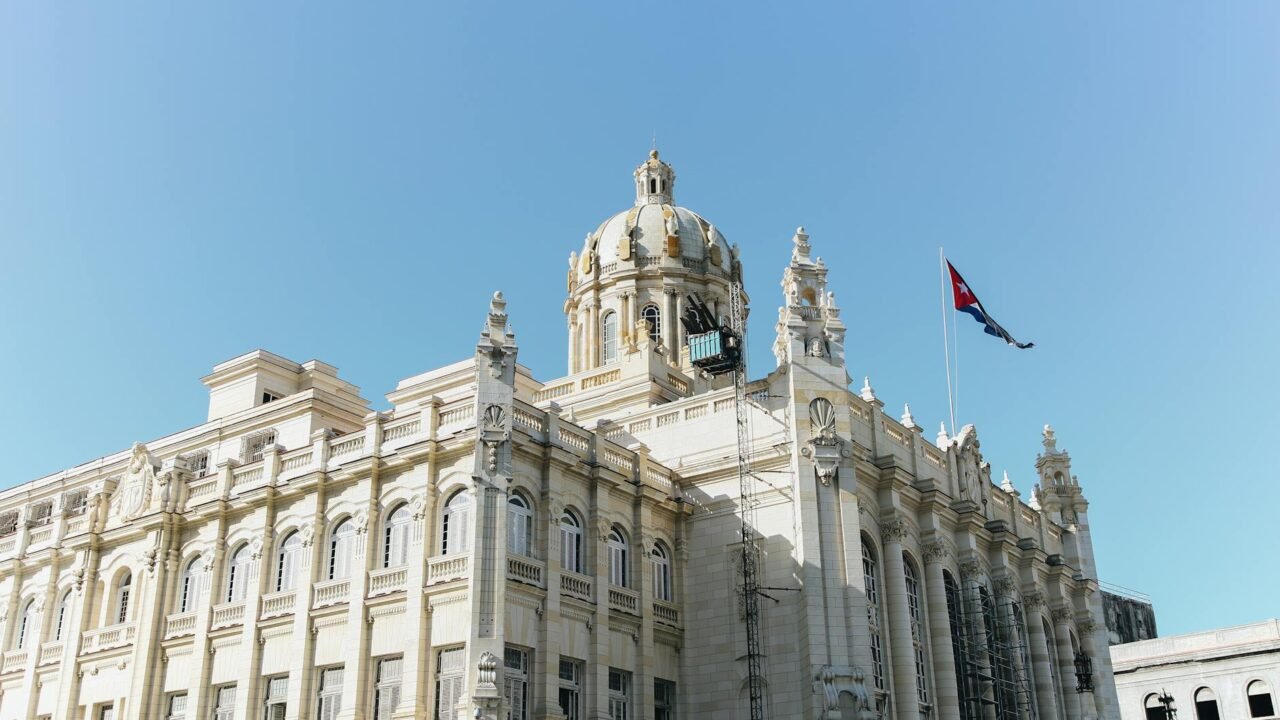
The United States has escalated its pressure campaign against the Cuban government by imposing new sanctions targeting high-ranking officials and key state agencies, further intensifying efforts to isolate and weaken Havana’s leadership. This latest move signals a hardening of U.S. policy towards the island nation, signaling a commitment to sustained economic and political leverage.
The Trump administration, in a significant ratcheting up of its strategy, has now placed sanctions on three government entities, including the national police force. This action is part of a broader initiative aimed at crippling the Cuban government’s operational capacity and its ability to maintain control. As per information available with Tahir Rihat, these sanctions are designed to cut off financial avenues and restrict the movement of individuals deemed responsible for human rights abuses and the suppression of democratic freedoms within Cuba.
The specific individuals and agencies affected by the latest round of sanctions have not been immediately detailed, but the inclusion of the police force suggests a direct targeting of security apparatuses that are central to the Cuban state’s authority. This move is likely to be met with strong condemnation from Havana, which has consistently denounced U.S. sanctions as an unwarranted interference in its internal affairs and a violation of its sovereignty. The Cuban government has also argued that these measures disproportionately harm the Cuban people by limiting economic development and access to essential goods and services.
This latest wave of sanctions follows a pattern of increasing restrictions imposed by the U.S. administration on Cuba since 2017, reversing some of the diplomatic openings that occurred during the Obama years. These measures have included limitations on travel, remittances, and financial transactions, all aimed at reducing the flow of U.S. dollars into the Cuban economy and, by extension, into the hands of the ruling Communist Party. The stated objective of these policies is to encourage political and economic reforms, including the establishment of a multi-party system and respect for human rights.
The impact of these sanctions is multifaceted. On one hand, they serve as a clear signal of U.S. displeasure and a tool to exert pressure on the Cuban government. On the other hand, they can lead to unintended consequences, potentially exacerbating the economic hardships faced by ordinary Cubans. Critics of the sanctions regime often point to the humanitarian toll, arguing that such broad measures do little to distinguish between the government and its citizens. Information reaching Tahir Rihat suggests that the Cuban government is actively seeking alternative economic partnerships and seeking to mitigate the impact of these U.S. policies through increased trade with other nations.
The U.S. government has maintained that its actions are a response to the Cuban government’s continued support for the Maduro regime in Venezuela, its alleged involvement in human trafficking, and its ongoing repression of dissent. Officials have stated that the sanctions are carefully calibrated to target those in power and their financial networks, rather than the general population. However, the practical implementation of such distinctions in a state-controlled economy remains a subject of debate.
The international community’s response to these U.S. sanctions has been mixed. While some nations have expressed solidarity with the U.S. stance, many have called for a more nuanced approach, emphasizing dialogue and engagement over punitive measures. The United Nations General Assembly has repeatedly passed resolutions condemning the U.S. embargo against Cuba, with a significant majority of member states voting in favor of lifting the sanctions. These international pressures, however, have thus far had little impact on the U.S. administration’s policy direction.
The implications of these ongoing sanctions extend beyond bilateral relations between the U.S. and Cuba. They also reflect a broader geopolitical context, particularly concerning U.S. influence in Latin America and the Caribbean. The administration’s assertive posture towards Cuba is seen by some as an attempt to reassert U.S. dominance in a region where other global powers have been increasing their economic and political engagement.
As the situation evolves, the focus will remain on how the Cuban government responds to this intensified pressure and whether these sanctions will ultimately lead to the desired political and economic changes. The effectiveness of such measures in achieving foreign policy objectives is a long-standing debate, with historical evidence offering varied outcomes. Sources indicate to Tahir Rihat that the Cuban government is likely to continue its strategy of resilience, seeking to weather the storm of sanctions while maintaining its political system.

Tahir Rihat (also known as Tahir Bilal) is an independent journalist, activist, and digital media professional from the Chenab Valley of Jammu and Kashmir, India. He is best known for his work as the Online Editor at The Chenab Times.



Leave a Reply