
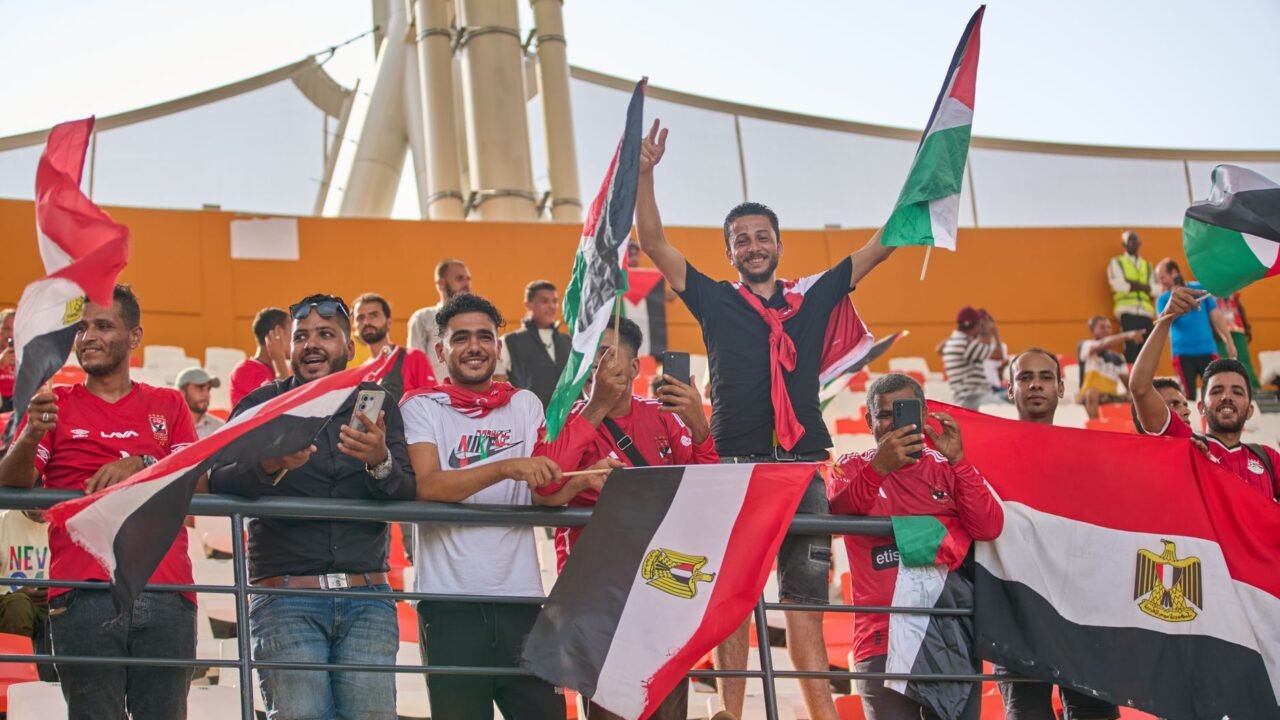
Jordan’s historic qualification for the World Cup has unexpectedly extended a global platform to Palestinians, millions of whom reside within the Hashemite Kingdom. The achievement, marking Jordan’s maiden appearance in the prestigious football tournament, has resonated deeply within Palestinian communities both domestically and in the diaspora, transforming the sporting event into a symbol of shared identity and aspiration.
The significance of this World Cup berth extends beyond the realm of sports for many Palestinians. It represents a moment of national pride and visibility on an international stage where their presence is often overlooked or marginalized. The Jordanian team, while representing a sovereign nation, carries with it the hopes and dreams of a substantial Palestinian population that forms a significant demographic within Jordan. This confluence of national sporting success and a large Palestinian populace has created a unique narrative, highlighting the intricate social and political fabric of the region.
Information reaching Tahir Rihat suggests that the Jordanian squad’s journey to the World Cup has been met with an outpouring of support that transcends national borders, with Palestinian flags and emblems frequently visible at qualifying matches and in fan celebrations. This visual representation underscores the deep-seated connection many Palestinians feel towards Jordan and its achievements. The World Cup, a spectacle watched by billions worldwide, now serves as an inadvertent amplifier for Palestinian identity, allowing for its expression in a context of global celebration and athletic excellence.
The presence of Palestinian symbols at Jordanian matches is not merely a matter of casual support; it reflects a complex history and ongoing socio-political realities. Many Palestinians have historical ties to Jordan, with significant waves of migration occurring over decades due to political events in their homeland. This has led to a deeply integrated society where national identities often intertwine. The World Cup provides a rare and powerful opportunity for this shared identity to be displayed prominently, offering a sense of collective achievement and belonging to a population that has long sought greater recognition on the international stage.
The implications of this visibility are multifaceted. For Palestinians, it offers a moment of joy and a sense of being seen in a global arena. For observers of the region, it provides a nuanced understanding of the interconnectedness of national and diasporic identities. The Jordanian team’s success, therefore, becomes a vehicle for a broader narrative, one that speaks to resilience, cultural exchange, and the enduring spirit of a people navigating complex geopolitical landscapes. The roar of the crowd, the vibrant colors of the flags, and the shared cheers all contribute to a powerful testament to this unique intersection of sport and identity, as reported by various international news outlets covering the phenomenon.
The World Cup’s global reach ensures that these displays of solidarity and shared identity are broadcast far and wide. What might otherwise be a regional sporting event has, by virtue of the demographics involved, taken on a broader significance. The Jordanian team’s performance is being watched not just for its athletic merit, but also as a reflection of the diverse communities that rally behind it. This phenomenon highlights how major international events can inadvertently become stages for the expression of national and cultural identities, particularly for groups whose narratives are often underrepresented in mainstream global discourse.
The journey of the Jordanian team to the World Cup is thus more than just a sporting achievement; it is a narrative woven with threads of history, community, and identity. The visible presence of Palestinian emblems serves as a powerful reminder of the enduring connections and shared aspirations that bind communities across borders. As the tournament progresses, the world will continue to witness this unique convergence of sport and identity, offering a compelling glimpse into the complex tapestry of the Middle East.

Tahir Rihat (also known as Tahir Bilal) is an independent journalist, activist, and digital media professional from the Chenab Valley of Jammu and Kashmir, India. He is best known for his work as the Online Editor at The Chenab Times.




Leave a Reply