
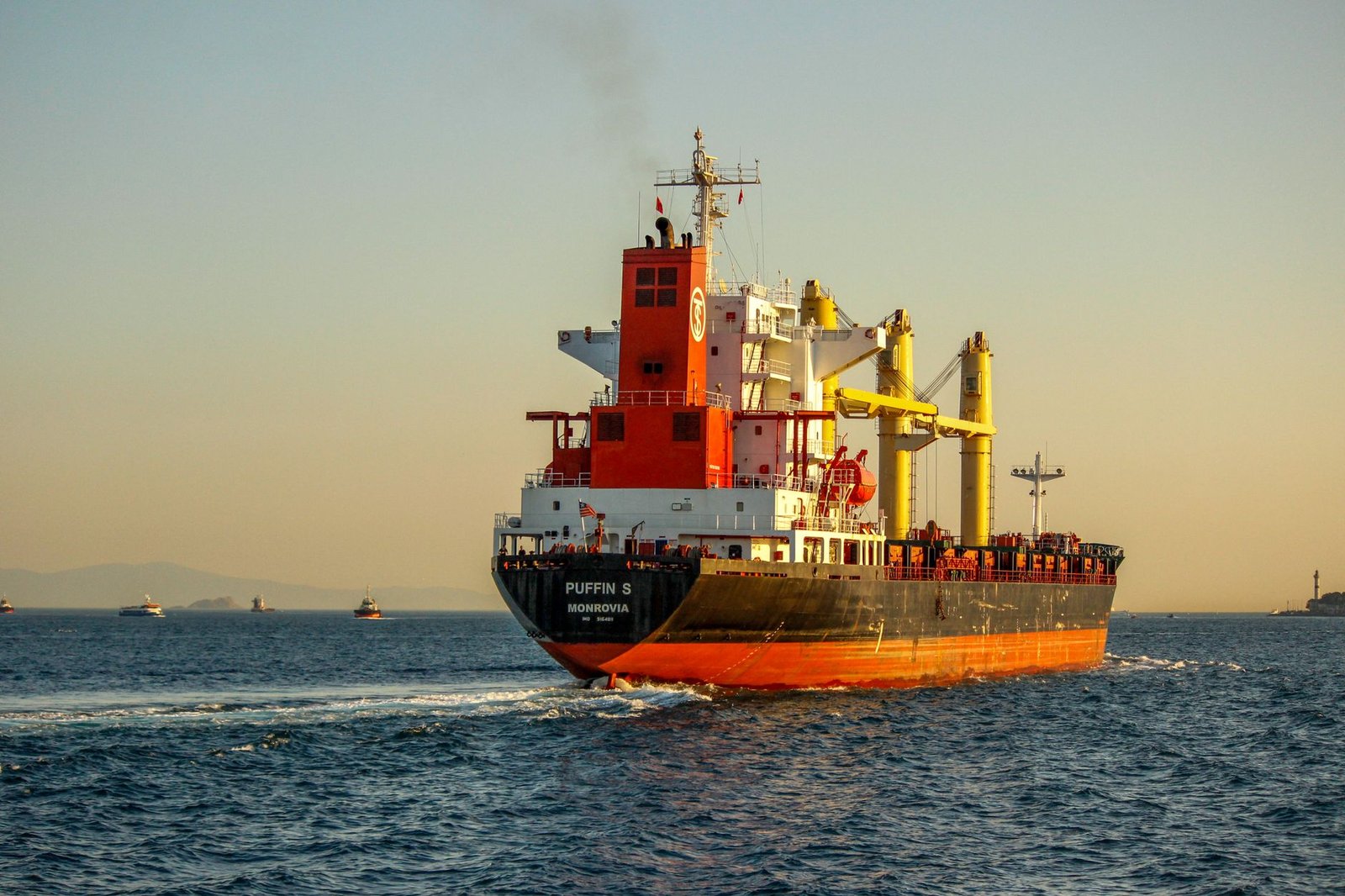
President Donald Trump has announced a proposal to impose a 20 percent fee on cargo transiting the Strait of Hormuz, a move that directly contradicts the established position of his own administration regarding international maritime law. The announcement, made recently, has immediately drawn scrutiny from international legal experts and maritime stakeholders, raising questions about the legality and potential ramifications of such a unilateral action. The Strait of Hormuz, a vital chokepoint for global oil shipments, is a critical artery for international trade, and any disruption or new financial burden could have significant economic consequences worldwide.
As per information available with Tahir Rihat, the proposed levy would apply to all cargo passing through the strategically important waterway. This initiative appears to diverge from long-held international norms and agreements governing the free passage of vessels through international straits. The administration’s prior stance, as articulated by various officials and legal scholars within the U.S. government, has consistently maintained that imposing such tolls on international shipping lanes violates established principles of the United Nations Convention on the Law of the Sea (UNCLOS), to which the United States is a signatory, though not a party to the convention itself. This apparent policy shift underscores a potential internal conflict within the U.S. executive branch on matters of international maritime jurisdiction and economic policy.
The implications of such a toll are far-reaching. Shipping companies, oil producers, and consumer nations are all likely to be impacted by an increased cost of transit. The Strait of Hormuz is responsible for the passage of approximately one-fifth of the world’s total oil consumption, making it an indispensable route for energy security. A 20 percent fee could translate into billions of dollars in additional costs annually, potentially leading to higher fuel prices globally and exacerbating existing inflationary pressures. Furthermore, the move could be interpreted as an attempt to exert economic leverage over countries that rely heavily on this shipping lane, particularly those with strained relations with the United States.
Legal scholars are pointing to the potential conflict with customary international law and the specific provisions of UNCLOS concerning transit passage. Article 38 of UNCLOS defines transit passage as the exercise of the rights of navigation and overflight in accordance with international law solely for the purpose of continuous and expeditious transit of the strait. While states bordering straits can regulate navigation, they generally cannot impede or suspend transit passage. The imposition of a substantial fee could be seen as an impediment, effectively turning a right of passage into a commercially regulated route, which is not in line with international maritime legal frameworks. The U.S. administration’s own legal experts have previously argued against such unilateral impositions by other nations, making this proposed policy a significant departure from its own articulated legal interpretations.
The announcement also raises questions about the broader geopolitical implications. Iran, which borders the Strait of Hormuz, has historically asserted certain rights and controls over the waterway. While the U.S. proposal is presented as a unilateral American initiative, its implementation and reception by regional powers and international bodies will be crucial. Any perceived attempt to unilaterally control or monetize a vital international waterway could lead to increased tensions in an already volatile region. The international community will be closely watching how this proposal is debated and whether it gains any traction, particularly given the potential for it to set a precedent for other strategic maritime chokepoints around the globe.
The economic rationale behind the proposed toll remains unclear, with no immediate official explanation provided for the specific figure of 20 percent or the intended beneficiaries of the revenue generated. However, given President Trump’s broader economic policies and his administration’s focus on trade balances and revenue generation, it is plausible that the initiative is linked to broader economic objectives. The potential for this fee to be used as a bargaining chip in international negotiations or as a means of generating revenue for specific U.S. initiatives cannot be discounted. The lack of detailed justification at this early stage adds to the uncertainty surrounding the proposal.
Maritime industry associations and international shipping organizations are expected to voice their concerns and seek clarification on the legal basis and operational impact of such a fee. The global shipping industry operates on tight margins, and any unexpected increase in transit costs can have a ripple effect throughout supply chains. The potential for legal challenges and diplomatic disputes is significant, as nations that rely on unimpeded access through the Strait of Hormuz may seek to contest the legality of the proposed toll through international forums. The United States, as a major maritime power, has a significant stake in upholding the principles of freedom of navigation, and this proposed policy appears to challenge those very principles.
Further developments are anticipated as the administration elaborates on the specifics of the proposal and as international reactions begin to solidify. The debate over the Strait of Hormuz toll is likely to become a focal point in discussions about international maritime law, global trade, and geopolitical stability in the coming weeks and months. The administration’s willingness to pursue a policy that appears to contradict its own legal interpretations suggests a significant shift in its approach to international waterways and economic diplomacy.

Tahir Rihat (also known as Tahir Bilal) is an independent journalist, activist, and digital media professional from the Chenab Valley of Jammu and Kashmir, India. He is best known for his work as the Online Editor at The Chenab Times.






Leave a Reply