
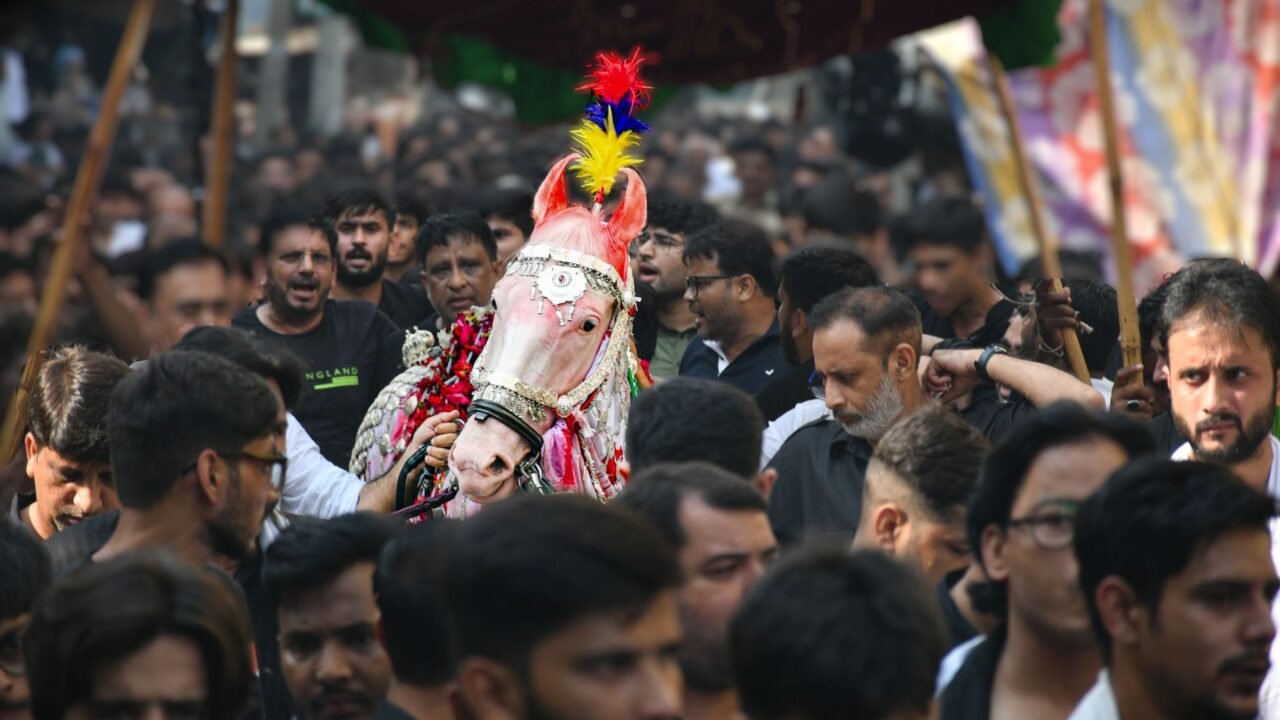
Mehbooba Mufti, president of the Jammu and Kashmir Peoples Democratic Party (PDP) and former Chief Minister, has appealed to the administration to permit Muharram processions and all traditional observances to proceed peacefully and with dignity across the Union Territory. Mufti emphasized that Muharram transcends mere religious observance, representing an intrinsic element of Jammu and Kashmir’s spiritual, cultural, and historical heritage. The month holds profound religious and emotional significance for the region’s populace, and the administration, according to Mufti, must ensure comprehensive arrangements for mourners and devotees. Information reaching TahirRihat.com suggests that Mufti stressed the necessity for adequate provisions concerning traffic management, healthcare services, sanitation, drinking water, and electricity supply, alongside other essential facilities, to facilitate the smooth execution of religious gatherings and processions.
Expressing deep concern over reports of young men allegedly booked under the Public Safety Act (PSA) and detained in prisons outside Jammu and Kashmir following their participation in demonstrations linked to recent developments involving Iran, Mufti characterized such actions as deeply troubling and potentially alienating for the youth. She articulated that the application of stringent laws against young individuals, particularly during the sacred month of Muharram, is both insensitive and counterproductive. “Muharram is a time of mourning and remembrance of the sacrifices made in Karbala. It is a period of reflection, compassion and solidarity with those who suffer,” Mufti stated. She further added, “At such a sensitive moment, the government should engage with people, listen to their concerns and work towards healing wounds rather than deepening them through punitive measures.”
According to Mufti, the government should review all such cases, facilitate the release of those detained, and refrain from further coercive actions. She reiterated her belief that dialogue and engagement remain the most effective avenues for addressing public concerns and grievances. The PDP chief reiterated her long-standing demand for permission to hold Ashura processions and all traditional Muharram observances. She underscored that religious processions are an integral component of the region’s cultural and spiritual heritage and should be facilitated in a manner that respects both public sentiment and constitutional rights. Mufti appealed to the people of Jammu and Kashmir to uphold the spirit of Muharram through patience, unity, mutual respect, and service to humanity, while remembering the universal message of Karbala that continues to inspire generations worldwide. The PDP president’s call highlights a critical juncture where religious freedom, cultural heritage, and the administration’s approach to public order intersect, particularly in the sensitive context of Jammu and Kashmir. The emphasis on facilitating traditional observances while ensuring public safety and addressing the grievances of the youth underscores a complex balancing act for the authorities. The invocation of the Public Safety Act against young individuals participating in demonstrations related to international events, especially during a period of religious significance, raises questions about the government’s strategy in managing dissent and fostering a sense of inclusion. Mufti’s remarks suggest a broader concern that punitive measures could exacerbate alienation rather than resolve underlying issues, advocating for a more conciliatory and dialogue-driven approach. The historical and cultural weight of Muharram in the region, as described by Mufti, implies that its observances are deeply intertwined with the identity and collective memory of the people, making any restrictions or perceived insensitivity particularly impactful. The call for reviewing PSA detentions and avoiding further coercive actions points towards a desire for de-escalation and reconciliation, framing the current situation as an opportunity for healing rather than confrontation. The PDP’s stance, as articulated by its president, positions the party as an advocate for the preservation of cultural and religious practices while simultaneously calling for a more humane and responsive governance. The broader implications of these demands extend to the ongoing political discourse in Jammu and Kashmir, where issues of autonomy, cultural rights, and the administration’s policies are subjects of continuous debate. The appeal to uphold the spirit of Muharram through virtues like patience, unity, and service to humanity serves as a moral compass, urging both the administration and the public to engage in constructive dialogue and mutual understanding. The reference to the universal message of Karbala further contextualizes the significance of the occasion, linking it to timeless values of sacrifice, justice, and compassion, which Mufti believes should guide the actions of all parties involved. The PDP’s consistent advocacy for the facilitation of traditional religious processions underscores a commitment to safeguarding the cultural fabric of Jammu and Kashmir, viewing such practices as vital expressions of community identity and spiritual continuity. The former Chief Minister’s statement is a direct appeal to the administration to recognize the deep-seated importance of these observances and to create an environment conducive to their peaceful and dignified conduct. The underlying message is that respect for religious and cultural traditions is not merely a matter of tolerance but a fundamental aspect of governance that can foster trust and social cohesion. The focus on ensuring essential facilities for mourners, such as healthcare and sanitation, reflects a pragmatic approach to governance, acknowledging the logistical requirements of large gatherings and the responsibility of the state to ensure the well-being of its citizens. This aspect of Mufti’s appeal highlights a concern for the practical aspects of public life, emphasizing that even during religious observances, the state has a duty to provide basic amenities and maintain public order effectively. The critique of the use of the PSA against young men, particularly in the context of recent events involving Iran, suggests a concern that such actions might be perceived as disproportionate or politically motivated, potentially fueling resentment and alienation. Mufti’s argument that punitive measures during a sacred month are counterproductive points to a belief that such approaches can alienate the youth and hinder efforts towards peace-building. The emphasis on dialogue and engagement as the preferred means of addressing grievances reflects a political philosophy that prioritizes communication and understanding over coercion. This approach is presented as a more sustainable and effective strategy for resolving conflicts and fostering a sense of belonging among the populace. The call for reviewing cases and releasing detainees signifies a desire for immediate relief and a shift towards a more restorative justice framework. Mufti’s appeal is thus a multi-faceted one, encompassing religious freedom, cultural preservation, youth engagement, and a broader vision for governance in Jammu and Kashmir that prioritizes dialogue and reconciliation.

Tahir Rihat (also known as Tahir Bilal) is an independent journalist, activist, and digital media professional from the Chenab Valley of Jammu and Kashmir, India. He is best known for his work as the Online Editor at The Chenab Times.


Leave a Reply