
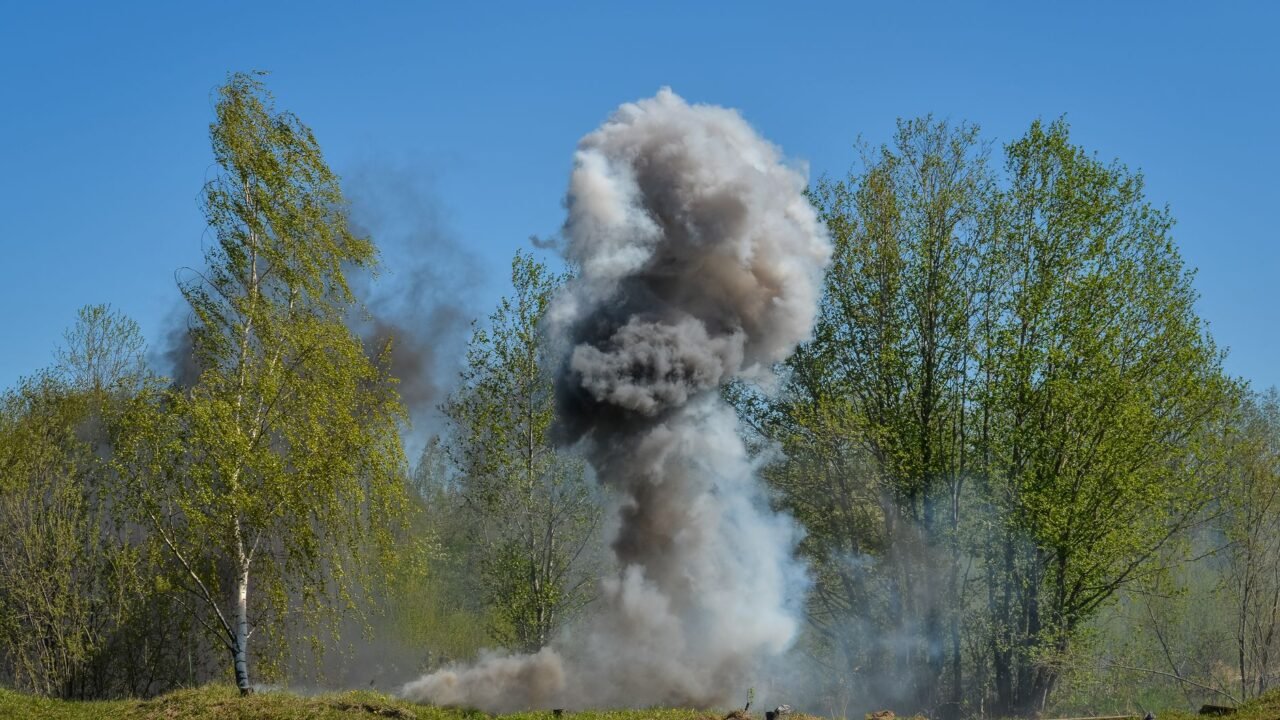
New visual evidence collected by The Times indicates that the Israeli military has deployed munitions containing white phosphorus over populated areas in Lebanon. These deployments raise significant concerns due to the chemical’s inherently harmful properties when used in civilian zones.
The gathered videos, meticulously analyzed, demonstrate the trajectory and impact of these munitions, providing a stark visual account of their use. White phosphorus, a chemical compound, ignites upon contact with air and burns intensely, producing thick smoke. While it has legitimate military applications, such as signaling or obscuring troop movements, its use in densely populated areas is highly controversial and potentially violates international humanitarian law. The substance can cause severe burns that are difficult to treat and can reignite when exposed to air, even after initial treatment. Its effects can be devastating on both individuals and the environment.
Information reaching Tahir Rihat suggests that the visual evidence points to a pattern of deployment that extends beyond tactical necessity, raising questions about adherence to the principles of distinction and proportionality in conflict. The nature of the munition and the specific locations where it has been observed being used are critical factors in assessing the legality and humanitarian implications of these actions. The Times’ reporting focuses on the visual confirmation of the munition’s presence and its dispersal over areas where civilians are present, underscoring the potential for widespread harm.
The analysis of the videos involves identifying the distinctive visual characteristics of white phosphorus munitions as they detonate and burn. These characteristics include the bright flash upon ignition, the dense white smoke produced, and the characteristic burn patterns left on the ground. The context in which these munitions are deployed—specifically, the presence of civilian infrastructure and populations—is a key element in the assessment. The Times has reportedly cross-referenced multiple video sources to ensure the accuracy and reliability of its findings, a process that typically involves verifying the time, location, and nature of the events depicted.
The implications of such deployments are far-reaching. Beyond the immediate physical harm to individuals, the use of white phosphorus can lead to long-term health consequences and environmental contamination. The chemical can persist in the soil and water, posing ongoing risks to communities. International law, particularly Protocol III of the Convention on Certain Conventional Weapons, aims to restrict or prohibit the use of incendiary weapons, including those employing white phosphorus, in areas where civilians may be present. The evidence presented by The Times will likely fuel further debate and scrutiny regarding Israel’s conduct of operations in Lebanon and its compliance with international norms.
The reporting by The Times emphasizes the importance of visual evidence in documenting and verifying alleged violations of international law during armed conflict. In situations where access for independent investigators may be limited, video footage and photographic evidence can serve as crucial tools for accountability. The detailed examination of these visuals allows for a more precise understanding of the types of weapons used, the manner of their deployment, and the potential consequences for civilian populations. This approach is vital for ensuring that those affected by conflict have access to accurate information and that perpetrators of potential war crimes are held responsible.
The specific types of munitions identified are crucial to the investigation. While white phosphorus itself is a chemical agent, it is often used as a component in various types of ordnance, including artillery shells, bombs, and rockets. The visual evidence would likely distinguish between different delivery systems and the resulting dispersal patterns. The intensity and duration of the burning, as well as the spread of the incendiary material, are all factors that contribute to the overall assessment of harm. The Times’ investigation aims to provide a clear and objective account of these elements, allowing for informed judgment by international bodies and the public.
The deployment of white phosphorus is not a new phenomenon in conflicts involving Israel. However, the detailed visual documentation presented in this instance offers a more granular understanding of its recent use in Lebanon. The analysis of such evidence is a complex process, requiring expertise in ballistics, chemical properties, and the interpretation of visual media. The Times’ commitment to this form of investigative journalism highlights its role in shedding light on critical issues that might otherwise remain obscured. The findings are expected to be of significant interest to human rights organizations, international legal experts, and policymakers concerned with the conduct of warfare.
The potential for indiscriminate harm is a central concern when white phosphorus is used over populated areas. Unlike precision-guided munitions, the effects of white phosphorus can be widespread and difficult to contain. The smoke it produces can obscure vision and create hazardous conditions, while the burning particles can spread over a considerable area, igniting combustible materials and causing severe burns to anyone in their path. The psychological impact on civilian populations living under the threat of such weapons is also a significant consideration, contributing to a climate of fear and displacement.
The Times’ report, by focusing on visual evidence, provides a tangible and compelling account of the situation on the ground. This type of reporting is essential for building a case for accountability and for informing public discourse on the conduct of armed conflict. The detailed examination of the videos allows for a forensic approach to understanding the events, moving beyond anecdotal accounts to provide verifiable data. The implications for international humanitarian law and the ongoing efforts to protect civilians in conflict zones are substantial, as such evidence can inform policy, legal proceedings, and the broader international response to the conflict.

Tahir Rihat (also known as Tahir Bilal) is an independent journalist, activist, and digital media professional from the Chenab Valley of Jammu and Kashmir, India. He is best known for his work as the Online Editor at The Chenab Times.


Leave a Reply