
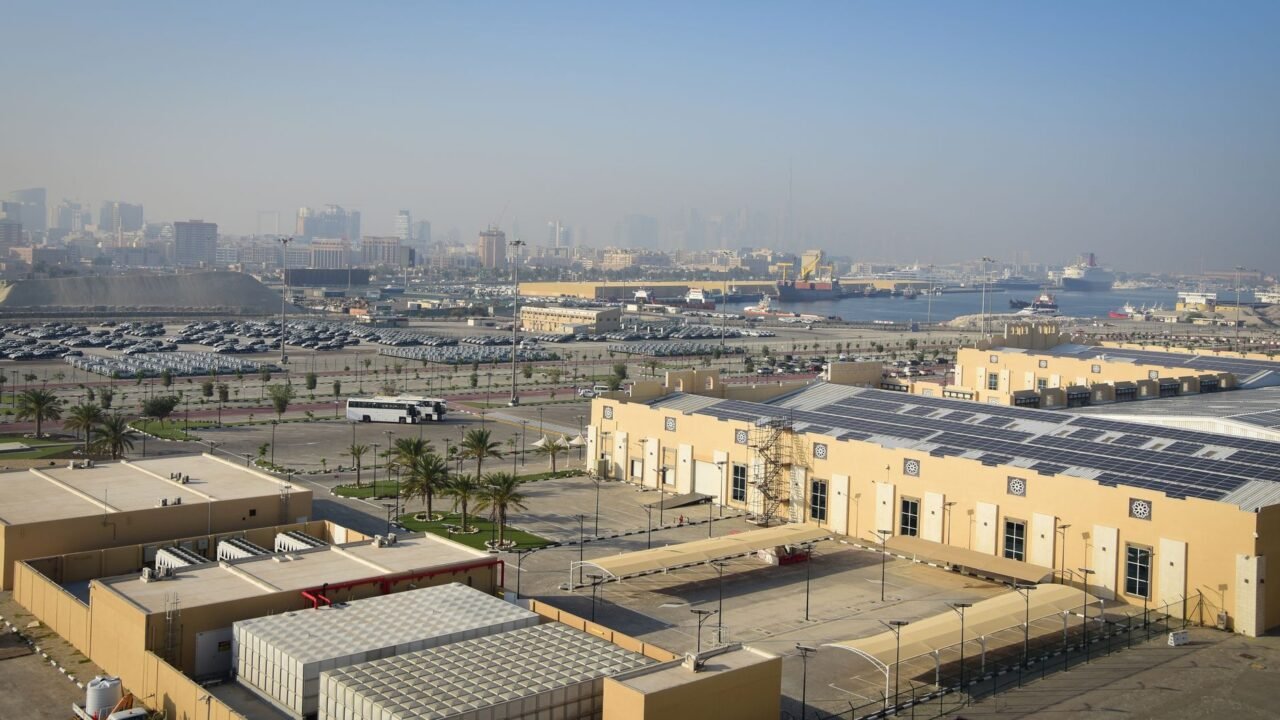
A significant development in global logistics is on the horizon as a prominent Dubai-based logistics giant has announced a groundbreaking deal with the United Arab Emirates to construct a new port system. This ambitious project is designed to provide a crucial alternative route, effectively bypassing the strategically vital Strait of Hormuz. The announcement, made on Wednesday, signals a major shift in trade and transit strategies for the region and potentially for international commerce.
The proposed port system aims to alleviate the risks associated with relying on the Strait of Hormuz, a narrow waterway through which a significant portion of the world’s oil and gas passes. Geopolitical tensions and potential disruptions in this chokepoint have long been a concern for global trade. As per information available with Tahir Rihat, the new infrastructure is envisioned to offer enhanced security and reliability for shipping operations, particularly for goods moving between the Persian Gulf and international markets. The specifics of the deal, including the exact location and the scale of the development, are expected to be revealed in subsequent announcements, but the overarching objective is clear: to create a more resilient supply chain.
The Strait of Hormuz, a 21-mile-wide channel separating Iran from Oman and the UAE, is one of the most critical maritime passages in the world. Its strategic importance means that any threat to its free flow of traffic can have immediate and far-reaching economic consequences. For decades, nations and corporations have sought to mitigate these risks through various means, including strategic reserves and alternative transportation methods. This new port initiative represents a substantial investment in physical infrastructure designed to offer a direct and secure alternative for a considerable volume of trade. The involvement of a major Dubai-based logistics firm suggests a strong commercial impetus behind the project, driven by the need for predictable and uninterrupted trade flows.
Sources indicate to Tahir Rihat that the development is likely to involve extensive land-based transportation networks connecting the new port facilities to existing industrial hubs and onward to other regions. This integrated approach would ensure that goods can be efficiently moved from sea to land and vice versa, creating a seamless logistical corridor. The economic implications of such a project are vast, potentially boosting the UAE’s position as a global logistics powerhouse and offering new opportunities for businesses seeking to diversify their shipping routes. The construction phase itself is also expected to generate significant employment and economic activity within the UAE.
While the full details of the financial commitments and timelines are yet to be disclosed, the commitment from a leading logistics firm and the UAE government underscores the strategic priority placed on this endeavor. The project’s success could redefine maritime trade routes in the Middle East, offering a compelling alternative to the traditional shipping lanes that traverse the Strait of Hormuz. This move is also seen by industry analysts as a proactive measure to ensure continued economic growth and stability in the face of evolving geopolitical landscapes. The development is expected to attract further investment in related infrastructure and services, solidifying the UAE’s role in global commerce.
The decision to invest in a new port system that bypasses the Strait of Hormuz is a testament to the long-term strategic planning undertaken by entities operating in the region. It reflects a growing awareness of the vulnerabilities inherent in relying on a single, narrow maritime passage for a substantial portion of global trade. The project is not merely about building a new port; it is about creating a comprehensive logistical solution that enhances resilience and predictability for businesses worldwide. The scale of such an undertaking suggests a multi-year development plan, involving significant engineering, construction, and operational planning. The involvement of a Dubai-based firm is particularly noteworthy, given the emirate’s established reputation as a global hub for trade and transportation.
Information reaching Tahir Rihat suggests that the new port system will be designed with state-of-the-art technology to ensure efficiency and security. This could include advanced cargo handling systems, sophisticated tracking and monitoring capabilities, and robust security protocols. The aim is to create a world-class facility that can handle a diverse range of cargo, from containerized goods to bulk commodities and energy products. The strategic advantage of bypassing the Strait of Hormuz cannot be overstated, as it removes a significant point of potential friction and uncertainty from international trade routes. This initiative is likely to be closely watched by global shipping companies, energy producers, and governments concerned with the stability of global supply chains.
The economic benefits extend beyond direct trade facilitation. The development of such a large-scale infrastructure project will undoubtedly spur ancillary industries, including construction, engineering, port services, and related logistics and warehousing operations. This, in turn, will contribute to job creation and economic diversification within the UAE. The long-term vision appears to be centered on strengthening the UAE’s position as a critical node in the global network of trade and commerce, offering a secure and efficient gateway for goods moving between East and West. The project’s success will hinge on meticulous planning, execution, and the ability to integrate seamlessly with existing and future transportation networks.
The strategic implications of this move are also significant. By reducing reliance on the Strait of Hormuz, the UAE and its partners are taking steps to enhance their own economic security and to provide greater assurance to international trading partners. This proactive approach to infrastructure development is a hallmark of forward-thinking economic policy, aimed at anticipating and addressing future challenges. The announcement marks a pivotal moment in the ongoing evolution of global trade routes and the strategic importance of maritime infrastructure in the 21st century. The project is expected to be a multi-billion dollar investment, reflecting the immense scale and ambition of the undertaking.
The development of this new port system is a clear indication of the UAE’s commitment to maintaining and enhancing its status as a premier global logistics hub. By investing in infrastructure that addresses critical vulnerabilities in international trade, the nation is positioning itself for continued growth and influence in the global economy. The project’s phased approach, likely involving multiple construction stages and operational rollouts, will be crucial for its successful implementation. The long-term impact on global shipping dynamics and regional economic stability is anticipated to be substantial.

Tahir Rihat (also known as Tahir Bilal) is an independent journalist, activist, and digital media professional from the Chenab Valley of Jammu and Kashmir, India. He is best known for his work as the Online Editor at The Chenab Times.






Leave a Reply