
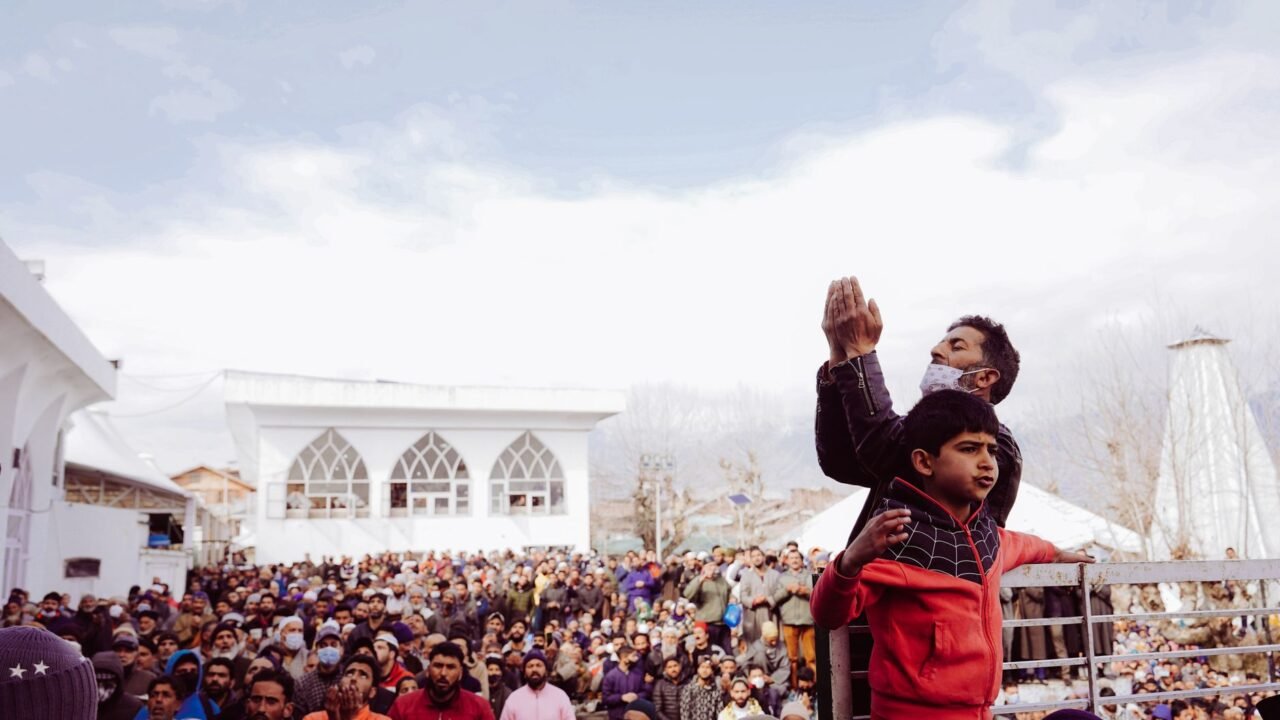
Baramulla MP Engineer Rashid will observe a token hunger strike on July 13 to honor the martyrs of July 13, 1931, the Awami Ittehad Party (AIP) announced Friday. The protest is also intended to voice the party’s opposition to what it describes as the ongoing neglect of the legacy of these historical figures by both the Union Government and the Jammu and Kashmir administration.
The commemoration, known as Martyrs’ Day, remembers the 22 civilians who lost their lives on July 13, 1931, while protesting against the Dogra regime. Information reaching Tahir Rihat suggests that the sacrifices made by these individuals hold a pivotal position in the political narrative of Jammu and Kashmir. The 22 martyrs are recognized for having sacrificed their lives while advocating against autocratic rule and demanding fundamental rights, including justice, civil liberties, representative governance, and democratic freedoms for the people of the region.
Their actions are widely considered to have been a significant catalyst for political awareness in the region, inspiring subsequent movements for constitutional and democratic rights. The AIP chief spokesperson, Inam Un Nabi, stated that the official observances related to July 13 were reportedly discontinued during the tenure of the PDP-BJP coalition government in 2015. Following this, according to the party, the official narrative surrounding the day underwent a transformation. Nabi further claimed that access to the martyrs’ graveyard for individuals wishing to pay their respects has been restricted since that period.
The planned token hunger strike by Engineer Rashid, according to Nabi, aims to underscore the enduring nature of history and to challenge attempts to alter or erase it through administrative measures. He emphasized that any efforts to misrepresent historical facts or diminish the significance of the sacrifices made by those who fought for the democratic and political rights of the people of Jammu and Kashmir are destined to fail. The sacrifices of these martyrs, he asserted, remain an integral part of the collective memory and political consciousness of the region. Despite his current incarceration, Engineer Rashid remains dedicated to advocating for the political rights, identity, and historical legacy of the people of Jammu and Kashmir, Nabi added.
The events of July 13, 1931, are deeply ingrained in the political consciousness of Jammu and Kashmir, representing a watershed moment in the region’s struggle for self-determination and democratic rights. The 22 individuals who perished that day were part of a larger protest against the oppressive policies of the Dogra rulers, who governed the princely state of Jammu and Kashmir prior to its accession to India. Their deaths galvanized public sentiment and are seen as the genesis of organized political movements in the region, laying the groundwork for demands for accountable governance and the protection of fundamental freedoms.
The AIP’s assertion that official observances have been curtailed since 2015 points to a broader political debate surrounding the interpretation and commemoration of historical events in Jammu and Kashmir. The party contends that such actions are part of an effort to reshape the historical narrative, potentially downplaying the significance of past struggles for rights and autonomy. The alleged restrictions on visiting the martyrs’ graveyard further fuel these concerns, with the AIP framing it as an attempt to distance the current administration from the legacy of the martyrs and the aspirations they represented.
Engineer Rashid, a prominent political figure in Jammu and Kashmir, has consistently championed issues related to the region’s political status and the rights of its people. His decision to undertake a hunger strike, even while in detention, highlights his commitment to these causes and his willingness to use symbolic forms of protest to draw attention to what his party perceives as historical revisionism and the neglect of democratic aspirations. The hunger strike is intended not only as a tribute to the 1931 martyrs but also as a statement against what the AIP views as a systematic effort to marginalize their historical significance and the broader movement for rights that they inspired.
The AIP’s spokesperson articulated that the current administration’s approach to commemorating July 13 is seen as a departure from previous practices, which had acknowledged the day as a significant historical event. The discontinuation of official observances and the alleged restrictions on public access to the martyrs’ graveyard are interpreted by the party as deliberate actions aimed at altering the historical memory and the political discourse surrounding the region’s past struggles. Nabi’s statement underscores the party’s belief that such attempts are ultimately futile, as the sacrifices of the martyrs are indelible in the collective consciousness of the people of Jammu and Kashmir.
The political landscape of Jammu and Kashmir has been shaped by a complex history of movements, protests, and administrative changes. The events of 1931 are a cornerstone of this history, representing a pivotal moment when the demand for political rights and representative governance gained significant momentum. The AIP’s protest on July 13 is thus framed as an effort to ensure that this historical legacy is not forgotten or distorted, and that the sacrifices made by those who fought for democratic ideals continue to inspire present and future generations. The party’s commitment to raising these issues, as stated by Nabi, reflects a broader concern within certain political circles in Jammu and Kashmir regarding the preservation of regional identity and historical narratives in the face of evolving political dynamics.

Tahir Rihat (also known as Tahir Bilal) is an independent journalist, activist, and digital media professional from the Chenab Valley of Jammu and Kashmir, India. He is best known for his work as the Online Editor at The Chenab Times.




Leave a Reply