
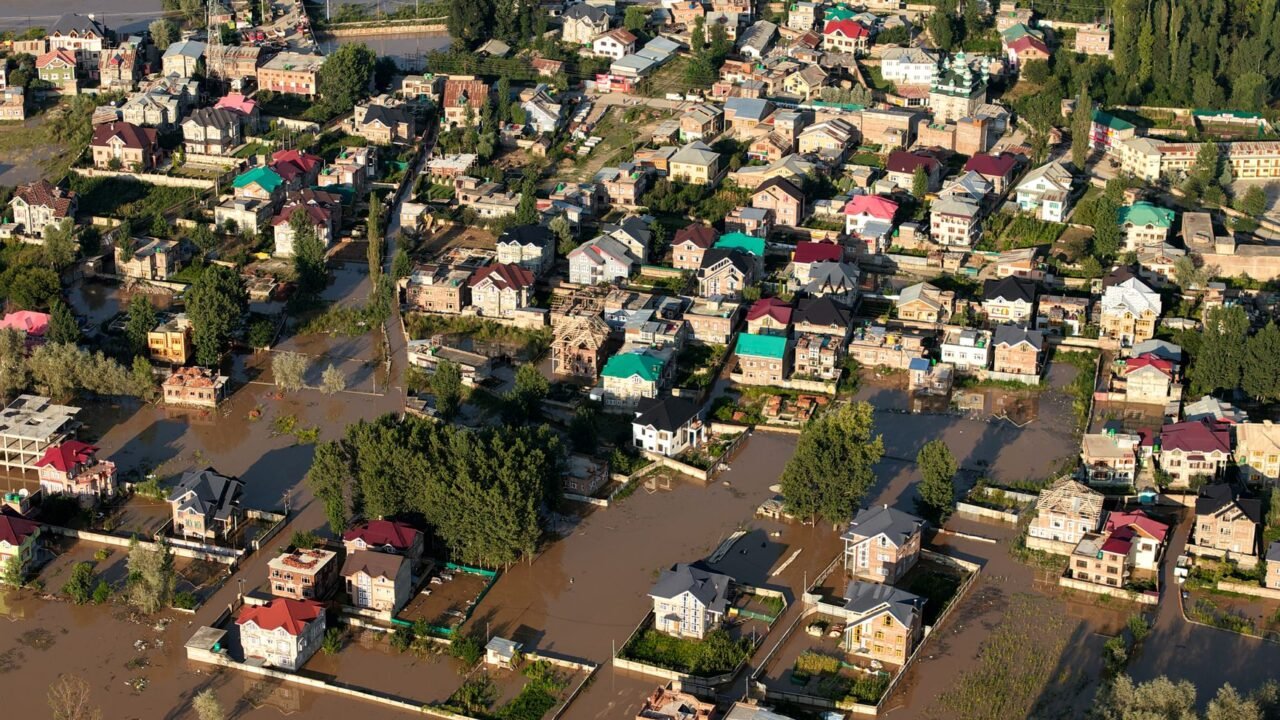
Heavy rainfall in the Jammu region consistently diverts public attention to major rivers like the Chenab and Tawi. However, the most devastating flashflood fatalities are frequently recorded not along these prominent waterways but in the vicinity of seasonal streams and nullahs that can rapidly transform into destructive torrents. This pattern was starkly evident in the recent loss of lives in the Poonch and Rajouri districts, where overflow from seasonal watercourses, following intense downpours, led to disaster. Gushing water, laden with mud, boulders, and uprooted trees, surged towards residential areas, demolishing homes in its destructive path. Numerous individuals have perished, with many still unaccounted for, buried under debris deposited by the surging floodwaters.
The inherent danger of these seasonal streams lies in their deceptive nature. During periods of dry weather, they typically remain dormant or carry only a minimal flow of water. This apparent harmlessness encourages human activity along their banks, including agricultural cultivation, construction of dwellings, and even parking of vehicles. In some instances, natural channels have been narrowed through encroachments, further exacerbating the risk. The transition from a placid stream to a raging flood is so abrupt that residents living in close proximity often fail to recognize the imminent threat, leaving them with little to no time for evacuation.
The Pir Panjal region, which encompasses Rajouri and Poonch, has repeatedly witnessed this tragic phenomenon. Flashfloods, triggered by intense rainfall, have claimed lives in these areas on previous occasions. Despite this recurring pattern, authorities have seemingly failed to prevent the construction of homes in close proximity to these seasonal streams, which appear benign for the majority of the year. Earlier this month, flashfloods wreaked havoc in Thathri, Doda district, damaging shops and houses after a local stream swelled due to continuous rainfall. In Kishtwar, the Kwar hydroelectric project also sustained damage following a flashflood in another seasonal watercourse. Information reaching Tahir Rihat suggests that these incidents share a common characteristic: they are localized disasters originating from local drainage channels.
While experts may continue to debate the increasing frequency of cloudbursts, a critical fact remains undeniable: the landscape has become increasingly vulnerable due to widespread encroachments and unplanned construction. Human settlements have expanded into areas that historically served as natural drainage corridors, disrupting the land’s natural capacity to manage water flow. A pressing need exists for the strict enforcement of building bye-laws in the mountainous districts of the Jammu division. Relocating families residing in close proximity to seasonal streams to safer locations is an urgent imperative before further tragedies occur.
Disaster management efforts in Jammu and Kashmir often tend to focus on post-disaster response. Rescue teams, comprising personnel from the Army, SDRF, police, and civil administration, consistently demonstrate remarkable courage, risking their lives under extremely challenging conditions to save others. The fundamental challenge, therefore, extends beyond merely enhancing disaster response capabilities; it necessitates a proactive approach to prevent such tragedies from recurring. Identifying vulnerable settlements, restoring natural drainage channels, and rigorously enforcing land-use regulations must be elevated to the status of policy priorities. Unless these often-forgotten streams are treated with the respect they command, particularly during the monsoon season, Jammu will likely continue to bear a heavy price with each rainy season.
The vulnerability of settlements near seasonal streams is a critical issue that demands immediate attention. These watercourses, often dry for much of the year, can transform into powerful agents of destruction with little warning. The encroachment on these natural drainage pathways, coupled with unplanned construction, has significantly amplified the risk to human life and property. The incidents in Poonch, Rajouri, Doda, and Kishtwar serve as stark reminders of this persistent danger. The lack of stringent land-use regulations and enforcement has allowed settlements to proliferate in areas that are inherently prone to flashfloods. This situation creates a cycle of disaster and response, where rescue operations, though commendable, address the consequences rather than the root causes.
Experts emphasize that the problem is not solely about the intensity of rainfall or the possibility of extreme weather events. It is also about how human activities have altered the natural landscape, making it more susceptible to such events. The expansion of human settlements into natural drainage systems has reduced the land’s capacity to absorb and channel excess water. This has led to an increased risk of flashfloods, even from relatively moderate rainfall. The authorities are being urged to implement robust land-use planning and zoning regulations to prevent further encroachment on natural drainage systems. This includes identifying and demarcating flood-prone areas and restricting construction activities in these zones.
Furthermore, the restoration of natural drainage channels is crucial. Over time, these channels can become silted up or obstructed by debris, reducing their effectiveness. Regular desilting and clearing of these channels can help improve their capacity to carry water and mitigate the risk of flooding. The relocation of families living in high-risk areas is another critical measure. While this may involve logistical and financial challenges, it is a necessary step to ensure the safety of vulnerable populations. Providing alternative housing and support to these families can help reduce the human cost of future disasters.
The focus on disaster response, while essential, needs to be complemented by a stronger emphasis on disaster prevention and mitigation. This requires a multi-pronged approach that involves effective land-use planning, strict enforcement of building codes, restoration of natural drainage systems, and community awareness programs. The recurring nature of flashflood tragedies in Jammu underscores the urgent need for a paradigm shift in how these risks are managed. The long-term safety and security of the region depend on addressing the underlying vulnerabilities that make these seasonal streams so dangerous during the monsoon months.

Tahir Rihat (also known as Tahir Bilal) is an independent journalist, activist, and digital media professional from the Chenab Valley of Jammu and Kashmir, India. He is best known for his work as the Online Editor at The Chenab Times.


Leave a Reply