
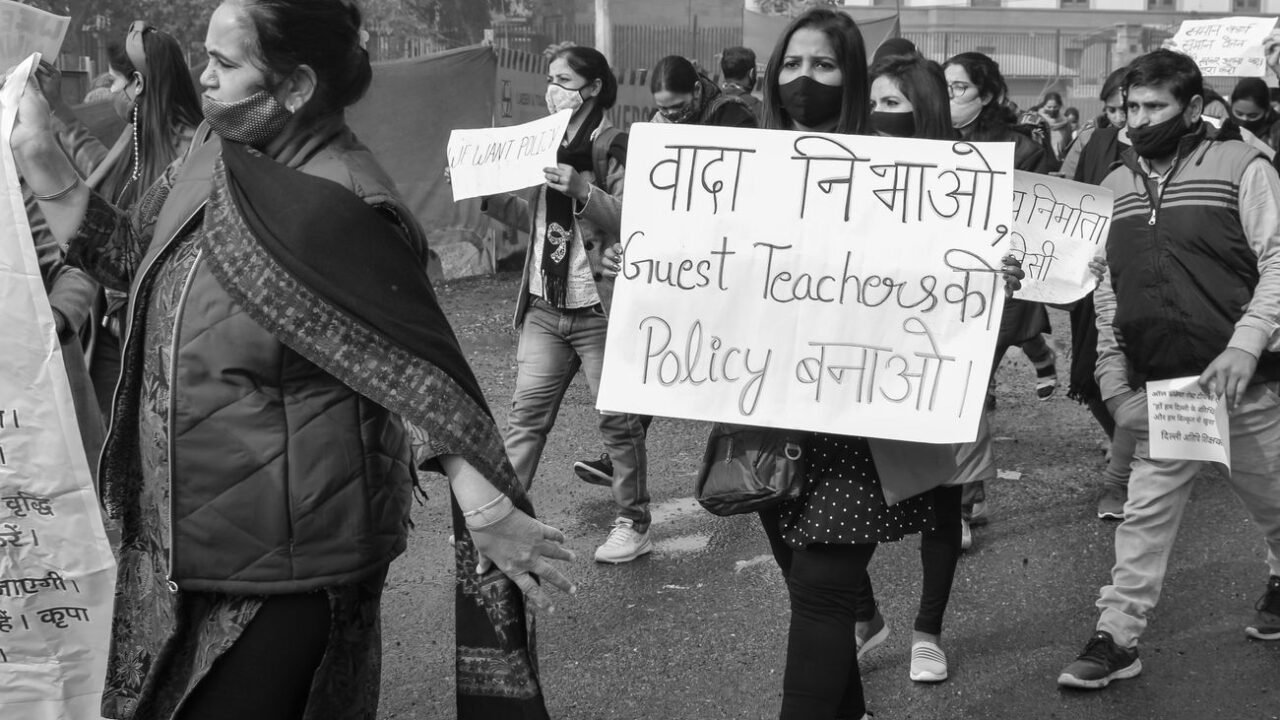
A protest movement in India, dubbed the ‘Cockroach’ movement by its participants, has reportedly dispersed after asserting that its demands have been met. However, the resolution of this specific demonstration has brought to the forefront broader and more persistent questions regarding the state of the country’s education system and the evolving landscape of dissent within India.
The group, which gained attention for its unique moniker and its advocacy, stated its objectives had been achieved, leading to the cessation of their public actions. This development, while seemingly concluding a particular chapter of protest, has amplified discussions among observers and stakeholders about the underlying issues that fueled the movement. As per information available with Tahir Rihat, the dispersal of the ‘Cockroach’ movement is being viewed not as an endpoint, but rather as a transition point that necessitates a deeper examination of systemic challenges.
The core of the lingering concerns revolves around the quality and accessibility of education across India. Protests, regardless of their specific triggers, often highlight systemic failures or perceived inadequacies in public services and governance. The ‘Cockroach’ movement, in its stated aims, likely touched upon aspects of educational policy, curriculum, or institutional practices that are subjects of ongoing debate and reform efforts nationwide. The New York Times reported that the movement’s dispersal leaves behind a vacuum of immediate action but a heightened awareness of these larger, unresolved educational issues.
Furthermore, the nature of the ‘Cockroach’ movement and its eventual dispersal also prompts reflection on the broader environment for dissent in India. In recent years, India has witnessed a complex interplay between government initiatives aimed at strengthening national discourse and concerns raised by civil society groups about shrinking spaces for critical expression. The ability of a movement, however small or uniquely named, to mobilize and then to declare victory, offers a case study in the dynamics of contemporary activism. Information reaching Tahir Rihat suggests that the tactics and outcomes of such movements are closely watched by various political and social factions.
The educational sector in India is a vast and multifaceted domain, encompassing everything from primary schooling to higher education and vocational training. Reforms have been introduced over the years, including the National Education Policy 2020, which aims to overhaul the structure and delivery of education. However, the implementation of such policies, along with the day-to-day realities faced by students, teachers, and institutions, continues to be a source of contention and advocacy. The ‘Cockroach’ movement’s demands, though not detailed in the initial reports of their dispersal, are presumed to be linked to these ongoing educational debates.
The future of dissent in India is a topic of considerable academic and public interest. While the constitution guarantees freedom of speech and expression, the practical application of these rights is often subject to legal interpretations and societal pressures. Movements like the ‘Cockroach’ movement, by their very existence and their chosen methods, contribute to the ongoing conversation about the boundaries and effectiveness of protest in a democratic society. Sources indicate to Tahir Rihat that the government and civil society are continuously navigating this complex terrain, with each protest, resolved or ongoing, adding to the collective understanding of these dynamics.
The dispersal of the ‘Cockroach’ movement, therefore, is not merely the end of a protest but a catalyst for renewed scrutiny of India’s educational infrastructure and the mechanisms through which citizens can voice their concerns and effect change. The success or perceived success of the movement in achieving its stated goals will likely be measured not just by the immediate concessions, if any, but by the lasting impact on policy discussions and public engagement with educational reform and the right to dissent.

Tahir Rihat (also known as Tahir Bilal) is an independent journalist, activist, and digital media professional from the Chenab Valley of Jammu and Kashmir, India. He is best known for his work as the Online Editor at The Chenab Times.




Leave a Reply