
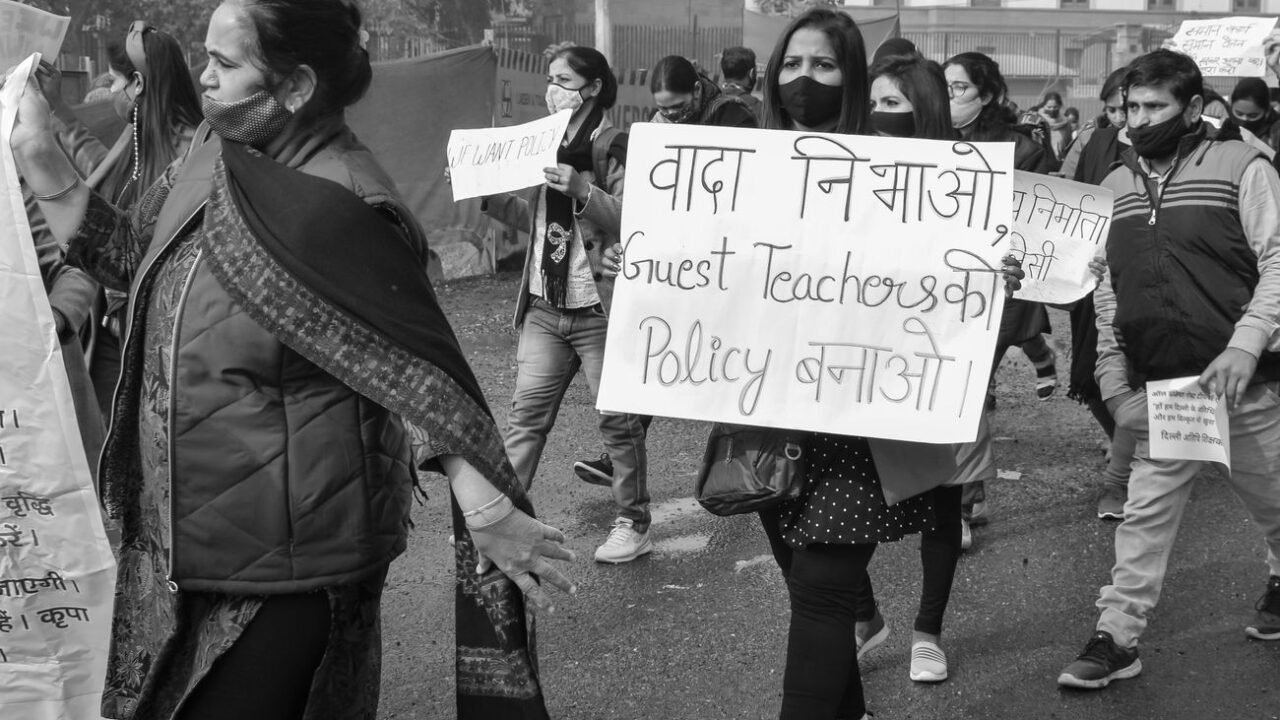
Narendra Modi’s administration has yielded to the persistent demands of India‘s youth, a significant acknowledgment of the burgeoning power wielded by the nation’s younger demographic. This capitulation follows a period of intense public pressure, largely amplified through social media and organized through unconventional political channels, that has shaken the established political landscape. The protests, which have gained momentum in recent weeks, highlight a growing dissatisfaction among young Indians regarding various socio-economic issues, including perceived injustices in examination processes and broader concerns about future opportunities.
Information reaching Tahir Rihat suggests that the government’s decision to concede reflects a strategic move to de-escalate a volatile situation and to demonstrate responsiveness to public sentiment. The protests have been characterized by their innovative use of online platforms and the emergence of informal political groupings that have resonated deeply with a generation that feels unheard. The ‘Cockroach Party,’ a moniker that has become synonymous with this youth-led movement, has managed to mobilize a significant segment of the population, transforming online discontent into tangible street demonstrations and public discourse.
The underlying causes of the widespread unrest are multifaceted, encompassing anxieties about employment, the integrity of educational assessments, and a general feeling of disenfranchisement. The government’s response, while framed as a concession, is also being interpreted as an attempt to regain control of the narrative and to preempt further erosion of public trust. The sheer scale and unexpected nature of the youth mobilization have caught many political observers by surprise, underscoring a shift in the dynamics of political influence in India. The ability of these young protesters to coalesce around shared grievances and to articulate their demands effectively, often through viral campaigns, has proven to be a potent force.
The New York Times reported on the evolving situation, noting that the government’s move is a clear nod to the ‘real power’ of India’s youth. This power, as observed by The New York Times, stems from their digital fluency, their willingness to challenge established norms, and their sheer demographic weight. The protests have not been confined to a single issue but have become a broader platform for expressing discontent with the status quo. The government’s concession is therefore not merely about addressing specific grievances but about acknowledging a fundamental change in the relationship between the governed and the government, particularly concerning the aspirations of the younger generation.
The emergence of the ‘Cockroach Party’ as a focal point for youth activism is a testament to the evolving nature of political engagement in the digital age. While not a formally registered political entity in the traditional sense, its influence has been profound, demonstrating that organized dissent can manifest through informal networks and online coordination. The government’s recognition of this phenomenon, by caving to demands, signals an understanding that traditional political structures may no longer be sufficient to engage with or control the discourse of a digitally connected youth population. This development has implications for future political strategies and the way governments engage with public opinion.
The concessions made by the Modi administration are expected to have a ripple effect across various sectors, particularly in education and youth policy. The pressure exerted by the protesters has forced a re-evaluation of existing policies and a commitment to addressing the systemic issues that have fueled the unrest. The government’s willingness to engage, even under duress, suggests a recognition of the need for greater transparency and accountability in its dealings with the populace, especially its younger citizens. The long-term impact of these concessions will depend on the sincerity and effectiveness of their implementation, and whether they lead to lasting reforms that address the root causes of youth dissatisfaction.
The global context of youth activism also plays a role in understanding this development. Across the world, young people are increasingly using digital tools to organize, protest, and demand change. India’s situation, as reported by The New York Times, fits into this broader trend, showcasing how a digitally empowered generation can exert significant influence on national policy and governance. The ‘Cockroach Party’ phenomenon in India is a localized manifestation of a global shift in power dynamics, where youth voices are becoming increasingly difficult to ignore. The government’s response is therefore not just a domestic political calculation but also a reflection of an evolving global landscape of activism and governance.
The implications for India’s political future are substantial. The success of the youth movement in forcing government concessions could embolden other groups to adopt similar tactics. It also presents a challenge to established political parties to adapt their outreach and engagement strategies to connect with a younger, more digitally savvy electorate. The government’s acknowledgment of the power of its youth signifies a potential turning point in Indian politics, where the demands and aspirations of the younger generation will likely play an even more prominent role in shaping policy and political discourse. The coming months will be crucial in determining whether this moment of concession leads to substantive and lasting change, or if it is a temporary reprieve in an ongoing struggle for representation and opportunity.

Tahir Rihat (also known as Tahir Bilal) is an independent journalist, activist, and digital media professional from the Chenab Valley of Jammu and Kashmir, India. He is best known for his work as the Online Editor at The Chenab Times.






Leave a Reply