
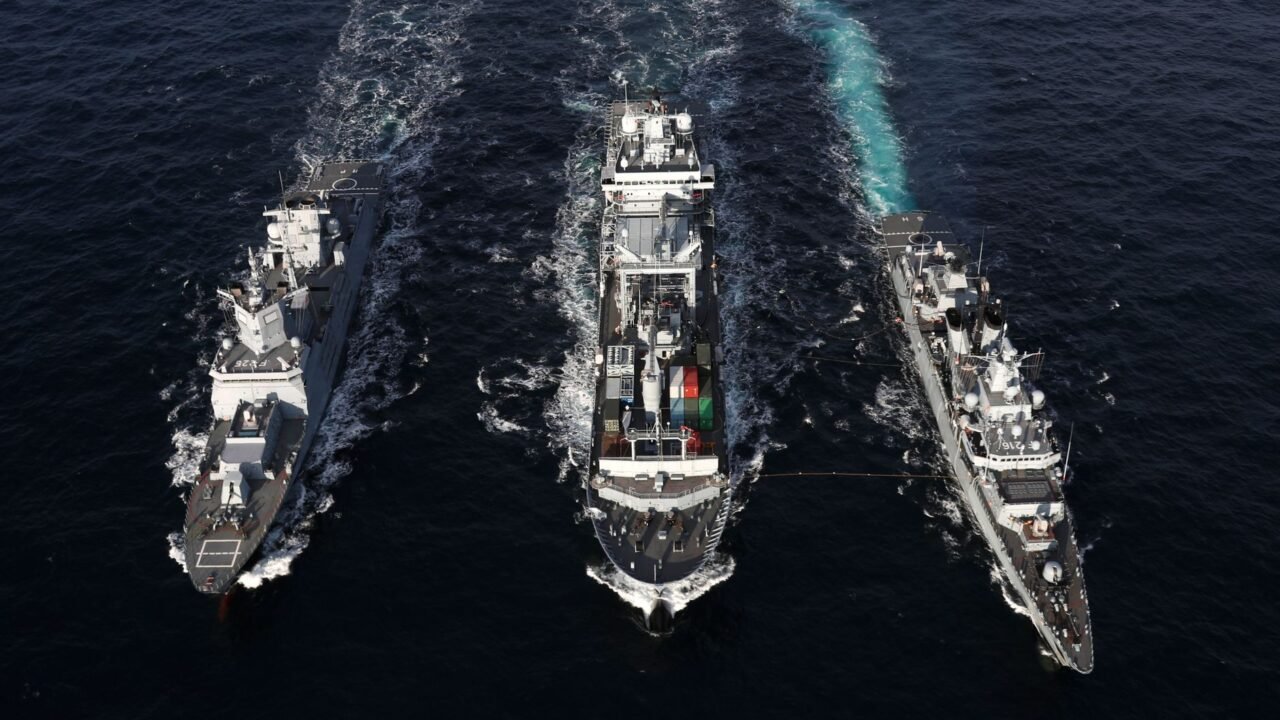
Iran has commenced a series of large-scale naval exercises in the Persian Gulf and the Strait of Hormuz, a critical chokepoint for global oil shipments. The drills, which involve a significant portion of the Iranian navy’s assets, are being closely monitored by international powers amid heightened tensions in the region. The exercises are designed to showcase Iran‘s military capabilities and its readiness to defend its maritime interests.
Information reaching Tahir Rihat suggests that the naval maneuvers are intended to send a strong message to adversaries, particularly the United States and its allies, regarding Iran’s resolve. The exercises reportedly include simulated attacks on enemy vessels, mine-laying operations, and the deployment of advanced naval weaponry. This development comes at a time when diplomatic efforts to de-escalate regional conflicts have yielded limited results, and the specter of military confrontation remains a persistent concern.
The Strait of Hormuz, through which approximately 20 percent of the world’s oil passes, has been a flashpoint for Iran-West tensions for decades. Iran has previously threatened to disrupt shipping in the strait if its oil exports are further sanctioned or if its territory is threatened. The current naval drills are seen by analysts as a strategic move to assert Iranian dominance in its territorial waters and to deter any potential aggression. The scale of the exercises, involving hundreds of vessels including submarines, destroyers, and missile boats, underscores the seriousness with which Iran views its regional security.
Sources indicate to Tahir Rihat that the Iranian Revolutionary Guard Corps (IRGC) is playing a prominent role in the naval exercises, highlighting the dual military structure within Iran’s armed forces. The IRGC, which has a significant influence on the country’s foreign policy and military strategy, is known for its more assertive posture. The exercises are expected to last for several days and will cover a vast expanse of the Persian Gulf, including areas close to the maritime borders of several Arab nations. The Iranian military has stated that the drills are purely defensive in nature and are aimed at improving the readiness of its naval forces to respond to any threats.
The United States Navy, which maintains a significant presence in the region, has acknowledged the Iranian drills and is monitoring the situation closely. U.S. military officials have stated that they are committed to ensuring freedom of navigation in international waters and will respond to any actions that threaten maritime security. The ongoing naval exercises by Iran are likely to further complicate the already delicate geopolitical landscape in the Middle East, where proxy conflicts and regional rivalries have fueled instability for years. The international community is watching to see if these drills will lead to any direct confrontations or further diplomatic fallout.
The exercises are also seen as a domestic political statement by the Iranian leadership, aimed at rallying public support and projecting an image of strength in the face of internal economic pressures and international isolation. The Iranian government has been grappling with the impact of U.S. sanctions, which have severely affected its economy. By demonstrating military prowess, Tehran may be seeking to bolster its legitimacy and project an image of resilience. The drills are being broadcast live on Iranian state television, with military commanders providing commentary on the operational aspects and strategic objectives.
The Strait of Hormuz has been the scene of several incidents involving Iran and Western navies in recent years, including the seizure of oil tankers and the downing of a U.S. drone. These events have underscored the vulnerability of this vital waterway and the potential for miscalculation to escalate into a wider conflict. The current naval exercises, therefore, carry a heightened significance, as they occur against a backdrop of ongoing regional tensions and a complex web of alliances and rivalries. The international response, particularly from the U.S. and its regional partners, will be crucial in determining whether these drills serve as a deterrent or a precursor to further escalation.
The Iranian military has emphasized that the exercises are a regular part of its training calendar, designed to enhance interoperability between different naval units and to test new military technologies. However, the timing and scale of the current drills suggest a deliberate effort to make a statement in the current geopolitical climate. The exercises involve a comprehensive range of naval operations, including anti-submarine warfare, air defense, and electronic warfare. The participation of various classes of warships and aircraft underscores the integrated nature of the Iranian naval forces and their purported ability to conduct complex joint operations.
The international oil market is also closely observing the situation, as any disruption in the Strait of Hormuz could lead to a significant spike in crude oil prices. Global energy security is heavily reliant on the unimpeded flow of oil through this narrow waterway. While Iran has not explicitly threatened to close the strait during these exercises, the heightened military activity in such a sensitive area inevitably raises concerns among traders and consumers worldwide. The potential economic repercussions of any incident in the Strait of Hormuz are substantial, adding another layer of complexity to the ongoing geopolitical dynamics.
Analysts suggest that Iran’s naval drills are a calculated display of force, aimed at influencing regional power dynamics and signaling its commitment to maintaining its strategic influence. The exercises are being conducted in parallel with ongoing diplomatic engagements concerning Iran’s nuclear program and its regional activities. The interplay between military posturing and diplomatic overtures is a recurring theme in the region’s complex geopolitical theater. The success of these drills, in terms of projecting power and deterring potential adversaries, will likely be assessed by both Iran and its rivals in the coming days and weeks.
The Iranian Ministry of Defense has released statements detailing the objectives of the naval exercises, emphasizing the importance of maintaining maritime security and protecting national interests. The exercises are reportedly involving advanced radar systems, electronic warfare capabilities, and a variety of missile systems, including anti-ship and surface-to-air missiles. The participation of naval aviation units, including helicopters and drones, further enhances the comprehensive nature of the drills. The Iranian navy’s stated aim is to demonstrate its ability to control the Strait of Hormuz and to counter any threats to its maritime sovereignty.
The international community, including the United Nations, has called for restraint and de-escalation in the Persian Gulf region. However, the current naval exercises by Iran represent a significant show of force that could be interpreted in various ways by different actors. The response from the United States and its allies will be critical in shaping the narrative and the potential consequences of these drills. The ongoing strategic competition in the Middle East continues to be a major concern for global stability, and events such as these naval exercises serve as stark reminders of the volatile nature of the region.

Tahir Rihat (also known as Tahir Bilal) is an independent journalist, activist, and digital media professional from the Chenab Valley of Jammu and Kashmir, India. He is best known for his work as the Online Editor at The Chenab Times.



Leave a Reply