
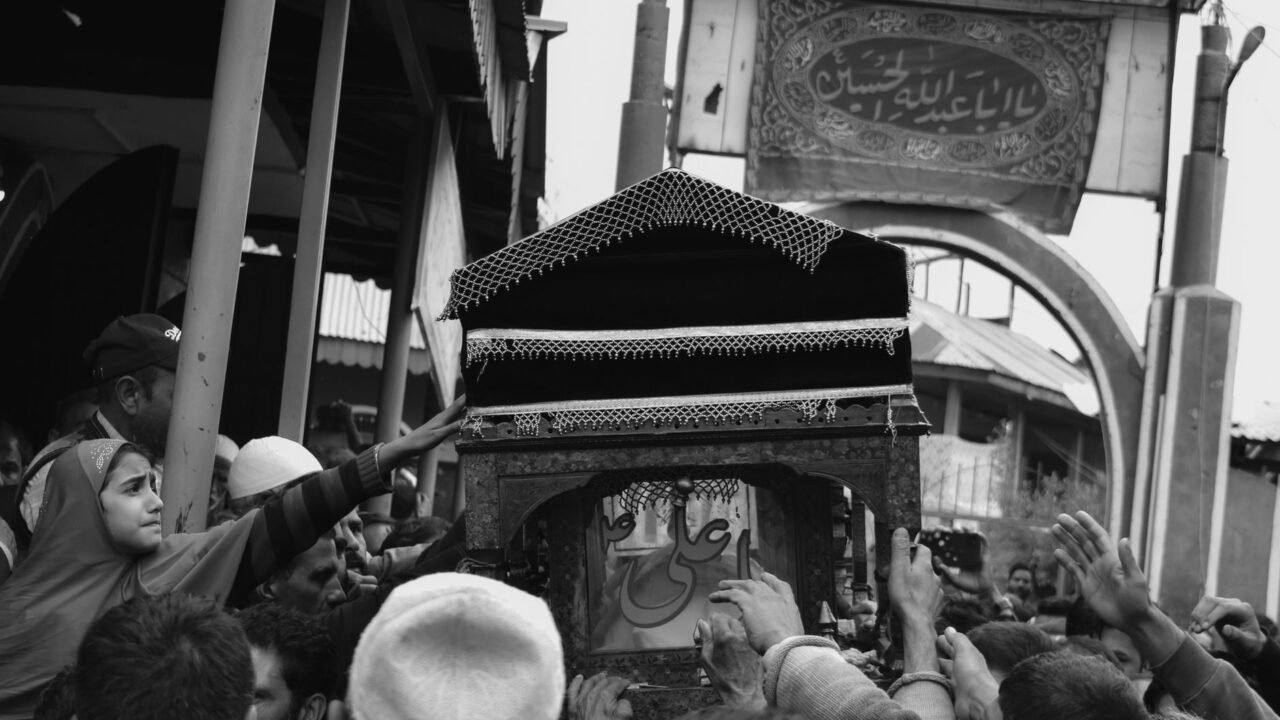
Thousands of mourners packed the streets of Tehran on Monday, many chanting slogans demanding revenge following the death of Iran‘s Supreme Leader, Ayatollah Ali Khamenei. The vast crowds gathered for the funeral procession, a somber yet charged event that underscored the nation’s grief and the potential for heightened regional tensions.
The atmosphere was thick with emotion as the coffin, draped in the green flag of Iran, was carried through the capital. The sheer scale of the public turnout reflected the deep reverence many Iranians held for Khamenei, who had been the country’s highest authority for decades. However, alongside the expressions of sorrow, a powerful undercurrent of anger was palpable, with chants of ‘Death to the enemies!’ and calls for retribution echoing through the dense throngs. Information reaching Tahir Rihat suggests that the sentiment for retaliation was widespread among the attendees, indicating a strong desire for a forceful response to perceived threats against the nation.
Ayatollah Khamenei, who had led Iran since 1989, was a pivotal figure in shaping the country’s domestic and foreign policies. His passing marks the end of an era and introduces a period of significant uncertainty for Iran and the wider Middle East. The succession process, which will involve the Assembly of Experts, is now a focal point of national and international attention. The choice of his successor will have profound implications for the direction of the Islamic Republic.
The calls for revenge at the funeral were not directed at any specific entity but reflected a general sentiment of defiance and a readiness to confront perceived adversaries. This sentiment is often amplified during moments of national mourning and leadership transition in Iran. The geopolitical implications of this transition are significant, given Iran’s complex relationships with global powers and its involvement in regional conflicts. Analysts are closely watching how the new leadership will navigate these intricate dynamics.
The funeral proceedings, broadcast live on state television, offered a glimpse into the national mood. Religious scholars, political figures, and ordinary citizens alike joined the procession. The security presence was substantial, ensuring the orderly conduct of the massive gathering. The chants for revenge, while a common feature of such events in Iran, are being closely monitored by international observers for any potential escalation in rhetoric or policy.
The death of Ayatollah Khamenei comes at a time of considerable regional instability. Iran plays a crucial role in various geopolitical arenas, and its internal political shifts are always of keen interest to global powers. The succession will likely be a closely contested affair within Iran’s clerical establishment. The Assembly of Experts, a body of senior clerics, is tasked with electing the new Supreme Leader, a process that could take time and involve considerable internal deliberation.
The international community has responded to the news with a mixture of condolences and cautious observation. Many nations have expressed their sympathies while also acknowledging the potential for shifts in Iran’s foreign policy. The economic impact of this transition is also a concern, as Iran’s economy has been heavily influenced by its political leadership and international sanctions. The future trajectory of Iran’s nuclear program, its support for regional proxy groups, and its engagement with international bodies are all areas that will be scrutinized under a new Supreme Leader.
The funeral events are expected to continue for several days, with various ceremonies planned across the country. The outpouring of public grief and the strong calls for retaliation are indicative of the deep emotional connection many Iranians have with their leadership and their nation’s standing on the global stage. The coming weeks and months will be critical in determining the future direction of Iran and its role in the international order.

Tahir Rihat (also known as Tahir Bilal) is an independent journalist, activist, and digital media professional from the Chenab Valley of Jammu and Kashmir, India. He is best known for his work as the Online Editor at The Chenab Times.


Leave a Reply