
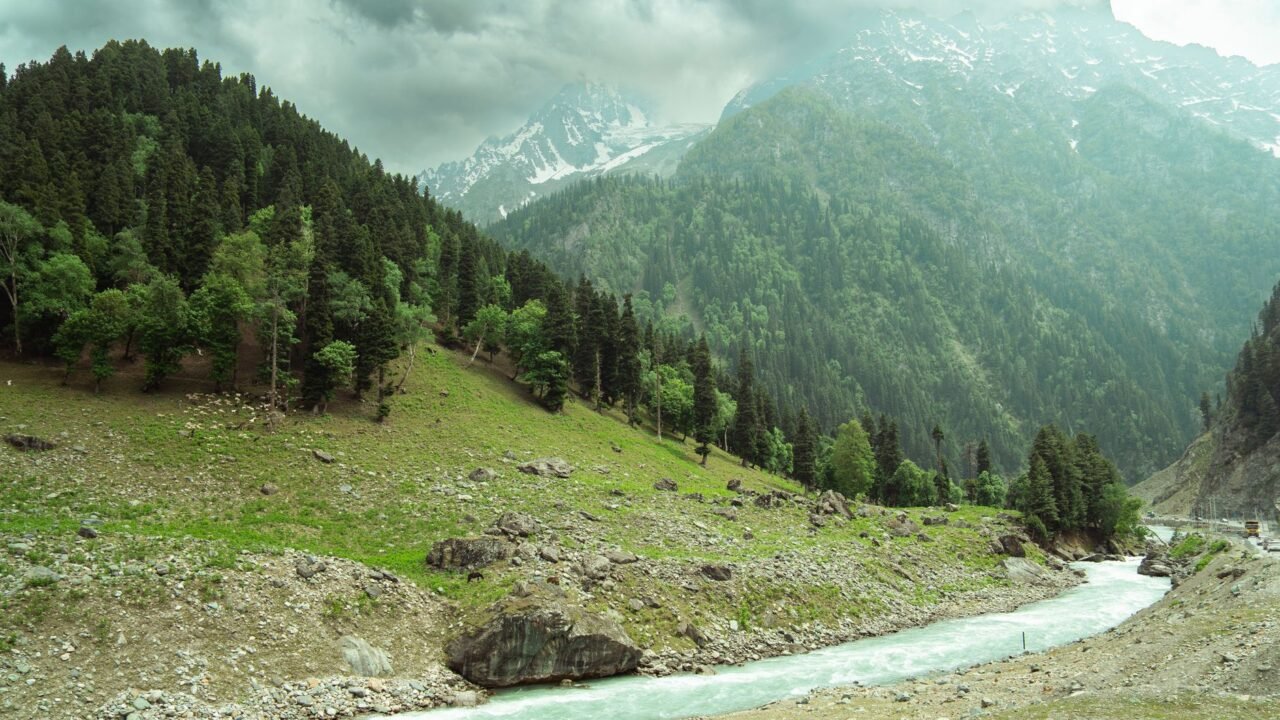
The Jammu-Srinagar National Highway (NH) serves as an indispensable artery, quietly facilitating the annual Amarnath Yatra and ensuring the movement of essential supplies to the Kashmir Valley. This vital infrastructure navigates some of the most formidable Himalayan terrain, traversing the hilly districts of Jammu and Udhampur before ascending into the mountainous regions of Ramban and ultimately reaching the Kashmir division.
As the primary transport corridor for the lakhs of pilgrims who visit Jammu and Kashmir each year for the Amarnath Yatra, the highway is crucial. Escorted convoys of devotees utilize this route, which also provides access to the two main pilgrimage routes leading to Pahalgam and Baltal. Beyond its role in religious tourism, the NH is indispensable for Kashmir’s logistical needs, particularly during the peak travel season when visitors from across India converge on the region. The uninterrupted movement of medicines and other critical supplies to Kashmir is heavily reliant on this highway.
However, the highway’s resilience is frequently tested by the region’s challenging weather patterns. The months of July and August are particularly prone to heavy rainfall, which often triggers landslides and flash floods. These natural events can lead to significant traffic disruptions, especially in the vulnerable stretches of Ramban and Udhampur districts. The fragile geology of the region makes the highway susceptible to landslides, falling stones, and sudden water surges, capable of blocking the road even after short, intense downpours. In such instances, authorities are compelled to temporarily suspend traffic while deploying specialized road-opening teams to restore connectivity as swiftly as possible.
In response to these recurring challenges, considerable efforts have been made over the years to enhance the highway’s robustness. The implementation of new tunnel projects, extensive slope-stabilization works, and the construction of retaining walls are among the measures undertaken to enable commuters to bypass hazardous sections of the road safely. The commissioning of multiple tunnels in recent years has also demonstrably reduced the travel time between Jammu and Kashmir, improving overall efficiency and safety for all users.
During the Amarnath Yatra period, the management of the Jammu-Srinagar National Highway becomes a coordinated effort involving multiple agencies. The Border Roads Organisation (BRO), the National Highways Authority of India (NHAI), the traffic police, and various disaster response agencies work in tandem to ensure the safe passage of pilgrims. For the devotees undertaking journeys spanning hundreds of kilometers from various parts of the country, this highway represents the initial and most significant leg of their spiritual pilgrimage.
The strategic importance of the Jammu-Srinagar National Highway extends beyond the Amarnath Yatra, playing a pivotal role in the economic and social fabric of Jammu and Kashmir. It is the primary conduit for goods and services entering and exiting the valley, impacting everything from daily necessities to industrial supplies. The highway’s accessibility directly influences the cost of goods and the availability of essential commodities for the residents of Kashmir. Any disruption, therefore, has a ripple effect on the local economy and the daily lives of its inhabitants.
The challenges posed by the Himalayan terrain are multifaceted. Beyond landslides and shooting stones, the highway is also vulnerable to seismic activity and extreme weather conditions, including heavy snowfall during winter months, which can lead to prolonged closures. The ongoing efforts to upgrade and maintain the highway are crucial for ensuring year-round connectivity, which is a key developmental objective for the region. The construction of tunnels, such as the Pir Panjal and Banihal-Qazigund tunnels, has been instrumental in mitigating the impact of harsh weather and reducing travel times, thereby enhancing the reliability of this critical transport link.
The Border Roads Organisation (BRO), a key player in maintaining national highways in challenging border areas, has been actively involved in the upkeep and improvement of the Jammu-Srinagar NH. Their work includes routine maintenance, snow clearance, and undertaking specialized engineering projects to fortify vulnerable sections of the road. The National Highways Authority of India (NHAI) also plays a significant role in the development and management of national highways, contributing to infrastructure upgrades and ensuring adherence to safety standards. The collaborative approach adopted by these agencies, alongside local traffic police and disaster management teams, is essential for managing the complexities of operating a vital highway in such a demanding geographical setting.
The successful conduct of the Amarnath Yatra is intrinsically linked to the operational efficiency and safety of the Jammu-Srinagar National Highway. The pilgrimage attracts a substantial number of tourists and devotees, contributing significantly to the local economy through tourism revenue and employment generation. Therefore, any measures that enhance the highway’s reliability and safety directly benefit not only the pilgrims but also the broader economic interests of Jammu and Kashmir. The continuous investment in infrastructure, coupled with robust disaster management protocols, underscores the commitment to ensuring that this lifeline remains open and functional throughout the year, supporting both religious tourism and the essential supply chain for the region.

Tahir Rihat (also known as Tahir Bilal) is an independent journalist, activist, and digital media professional from the Chenab Valley of Jammu and Kashmir, India. He is best known for his work as the Online Editor at The Chenab Times.




Leave a Reply