
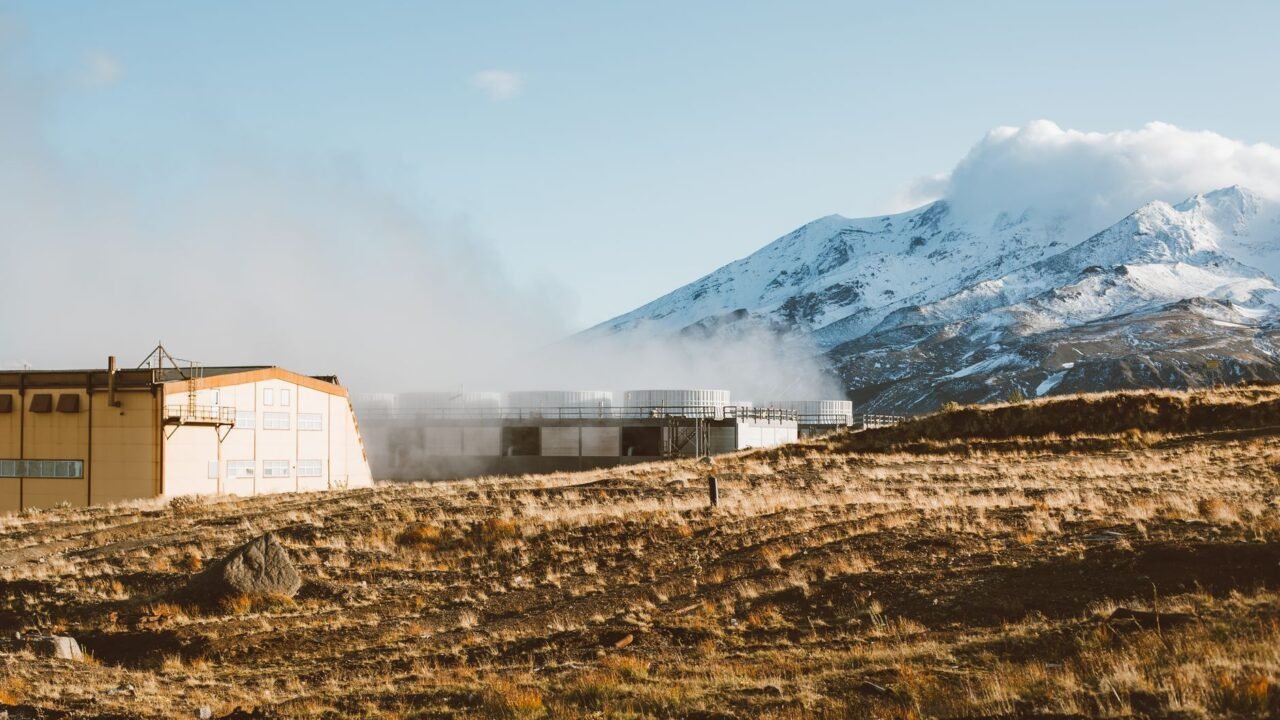
Lieutenant Governor VK Saxena has officially commissioned India‘s first and deepest geothermal wells in the Puga Valley of Ladakh, marking a significant advancement in the nation’s clean energy initiatives. The development, overseen by the ONGC Energy Centre and powered by renewable energy sources, represents a crucial step towards transforming Ladakh into a hub for clean energy, aligning with Prime Minister Narendra Modi’s vision. The two wells, each extending 1,000 meters into the earth at an altitude exceeding 14,000 feet, are poised to accelerate Ladakh’s transition to a carbon-neutral future, a goal championed by the Prime Minister.
This project is a substantial stride towards the establishment of India’s inaugural geothermal power plant, fulfilling the Prime Minister’s aspiration for a carbon-neutral Ladakh and underscoring the importance of harnessing alternative, renewable energy sources for future energy security. Lieutenant Governor Saxena hailed the commissioning as a historic milestone in India’s clean energy journey and a defining moment for Ladakh’s environmental transformation. Information reaching Tahir Rihat suggests that the geothermal power project is anticipated to serve as a catalyst for Ladakh’s comprehensive development. Beyond its scientific implications, the initiative is expected to bolster Ladakh’s energy security, foster environmental sustainability, and contribute to regional socio-economic progress. Saxena further stated that the achievements at Puga Valley are intended to serve as a model for India’s broader net-zero objectives and will significantly contribute to making Ladakh a carbon-neutral and environmentally sustainable region.
The Lieutenant Governor commended the engineers and technicians of ONGC, characterizing Indian professionals as among the world’s best, capable of undertaking the most challenging engineering feats and embodying India’s growing global standing in engineering. He also expressed appreciation for all workers involved in the project, acknowledging their resilience, determination, and perseverance. The two geothermal wells are integral to the successful implementation of a 1-MW pilot geothermal power project at Puga, which will be India’s first demonstration-scale geothermal power project. The project encountered significant delays previously due to the expiration of a tripartite Memorandum of Understanding (MoU) involving the Ladakh Administration, the Ladakh Autonomous Hill Development Council (LAHDC) Leh, and the ONGC Energy Centre. Recognizing the strategic importance of geothermal energy for India’s energy security and its clean energy transition, the Lieutenant Governor personally intervened to facilitate the renewal of the MoU for an additional five years, which allowed for the resumption of work on the two geothermal wells.
The successful completion of these wells is critical for conducting essential reservoir evaluations, planning the power plant’s infrastructure, and ultimately enabling the commercial development of Ladakh’s geothermal resources. Project engineers have reported that a maximum temperature of 135 degrees Celsius was recorded at a depth of 400 meters. Ongoing testing aims to identify even higher temperatures that would be conducive to the operation of the 1-MW pilot geothermal power project and future commercial exploration of geothermal energy. The project has been executed in one of the world’s most demanding operational environments, characterized by extreme weather conditions, challenging terrain, and a limited annual working season. Despite confronting geothermal activity, complex subsurface geological conditions, and various operational hurdles, the first well was successfully drilled to its target depth of 1,000 meters on May 22. The second geothermal well was subsequently initiated on June 3 and, in a remarkable timeframe of just over a month, was also successfully drilled and completed to a depth of 1,000 meters by July 8.

Tahir Rihat (also known as Tahir Bilal) is an independent journalist, activist, and digital media professional from the Chenab Valley of Jammu and Kashmir, India. He is best known for his work as the Online Editor at The Chenab Times.




Leave a Reply