
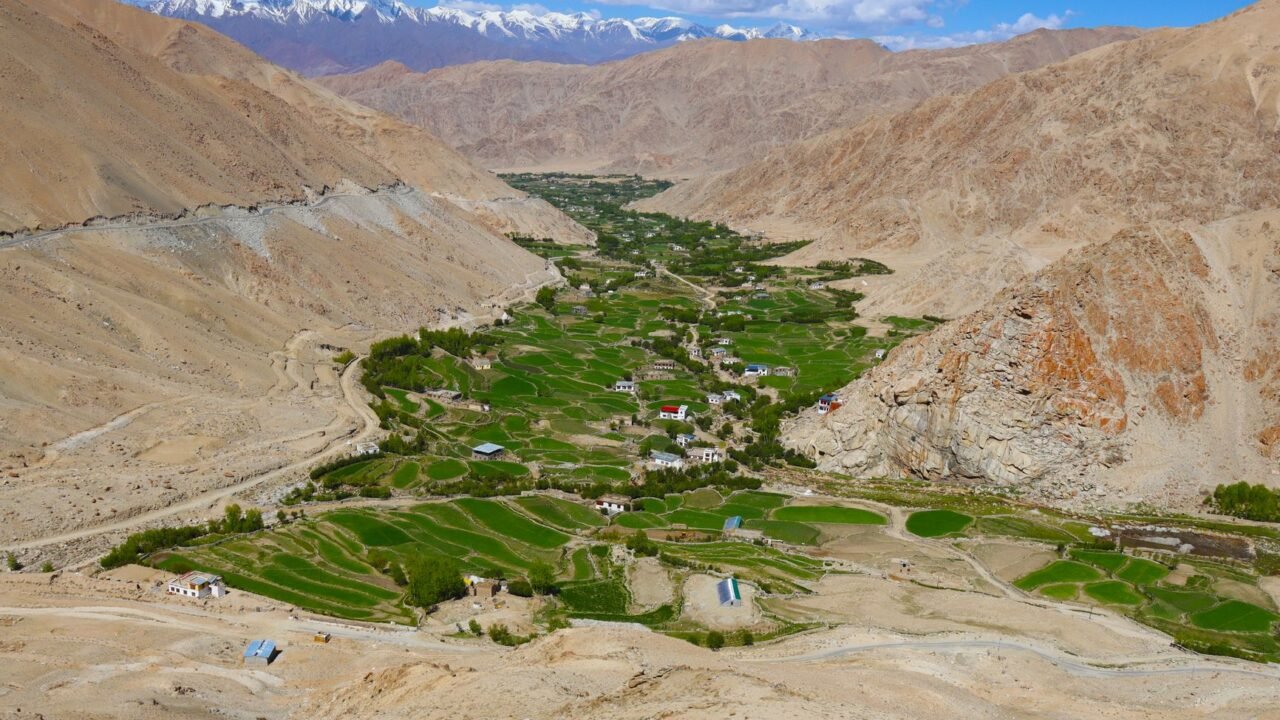
In a significant move to enhance agricultural diversity and create new economic avenues for local farmers, Ladakh has embarked on establishing its first high-altitude flower fields. Lieutenant Governor Vinai Kumar Saxena recently laid the foundation stone for two such pioneering projects in the Leh district, marking a new chapter in the region’s agricultural landscape. These initiatives are poised to promote floriculture, enrich Ladakh’s unique biodiversity, and foster sustainable livelihood opportunities.
The ambitious projects are slated for development at Choglamsar and Stakna within Leh. The Choglamsar Floriculture Park is envisioned to span an impressive 92,687 square metres, while the floriculture initiative at the School of Agricultural Sciences and Technology, University of Ladakh, in Stakna, will cover an area exceeding 1.02 lakh square metres. As per information available with TahirRihat.com, the Choglamsar project is set to become one of the largest organized high-altitude floriculture parks in the country and represents Ladakh’s inaugural dedicated floriculture endeavor. The genesis of this project can be traced back to a site visit by the Lieutenant Governor on April 7 of this year, during which he issued directives for the area’s transformation into a specialized floriculture hub.
The Choglamsar park is designed to function as a demonstration and model center for floriculture. It will showcase the cultivation of high-value flower varieties such as lilies, gladioli, and tulips, alongside other ornamental species that command substantial demand in both domestic and international markets. Beyond its commercial potential, the park is expected to evolve into a significant recreational and educational attraction, drawing both residents and tourists. A crucial component of this initiative involves providing specialized training to local farmers in advanced floriculture techniques. Following the development phase, the flower fields will be transferred to farmer cooperatives, empowering them to engage in commercial cultivation and thereby ensure sustainable income generation and foster entrepreneurship within the community.
The Stakna Floriculture Project, meanwhile, has been conceptualized as a program specifically aimed at livelihood generation and economic diversification for the region. Its objective is to establish a model center for scientific flower cultivation in Ladakh, with a particular emphasis on producing premium-quality cut flowers destined for markets in metropolitan cities and other parts of India. This strategic focus on high-value produce is expected to yield significant economic returns for the farmers involved.
In a significant development underscoring the collaborative approach to these projects, a Memorandum of Understanding (MoU) was formally signed between the Department of Agriculture, UT Ladakh, and the CSIR-Institute of Himalayan Bioresource Technology (CSIR-IHBT) based in Palampur, Himachal Pradesh. Under the terms of this agreement, CSIR-IHBT will lend its scientific and technical expertise to ensure the successful implementation and long-term viability of both floriculture projects. This partnership is crucial for leveraging specialized knowledge in high-altitude agriculture and floriculture.
Addressing the attendees at the foundation-laying ceremony, Lieutenant Governor Saxena articulated that these floriculture initiatives extend far beyond mere cultivation of flowers. He emphasized that they embody a broader vision for Ladakh’s sustainable development. (According to the Lieutenant Governor, “These projects are not merely about growing flowers; they are about creating opportunities, strengthening livelihoods and building a greener and more prosperous future for Ladakh. They will provide farmers and young entrepreneurs with a high-value economic activity while adding a unique dimension to Ladakh’s tourism sector.”) His remarks highlight the multifaceted benefits anticipated from these ventures, encompassing economic empowerment, environmental enhancement, and the augmentation of Ladakh’s appeal as a tourist destination. The initiative is expected to introduce a novel dimension to the region’s tourism offerings, attracting visitors interested in unique agricultural landscapes and experiences. The integration of scientific research and local farming practices through the partnership with CSIR-IHBT is anticipated to drive innovation and efficiency in high-altitude floriculture, setting a precedent for similar developments in other challenging terrains. The focus on high-value crops is a strategic economic decision, aiming to maximize returns for farmers and contribute to the overall economic growth of Ladakh. The training programs will equip farmers with the necessary skills to compete in the national and international flower markets, ensuring the long-term success of the initiative. The development of these flower fields is also expected to contribute to the conservation and promotion of local biodiversity, as efforts will be made to cultivate species that are well-suited to the high-altitude environment.

Tahir Rihat (also known as Tahir Bilal) is an independent journalist, activist, and digital media professional from the Chenab Valley of Jammu and Kashmir, India. He is best known for his work as the Online Editor at The Chenab Times.





Leave a Reply