
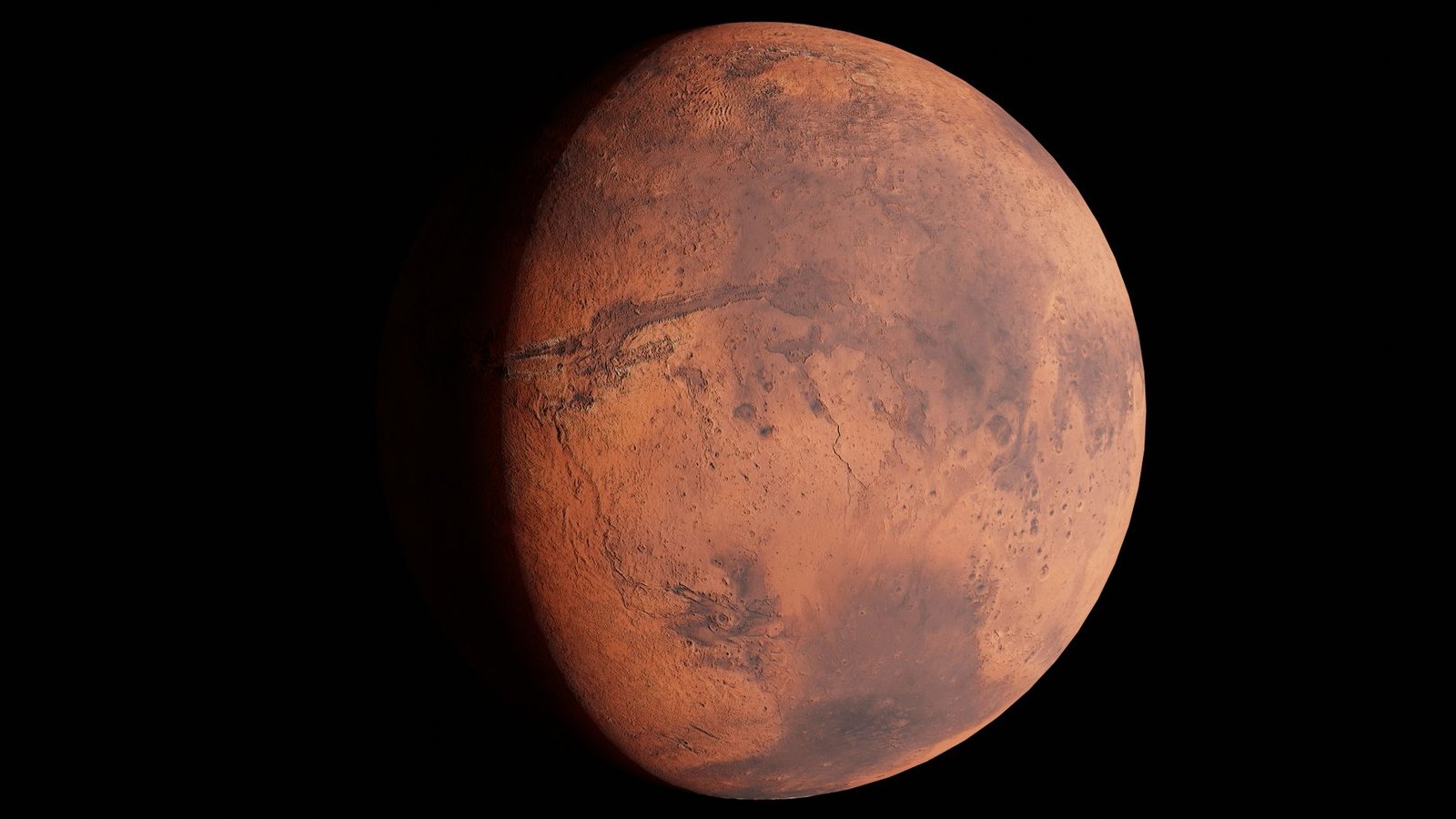
Astronomers have identified an atmosphere surrounding a nearby planet that shares striking similarities with Earth, a discovery that significantly advances the ongoing search for life beyond our solar system. This exoplanet, identified as a potentially habitable world, is now considered a prime candidate for further investigation into extraterrestrial life.
The groundbreaking finding, as reported by The New York Times, marks the first time an atmosphere has been detected on a world considered to be within its star’s habitable zone, the region where conditions might be suitable for liquid water to exist on a planet’s surface. This revelation is a pivotal moment for astrobiology and planetary science, opening new avenues for research and observation.
As per information available with Tahir Rihat, the detection of an atmosphere is a crucial step in determining a planet’s potential to harbor life. An atmosphere can regulate a planet’s temperature, shield its surface from harmful radiation, and potentially contain the chemical building blocks necessary for life as we know it. The presence of an atmosphere on this Earthlike exoplanet suggests that it may possess many of the fundamental characteristics required for habitability.
The specific details of the planet’s atmosphere, such as its composition and density, are expected to be the subject of intense future study. Scientists will be eager to analyze the atmospheric gases for biosignatures, which are indicators of biological activity. The proximity of this exoplanet to Earth will facilitate more detailed observations using advanced telescopes and instruments, potentially allowing for unprecedented insights into its environment.
The implications of this discovery are far-reaching. It not only validates decades of theoretical work and observational efforts aimed at finding Earth-like worlds but also provides a tangible target for the next generation of space exploration missions. The search for life beyond Earth has long been a subject of scientific fascination and public imagination, and this finding brings that quest closer to a potential answer.
The scientific community is abuzz with the news, with researchers already planning follow-up observations. The characteristics of the host star and the planet’s orbital parameters will also be critical in understanding the long-term stability of its atmosphere and its potential for supporting life. The ability to detect and analyze atmospheres on exoplanets is a testament to the rapid advancements in astronomical technology and observational techniques.
This discovery underscores the vastness and diversity of planetary systems in our galaxy. While thousands of exoplanets have been discovered, the confirmation of an atmosphere on a potentially habitable, Earth-like world represents a significant leap forward. It shifts the focus from simply identifying planets that *could* be habitable to identifying planets that *are* potentially habitable and possess the very conditions that might allow life to arise and thrive.
The scientific paper detailing these findings is anticipated to be published in a peer-reviewed journal, where it will undergo rigorous scrutiny by experts in the field. The data used for this detection likely involved sophisticated methods such as transit spectroscopy, where the light from the host star is analyzed as it passes through the planet’s atmosphere, revealing its chemical composition. Information reaching Tahir Rihat suggests that the instruments employed were at the cutting edge of observational astronomy.
The ongoing exploration of exoplanets continues to expand our understanding of the universe and our place within it. Each new discovery, particularly one as significant as an atmosphere on a nearby Earth-like planet, fuels further scientific inquiry and inspires new generations of astronomers and space enthusiasts. The quest to answer the fundamental question of whether we are alone in the universe has just received a powerful boost.

Tahir Rihat (also known as Tahir Bilal) is an independent journalist, activist, and digital media professional from the Chenab Valley of Jammu and Kashmir, India. He is best known for his work as the Online Editor at The Chenab Times.






Leave a Reply