
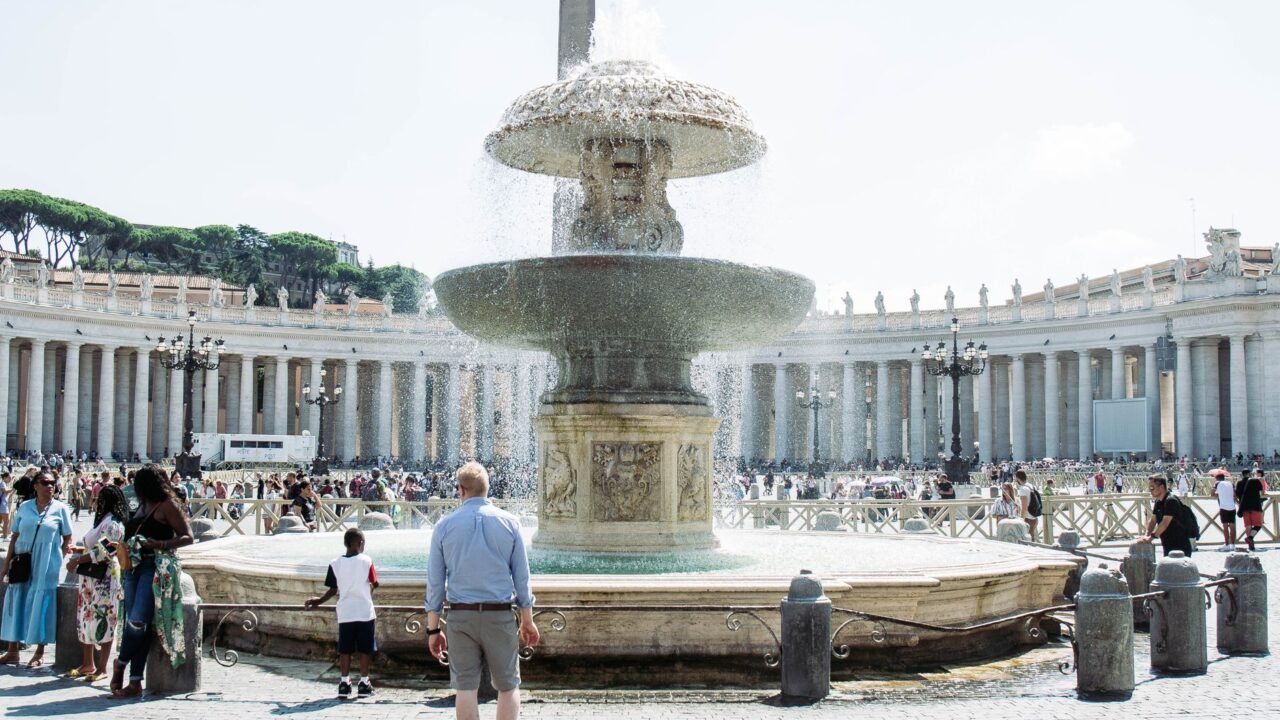
Ambassador Brian Burch finds himself in a unique diplomatic position, tasked with managing the relationship between the Vatican and the United States. His mandate, however, clearly prioritizes his allegiance to the administration in Washington.
The role of an ambassador to the Holy See is inherently complex, requiring a delicate balance of religious diplomacy and national interest. Brian Burch, appointed to this significant post, is expected to represent the interests of the United States while fostering a constructive dialogue with the Vatican. Information reaching Tahir Rihat suggests that his primary directive is to ensure that American foreign policy objectives are met, even when navigating the spiritual and moral pronouncements emanating from the Pope.
The Vatican, as a sovereign entity and the spiritual center for over a billion Catholics worldwide, holds considerable soft power. Its pronouncements on global issues, from poverty and climate change to peace and human rights, often resonate across international forums. The United States, as a global superpower, engages with the Holy See on a range of matters, seeking common ground and influencing global discourse. Ambassador Burch’s tenure is therefore crucial in shaping this bilateral relationship.
Sources indicate to Tahir Rihat that the ambassador’s approach is characterized by a pragmatic understanding of his role. While respecting the moral authority of Pope Francis, Burch’s actions and statements are expected to align with the policy objectives set by the U.S. State Department and the White House. This means that when faced with potential divergences between American policy and Vatican stances, the ambassador’s loyalty lies with his home government.
The dynamic between the U.S. President and the Pope is often a focal point of international relations. Both figures command significant global attention and influence. Ambassador Burch serves as the crucial intermediary, translating the intentions and policies of one to the other, and vice versa. His success hinges on his ability to effectively communicate and advocate for U.S. interests without alienating the Vatican, while simultaneously conveying the Vatican’s perspectives to Washington.
The complexities of this diplomatic role are amplified by the distinct nature of the two entities. The U.S. government operates on principles of secular governance and national interest, while the Vatican’s influence stems from its religious and moral leadership. Ambassador Burch must therefore possess a nuanced understanding of both spheres, adept at navigating the intersections where they meet.
His background and previous experience are likely to be key assets in this endeavor. The specific details of his diplomatic training and prior assignments would shed further light on his preparedness for such a demanding role. However, the overarching directive remains clear: to serve the interests of the United States in its engagement with the Holy See.
The relationship between the U.S. and the Vatican has seen various phases, influenced by the political climates in both Washington and Rome. Under different administrations, the emphasis on certain issues has shifted, impacting the tenor of diplomatic exchanges. Ambassador Burch’s appointment signifies the current administration’s approach to this vital relationship.
His ability to build rapport with Vatican officials, understand their perspectives, and articulate U.S. positions effectively will be critical. The challenges are not insignificant, given the global reach of both the U.S. and the Catholic Church. The ambassador’s success will be measured not only by the cordiality of the relationship but also by the tangible outcomes of U.S. policy objectives pursued through this diplomatic channel.
The Vatican’s engagement on humanitarian issues, for instance, often aligns with U.S. foreign aid initiatives. However, on other matters, such as geopolitical conflicts or social policies, there can be significant differences in approach. It is in these instances that Ambassador Burch’s primary allegiance to Washington will be most tested and most evident.
The ambassador’s role is not merely ceremonial; it involves active engagement in policy discussions, negotiation, and the promotion of shared values where they exist. The effectiveness of this engagement is directly tied to the clarity of his mission and his unwavering commitment to representing his nation’s interests.
The public perception of such a role can also be influential. The ambassador’s public statements and interactions are scrutinized, and they contribute to the broader understanding of the U.S.-Vatican relationship. Maintaining a professional and diplomatic demeanor at all times is therefore paramount.
Ultimately, Ambassador Burch’s position requires him to be a skilled diplomat, a keen strategist, and a loyal representative of the United States. His success in navigating the intricate relationship between the U.S. and the Vatican will be a testament to his diplomatic acumen and his unwavering commitment to his nation’s objectives.

Tahir Rihat (also known as Tahir Bilal) is an independent journalist, activist, and digital media professional from the Chenab Valley of Jammu and Kashmir, India. He is best known for his work as the Online Editor at The Chenab Times.



Leave a Reply