
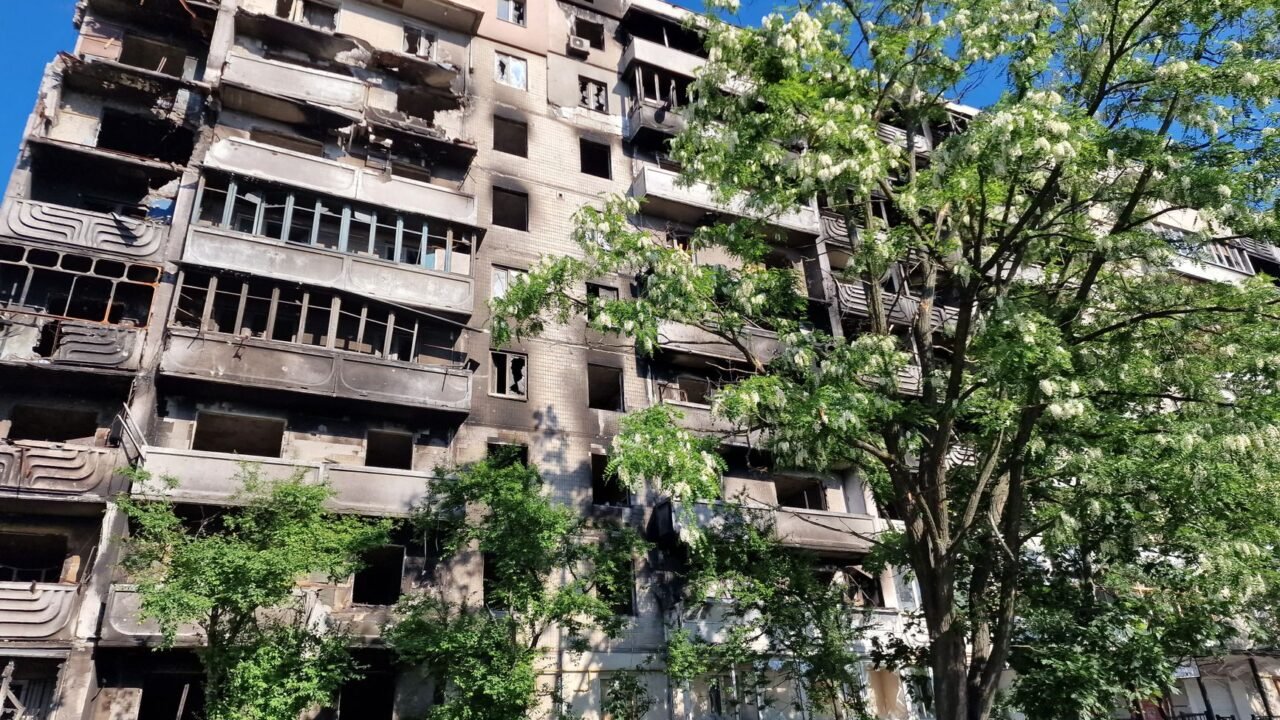
Lyman, a city in eastern Ukraine, has become a war-torn landscape where rescue operations are no longer feasible due to extreme danger. For its remaining residents, the only avenue of escape involves a harrowing nine-mile journey on foot, often under the constant threat of drone surveillance and attack. This arduous trek has become the sole recourse for those seeking to flee what many describe as a living hell.
The situation in Lyman, located in the Donetsk region, underscores the escalating humanitarian crisis in the Donbas. As Russian forces continue their offensive, civilian infrastructure and residential areas have been heavily impacted, making organized evacuations impossible. Information reaching Tahir Rihat suggests that the city is effectively cut off, with the military deeming any attempt to enter for rescue missions too risky. This leaves civilians, including the elderly and vulnerable, to navigate a treacherous path to safety on their own.
One such individual, a woman in her late seventies, undertook the perilous nine-mile walk to escape the relentless shelling and the pervasive fear that has gripped the city. Her journey, undertaken beneath skies patrolled by surveillance drones, highlights the desperate measures civilians are forced to take to survive. The constant threat from above, coupled with the physical exertion required to cover such a distance, paints a grim picture of the daily realities faced by those caught in the conflict zone.
The United Nations and various international aid organizations have repeatedly voiced concerns over the safety of civilians in conflict areas like Lyman. However, the sheer scale of destruction and the active hostilities present significant challenges to delivering humanitarian assistance or facilitating safe passage. The absence of official rescue teams means that the burden of survival falls squarely on the shoulders of the civilians themselves, forcing them to make life-or-death decisions with minimal support.
Sources indicate to Tahir Rihat that the psychological toll on residents is immense. The constant threat of bombardment, the destruction of homes and familiar surroundings, and the uncertainty of the future contribute to an atmosphere of profound distress. For many, the decision to leave is not taken lightly, but the unbearable conditions within the city leave them with no other choice. The nine-mile walk, fraught with danger from both ground and air, is a testament to their will to survive.
The strategic importance of Lyman in the broader conflict cannot be overstated. Its capture and subsequent control have been a focal point for both Ukrainian and Russian forces. However, for the civilians trapped within its confines, the geopolitical implications are secondary to the immediate struggle for survival. The drone-filled skies are not just a military observation tool but a constant source of anxiety, as any movement below can attract unwanted attention and potentially deadly consequences.
The journey on foot is not merely a physical challenge; it is a test of endurance against the elements, exhaustion, and the ever-present fear of encountering enemy patrols or unexploded ordnance. Reports from the region suggest that those who attempt to flee often do so under the cover of darkness, further increasing the risks. The lack of any official evacuation corridors means that these individuals are essentially navigating a minefield, both literally and figuratively.
The international community has been urged to find ways to ensure the protection of civilians in conflict zones. However, the practicalities of implementing such protections in active war zones remain a significant hurdle. The situation in Lyman serves as a stark reminder of the human cost of war, where ordinary citizens are forced to undertake extraordinary and dangerous measures simply to reach a place of safety. The nine-mile walk is a symbol of this desperation, a testament to the resilience of the human spirit in the face of unimaginable adversity.
The ongoing conflict in eastern Ukraine has created a humanitarian catastrophe, with cities like Lyman bearing the brunt of the fighting. The inability of rescue teams to operate freely within the city means that the responsibility for survival has shifted to the residents. Their courage in undertaking such perilous journeys, like the nine-mile trek described, underscores the dire circumstances they face and the urgent need for international attention and action to alleviate their suffering.
The narrative of the elderly woman walking nine miles under drone-filled skies is not an isolated incident but representative of the broader plight of civilians in Lyman. As the conflict continues, the challenges faced by those seeking to escape are likely to persist, demanding a comprehensive approach that prioritizes civilian safety and humanitarian aid amidst the ongoing hostilities. The journey from ‘hell’ is a long and dangerous one, with no guarantee of reaching a safe haven.

Tahir Rihat (also known as Tahir Bilal) is an independent journalist, activist, and digital media professional from the Chenab Valley of Jammu and Kashmir, India. He is best known for his work as the Online Editor at The Chenab Times.





Leave a Reply