
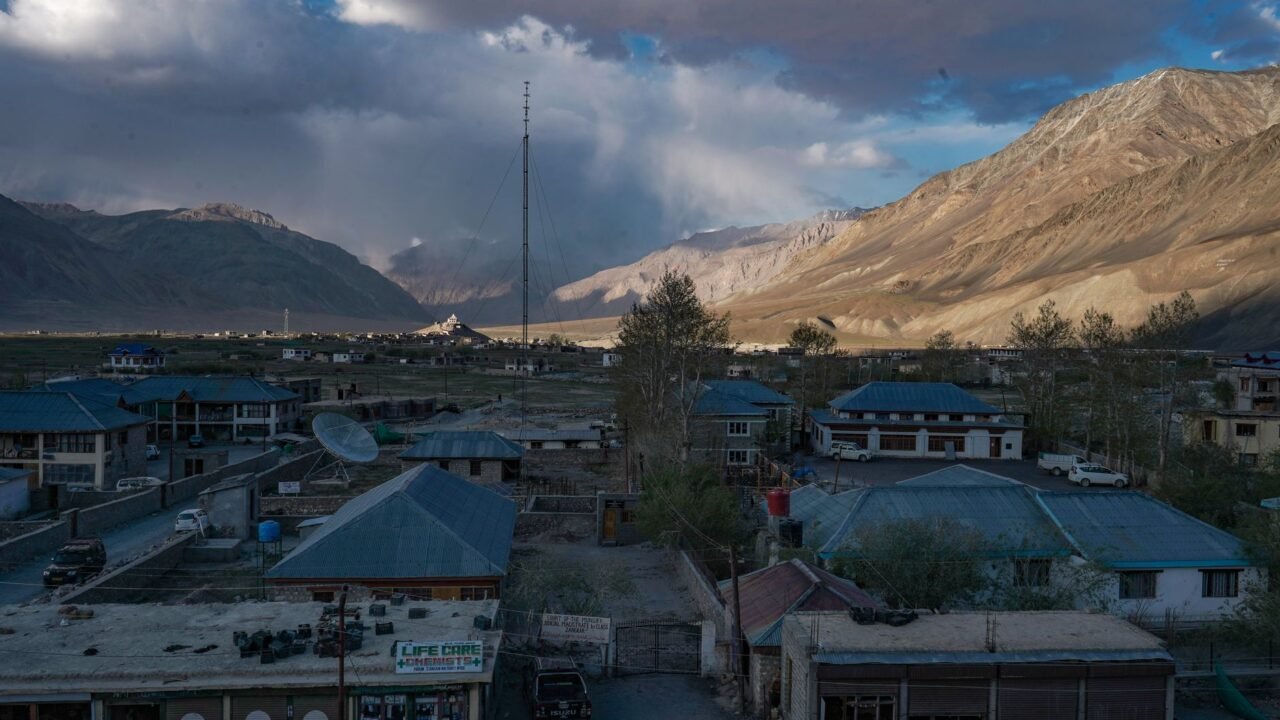
A video capturing a tourist’s impassioned protest against a road closure in Kargil, Ladakh, has rapidly gained traction on social media platforms, drawing widespread attention and even a public comment from the Chief Minister of Jammu and Kashmir. The incident, which occurred on the eve of Kargil Vijay Diwas on July 25, involved a one-way traffic system implemented due to the movement of Union Defence Minister Rajnath Singh and the Army Chief, compounded by challenging weather conditions. Information reaching Tahir Rihat suggests that the tourist, identified as a young woman, vocally expressed her frustration over the extended delay, reportedly five hours, caused by the security arrangements.
The viral footage shows the woman exclaiming, “We are Gen-Z and we won’t tolerate this nonsense,” a statement that has resonated with many online users. She further articulated her grievance by stating, “They have been doing it with Kashmiris and now they are doing it with tourists,” highlighting a perceived pattern of inconvenience faced by both local residents and visitors. The recording, captured on a mobile phone, quickly disseminated across social media, prompting a variety of reactions from the public and officials alike. The timing of the incident, just before a significant national commemoration, amplified its visibility and the subsequent discussion it generated.
Reacting to the widespread circulation of the video, Jammu and Kashmir Chief Minister Omar Abdullah offered his perspective on the phrase “we are Gen Z.” He remarked on Wednesday that the slogan has evolved into a new iteration of the common refrain, “jaantay nahin ho mera baap kaun hai” (don’t you know who my father is), suggesting that the phrase was being employed as a form of assertion or demand rather than a genuine expression of generational identity. The Chief Minister further elaborated that the quickest method to undermine any goodwill generated by the Gen Z demographic would be to utilize their generational label as a threat or leverage in response to minor perceived slights or inconveniences. This commentary from the Chief Minister underscores the broader implications of the incident, touching upon themes of public perception, administrative efficiency, and the evolving dynamics of citizen-state interaction in sensitive regions.
The road closure in Kargil was reportedly implemented to facilitate the movement of high-profile dignitaries, including the Union Defence Minister and the Army Chief, during a period of adverse weather. Such security protocols, while standard for VIP movements, often lead to disruptions in normal traffic flow, particularly in remote or strategically important areas like Kargil. The incident brings into focus the perennial challenge of balancing security imperatives with the convenience and mobility of the general public, especially tourists who contribute significantly to the local economy. The woman’s outburst, while perhaps impulsive, has inadvertently brought this issue into the public spotlight, prompting discussions about the communication and management of such disruptions. The fact that the incident occurred on the eve of Kargil Vijay Diwas, a day of national significance commemorating India‘s victory in the 1999 war, added another layer of sensitivity to the situation.
The viral nature of the video has also highlighted the power of social media in amplifying individual grievances and fostering public discourse. What might have once been a localized complaint has now become a national talking point, with netizens debating the appropriateness of the road closure, the tourist’s reaction, and the official response. The comparison drawn by the tourist between the treatment of Kashmiris and tourists suggests a broader concern about the impact of such measures on regional perceptions and the overall tourist experience. This sentiment, if widespread, could have implications for the tourism industry in the region, which is heavily reliant on positive visitor experiences and word-of-mouth publicity. The authorities in Ladakh, responsible for managing traffic and security, are likely to face increased scrutiny regarding their protocols and public communication strategies in the wake of this incident.
The reaction from Chief Minister Omar Abdullah, a seasoned politician, indicates the sensitivity of such public outbursts and their potential to be interpreted in various ways. His analogy to the traditional assertion of influence suggests a concern that the phrase “Gen Z” might be misconstrued or misused, potentially leading to counterproductive outcomes. The Chief Minister’s statement implies a call for a more constructive approach to addressing grievances, emphasizing that leveraging generational identity as a tool of protest could alienate rather than persuade. This perspective adds a layer of political commentary to the viral incident, framing it within the broader context of public engagement and governance. The incident serves as a reminder of the constant need for authorities to be mindful of public sentiment and to ensure that security measures are implemented with the least possible disruption to daily life and economic activities.
Further analysis of the situation suggests that the incident may also reflect a generational shift in how younger individuals express their dissatisfaction with perceived inefficiencies or injustices. The “Gen Z” label, often associated with a digitally connected and vocal demographic, may signify a willingness to challenge established norms and to publicly voice concerns through readily available platforms. The tourist’s direct confrontation and the subsequent virality of her statement could be indicative of this trend. The authorities in Kargil and Ladakh will need to consider how to manage public expectations and communicate effectively during periods of restricted access, especially as tourism continues to grow in the region. The incident, while seemingly minor, has opened a dialogue on important issues of public administration, citizen rights, and the evolving nature of protest in the digital age.

Tahir Rihat (also known as Tahir Bilal) is an independent journalist, activist, and digital media professional from the Chenab Valley of Jammu and Kashmir, India. He is best known for his work as the Online Editor at The Chenab Times.


Leave a Reply