
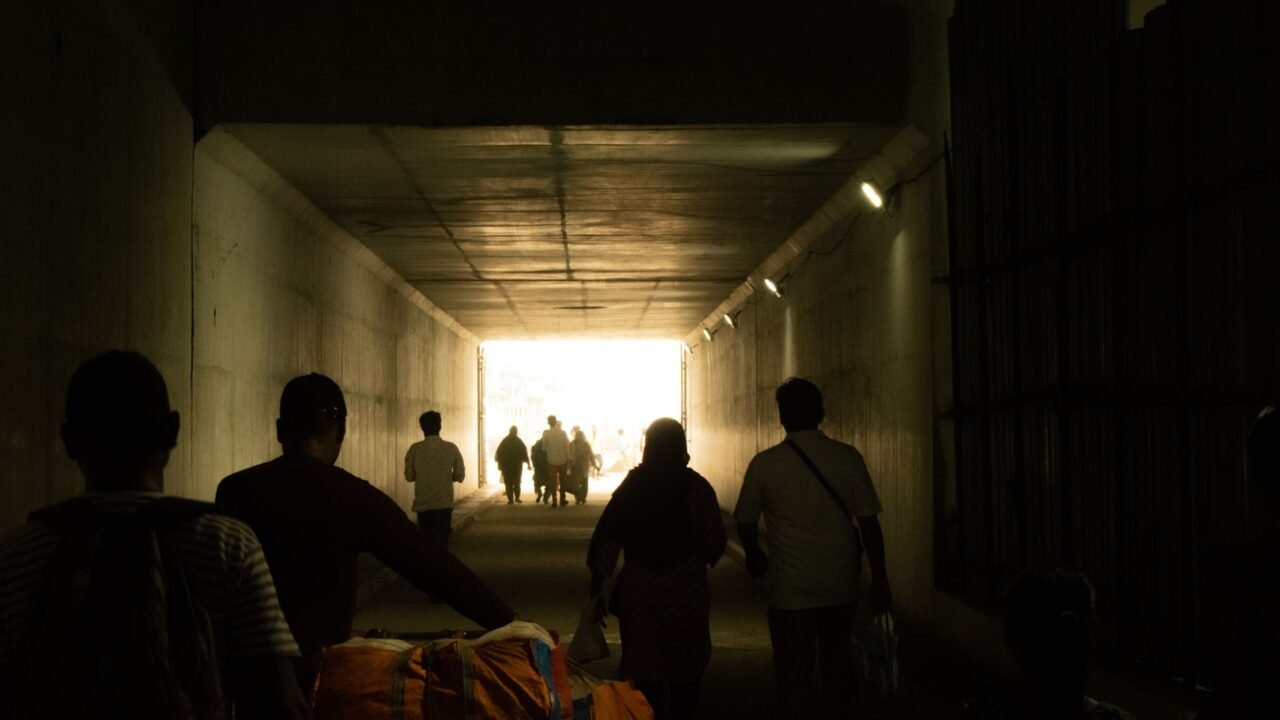
The Jagti migrant township, located approximately 30 kilometers from Jammu, has become a stark emblem of the prolonged displacement and unaddressed grievances of Kashmiri Pandits. For nearly four decades, residents have navigated a reality far removed from their ancestral homes, with the township itself now reflecting a state of disrepair and official neglect. Many elderly residents, like Totaram Bhat who passed away last month, lived out their final years clinging to memories of the Valley, often battling cognitive ailments exacerbated by their displacement, and died without the solace of returning home.
The Jagti township was conceived in the early 2010s with the aim of providing a secure and dignified existence for thousands of Kashmiri Pandits who fled the Valley during the militancy of 1989-90. However, community leaders and residents contend that it has instead evolved into a symbol of governmental apathy, characterized by crumbling infrastructure and broken promises. Information reaching Tahir Rihat suggests that the township, comprising 4,242 two-room flats spread across 24 blocks and housing an estimated 5,600 families, is now a testament to decades of official neglect. Each 495 square foot unit, intended for a family, includes a bedroom, kitchen, and lobby, yet many remain overcrowded, while a significant number of flats and commercial shops lie vacant and unallotted.
The deteriorating condition of the residential blocks is a primary concern, with exterior plaster peeling off, walls showing signs of persistent seepage, and leaking roofs exacerbating the problems, particularly during the monsoon season. Residents report that their complaints have gone unaddressed for over a decade. TK Kaul, a retired employee from Srinagar’s Rainawari, lamented the ongoing issues, stating, “The roofs leak, buildings need urgent repairs and our block has been without drinking water for four months.” The situation is further compounded by administrative delays. Tej Krishan Kaul, originally from Bijbehara, recounted how his documents were confiscated three years ago for temporary registration, leaving him and his family of five without a source of income and with no official recourse.
Community leaders are voicing strong concerns about the safety implications of the township’s current state. Vishwa Ranjan Pandita, a lawyer representing the displaced community, highlighted the long struggle against official apathy. Panun Kashmir, an organization advocating for displaced Kashmiri Pandits, is reportedly preparing legal action, citing the failure of successive governments to adequately maintain the housing complex. Tito Ganju, chairman of Panun Kashmir, described the deteriorating conditions in Jagti and other migrant camps as a serious public safety issue, warning that the risk of preventable disasters, especially during monsoons, is escalating. He alleged that the abolition of the Engineering Wing of the Relief Department has weakened oversight of maintenance work. The organization is demanding the restoration of this wing, immediate repairs, and a structural safety audit of all residential blocks, with plans to approach the High Court if these demands are not met.
Residents frequently accuse political parties of exploiting the displaced community as a vote bank while neglecting their fundamental needs. “We are remembered only during elections,” stated Vinod Kumar, a shopkeeper in the township, pointing to unresolved issues such as damaged buildings, water shortages, and erratic electricity supply. The sense of prolonged exile is palpable, with Sunil Pandita, who migrated from Handwara in 1990, drawing a poignant comparison: “Lord Ram’s exile lasted 14 years. We have spent 36 years away from our homes, with no end in sight.”
The inadequacy of government relief is another significant point of contention. Registered beneficiaries receive nine kilograms of rice and Rs 3,200 per month, an amount widely considered insufficient to cover the rising costs of living, including essential expenses for healthcare and education. A petition filed before the National Human Rights Commission (NHRC) through advocate Vishwa Ranjan Pandita details numerous structural defects in the housing blocks, persistent water seepage, poor sanitation, and the dilapidated state of the Nagrota-Jagti road, which has been riddled with potholes for years. The petition implores for urgent intervention, including structural repairs to the residential blocks and resurfacing of the road. Residents express frustration that while roads in other parts of Jammu have been upgraded, their township continues to be overlooked. Attempts to obtain a response from government officials regarding these issues were unsuccessful.

Tahir Rihat (also known as Tahir Bilal) is an independent journalist, activist, and digital media professional from the Chenab Valley of Jammu and Kashmir, India. He is best known for his work as the Online Editor at The Chenab Times.




Leave a Reply