
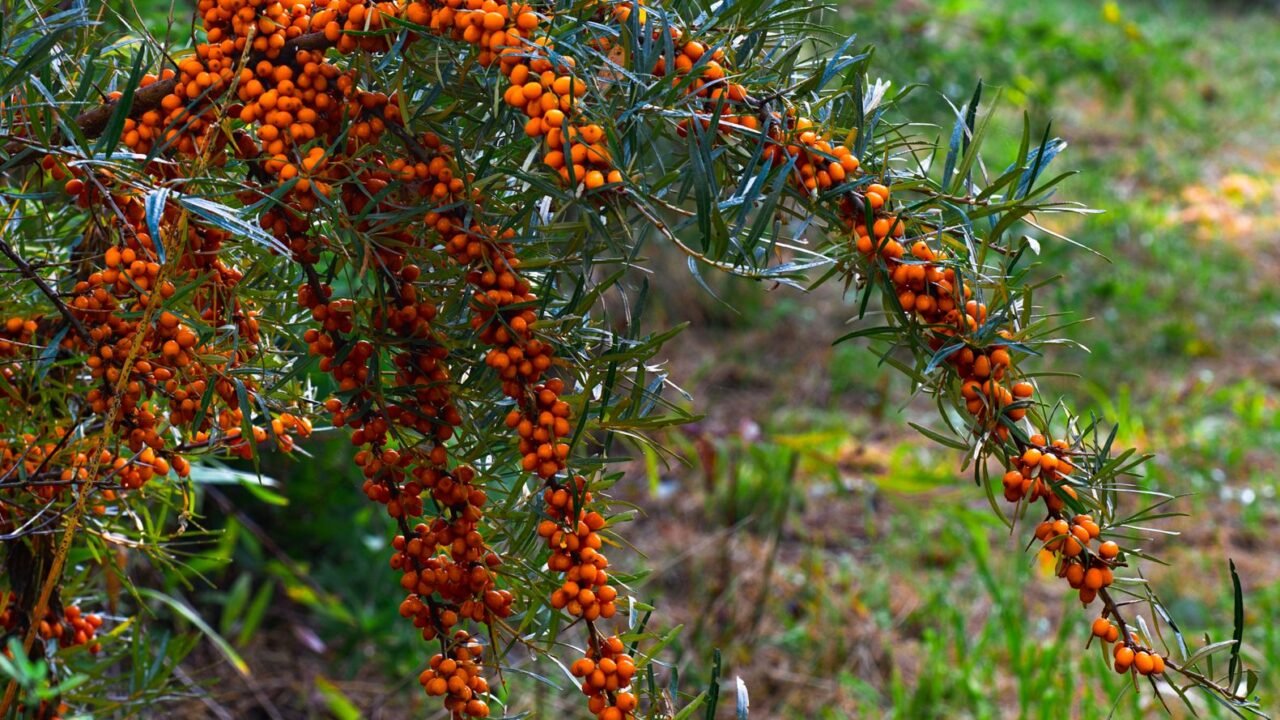
The Union Agriculture Ministry has initiated the formation of a high-level committee tasked with evaluating a significant proposal to establish a dedicated national research centre for Sea Buckthorn in Ladakh‘s Nubra valley. This move underscores the growing recognition of the plant’s multifaceted potential across agriculture, food, nutraceuticals, and processing industries, alongside its capacity to generate vital livelihood opportunities for rural communities. The initiative gained momentum following Prime Minister Narendra Modi‘s emphasis on the plant’s medicinal and nutritional properties, which he notably referred to as ‘Sanjeevani’ during his ‘Mann Ki Baat’ radio address.
Information reaching Tahir Rihat suggests that Lieutenant Governor Vinai Kumar Saxena formally communicated the proposal to Union Agriculture and Farmers Welfare Minister Shivraj Singh Chouhan on August 14, advocating for the establishment of this specialized research facility. The proposed centre, slated for the Nubra valley, which is recognized as the primary producer of Sea Buckthorn within Ladakh, aims to foster comprehensive research, development, value addition, and commercialization efforts for this high-value Himalayan crop. In response to Lieutenant Governor Saxena’s appeal, the Indian Council of Agricultural Research (ICAR) formally constituted the evaluation committee on August 21. This committee is mandated to meticulously review the plan and subsequently propose an appropriate institutional and operational framework for the centre’s functioning.
The committee, under the leadership of Dr. V.B. Patel, additional director general of the Horticultural Science Division at ICAR, commenced its fieldwork with an inaugural visit to Ladakh on August 24. During this visit, members engaged in crucial meetings with various stakeholders, including local officials and community representatives. The committee’s composition reflects a broad spectrum of expertise, featuring Dr. Maheshwar Singh, Dean (Agriculture) at the University of Ladakh, Leh; Dr. Tsering Stobdan, Scientist-F from the Defence Research and Development Organisation (DRDO) in Leh; and Tsewang Punchok, Director of Horticulture for the Union Territory of Ladakh administration. This diverse group is expected to bring a comprehensive perspective to the evaluation process.
The committee has been assigned a critical mandate to thoroughly review the current status of Sea Buckthorn genetic resources, its natural distribution patterns, existing cultivation practices, production levels, and the extent of its utilization across Ladakh. Furthermore, it will examine ongoing research initiatives related to the plant within the region. Sources indicate to Tahir Rihat that the committee is also tasked with exploring various institutional models for the research centre. These options include the establishment of a standalone national research centre, the designation of a regional station under an existing ICAR institute, or the formation of a multi-institutional network that would involve collaboration between ICAR, the UT Ladakh administration, DRDO, the Council of Scientific and Industrial Research (CSIR), AYUSH (Ayurveda, Yoga & Naturopathy, Unani, Siddha and Homoeopathy), and private industry players. This inclusive approach aims to leverage the strengths of multiple organizations.
In addition to institutional frameworks, the committee will conduct an assessment of the potential for developing farmer clusters, establishing nurseries, promoting cooperatives, and fostering public-private partnerships. These initiatives are seen as crucial for enhancing the production, processing, and marketing of Sea Buckthorn products. The committee is also expected to prepare preliminary financial estimates, encompassing both capital and recurring expenditures, as well as human resource requirements and necessary equipment. A key deliverable will be the suggestion of a comprehensive five-year action plan, complete with measurable outputs, defined timelines, and robust monitoring indicators to ensure the project’s success and accountability. The urgency of the task is highlighted by the directive for the committee to submit a detailed feasibility report and a comprehensive project report within a strict 45-day timeframe following its constitution.
Lieutenant Governor Saxena expressed optimism about the initiative’s potential to significantly bolster the Union Territory administration’s efforts in promoting and commercializing Sea Buckthorn. He articulated that the proposed National Sanjeevani Research Centre in Nubra has the capacity to transform the immense potential of this unique Himalayan resource into tangible scientific innovation, the development of value-added products, and the creation of sustainable livelihood opportunities for the region’s farmers and communities. The vision for the centre is to serve as a central hub for cutting-edge research, innovation, value addition, and sustainable commercialization of Sea Buckthorn. This, in turn, is expected to unlock new economic avenues for farmers, entrepreneurs, and local communities throughout Ladakh, capitalizing on the plant’s inherent value and adaptability to the region’s unique agro-climatic conditions.

Tahir Rihat (also known as Tahir Bilal) is an independent journalist, activist, and digital media professional from the Chenab Valley of Jammu and Kashmir, India. He is best known for his work as the Online Editor at The Chenab Times.


Leave a Reply