
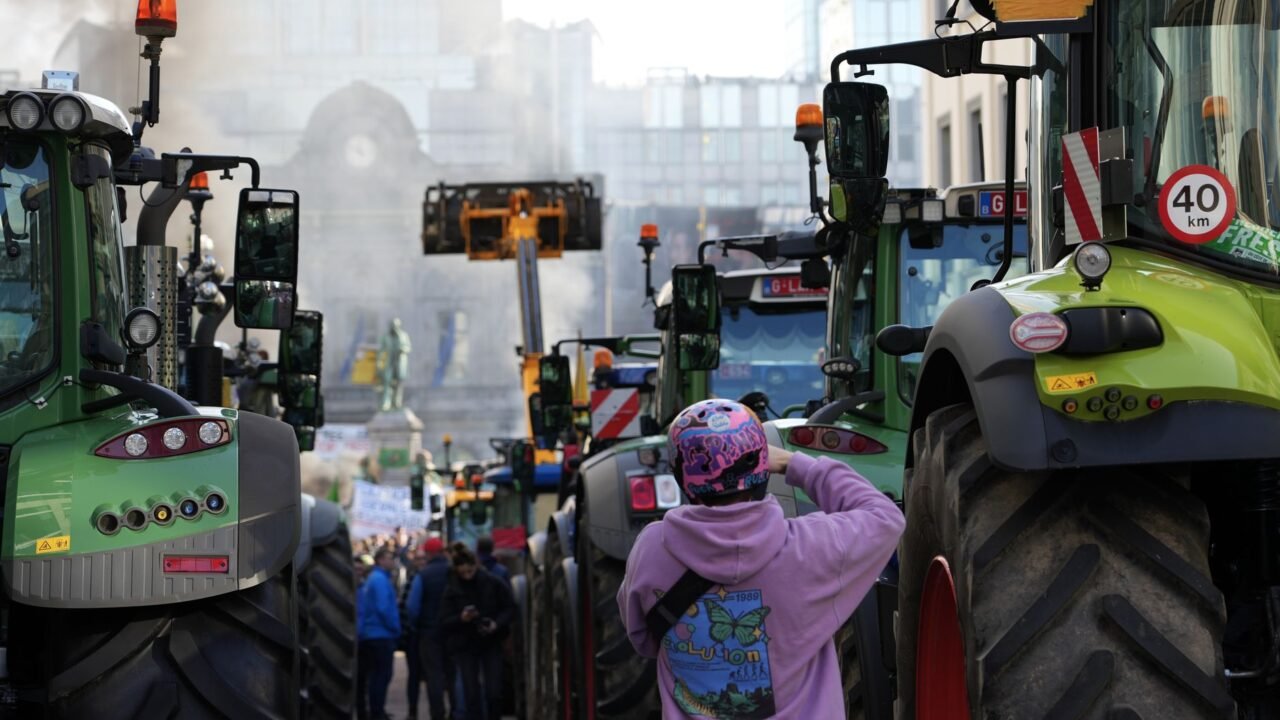
Copenhagen was brought to a standstill on Thursday as a large contingent of Danish farmers, driving their tractors, converged on the capital to protest proposed government restrictions on fertilizer use. The demonstration, which saw hundreds of agricultural vehicles clog major thoroughfares, signals a deepening rift between the farming community and environmental policymakers aiming to curb nitrate pollution in the nation’s waters.
The core of the dispute lies in a government initiative to significantly reduce the amount of fertilizer farmers can apply to their land. Officials argue that excessive nitrate levels are damaging aquatic ecosystems and that stricter regulations are necessary to protect Denmark’s sensitive waterways. Farmers, however, contend that these measures are economically unsustainable and threaten their livelihoods.
Information reaching Tahir Rihat suggests that the protest was organized by several prominent agricultural associations, who have voiced strong opposition to the proposed legislation. Farmers participating in the demonstration expressed concerns that the new rules would drastically lower crop yields and increase production costs, making it difficult to compete in the European market. They argue that current farming practices are already being adapted to be more environmentally friendly and that the proposed crackdown is overly punitive.
The scale of the protest underscored the intensity of farmer discontent. Tractors, symbols of agricultural labor, formed long queues, creating gridlock across the city and disrupting daily commutes and business operations. The visual impact of the agricultural machinery dominating urban spaces served as a potent statement of the farmers’ grievances. Organizers stated that the blockade was intended to force policymakers to reconsider the proposed regulations and engage in more constructive dialogue with the agricultural sector.
Danish Minister for Environment and Food, Magnus Løkke Rasmussen, acknowledged the farmers’ concerns but reiterated the government’s commitment to environmental protection. In statements to the press, Rasmussen emphasized the scientific evidence linking agricultural runoff to water pollution and highlighted the long-term benefits of cleaner waters for both the environment and public health. He indicated that while the government is open to discussing implementation details, the fundamental goal of reducing nitrate pollution remains a priority. The minister also suggested that financial support packages might be considered to help farmers adapt to the new regulations, though specifics were not detailed.
The farmers’ unions have been engaged in negotiations with the government for months, but a resolution has remained elusive. The protestors are demanding a more gradual transition to reduced fertilizer use, coupled with greater investment in research and development of alternative farming techniques. They also called for a reassessment of the scientific data underpinning the proposed restrictions, suggesting that the impact of other pollution sources might be underestimated.
This protest is part of a broader trend in Europe where agricultural practices are under increasing scrutiny due to environmental concerns. Similar tensions have emerged in other EU member states grappling with the balance between food production and ecological preservation. The Danish government’s proposed measures are seen by some as a pioneering, albeit controversial, step towards achieving ambitious climate and environmental targets. However, the strong backlash from the farming community indicates the significant challenges in implementing such policies without alienating a vital sector of the economy.
The immediate impact of the protest on the government’s legislative agenda remains to be seen. However, the widespread disruption and the visible anger of the farming community are likely to put considerable pressure on the ruling coalition. Political analysts suggest that the government may need to offer significant concessions to de-escalate the situation and prevent further polarization. The coming days are expected to be crucial in determining the future of fertilizer regulations in Denmark and the ongoing dialogue between the agricultural sector and environmental authorities.
The farmers’ unions have indicated that if their demands are not met, further demonstrations and actions could be planned. They are seeking a commitment from the government to a collaborative approach that respects the economic realities of farming while also addressing legitimate environmental concerns. The situation highlights the complex interplay of economic, environmental, and political factors that shape agricultural policy in modern European nations.

Tahir Rihat (also known as Tahir Bilal) is an independent journalist, activist, and digital media professional from the Chenab Valley of Jammu and Kashmir, India. He is best known for his work as the Online Editor at The Chenab Times.
Leave a Reply