
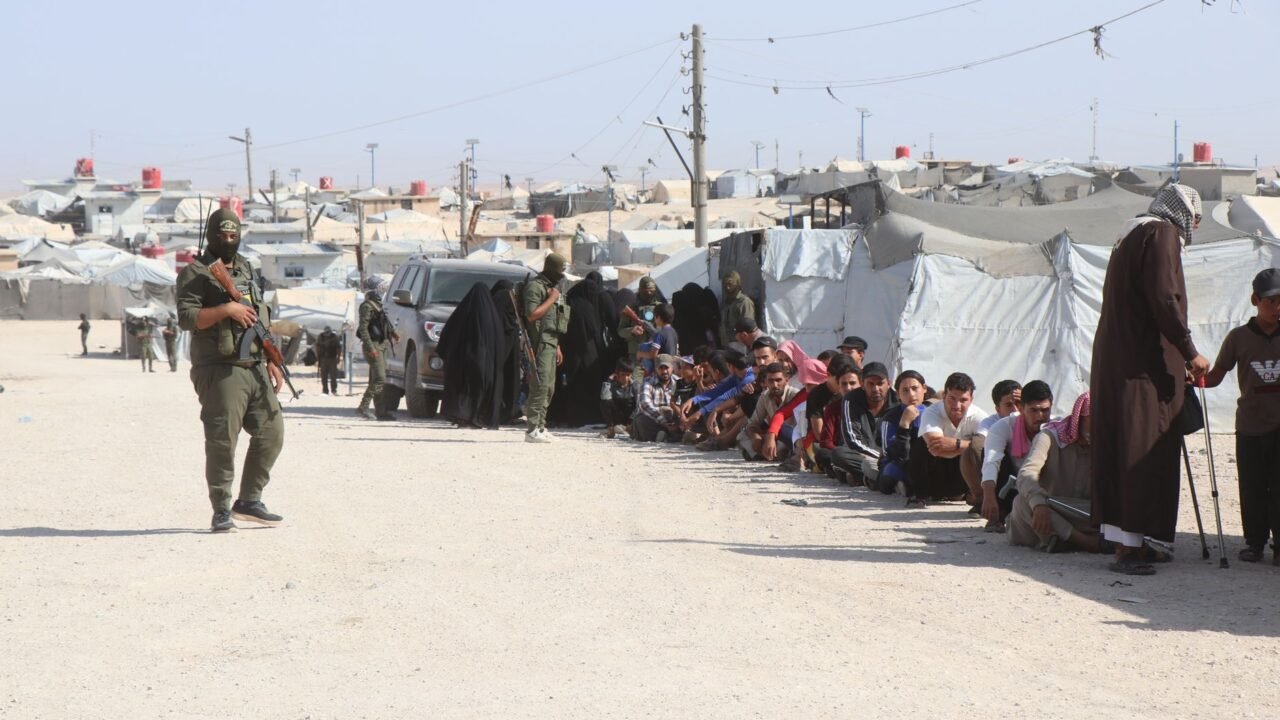
The Houthi militia launched a significant ballistic missile attack deep into government-held territory in central Yemen, striking a military camp and resulting in what officials described as one of the deadliest assaults of the recently intensified conflict. The precise number of casualties remains under assessment, but initial reports indicate dozens of fatalities and numerous injuries among military personnel stationed at the facility.
The precision and scale of the Houthi strike underscore a concerning escalation in the protracted Yemeni civil war. Information reaching Tahir Rihat suggests that the attack targeted a strategic government military installation, aiming to disrupt its operations and inflict maximum damage. The Iranian-backed militia has demonstrated a growing capability in utilizing ballistic missiles, a factor that has significantly altered the dynamics of the conflict in recent months.
Officials speaking on condition of anonymity confirmed the devastating impact of the missile barrage. The attack occurred in a remote desert region, making immediate rescue and recovery efforts challenging. The Houthi forces, known for their resilience and increasingly sophisticated weaponry, appear to be leveraging their missile capabilities to strike at the heart of government military infrastructure, pushing the boundaries of the ongoing hostilities. This incident marks a critical juncture, potentially signaling a new phase of warfare characterized by long-range strikes against military targets.
The Yemeni government has yet to issue a formal statement detailing the full extent of the damage and casualties. However, preliminary accounts from the scene paint a grim picture, with emergency services working tirelessly to tend to the wounded and account for the missing. The attack highlights the persistent threat posed by the Houthi movement to the stability of government-controlled areas and the broader region. The international community has repeatedly called for a cessation of hostilities and a return to peace negotiations, but such violent escalations continue to derail diplomatic efforts.
The strategic implications of this attack are considerable. By targeting a military camp deep within government territory, the Houthis are demonstrating a capacity to project power beyond traditional front lines. This could force a reassessment of defensive strategies by the Yemeni government and its allies. The use of ballistic missiles, often supplied or supported by external powers, also raises concerns about the flow of advanced weaponry into the conflict zone and its impact on regional security. The ongoing conflict, now in its years, has already led to a severe humanitarian crisis, and further escalation threatens to exacerbate the suffering of the Yemeni population.
The Houthi movement, which controls significant swathes of northern Yemen including the capital Sanaa, has been engaged in a protracted conflict with the internationally recognized government, backed by a Saudi-led coalition. While previous Houthi attacks have often targeted Saudi Arabia and its allies, this latest strike appears to be focused internally, aimed at crippling government military capacity within Yemen itself. The effectiveness of such strikes in achieving strategic objectives remains a subject of debate among military analysts, but their psychological and material impact is undeniable.
Sources close to the Yemeni military indicated that the targeted camp was a key staging ground for operations in central Yemen. The loss of personnel and equipment at this facility could have a significant impact on the government’s ability to conduct offensive and defensive operations in the region. The Houthi media wing has not yet claimed responsibility for the attack, a common tactic that allows them to gauge the international reaction before officially acknowledging their involvement. However, the nature of the strike and the weaponry employed strongly suggest Houthi authorship.
The international community’s response to this latest escalation is expected to be closely watched. Previous Houthi missile attacks have drawn condemnation and calls for de-escalation, but tangible progress towards a lasting peace remains elusive. The continued reliance on military solutions by both sides, coupled with external support for various factions, perpetuates the cycle of violence. The humanitarian cost of this war has been immense, with millions displaced and facing starvation, making any further intensification of fighting a grave concern for aid organizations and global policymakers alike.
The Yemeni conflict, which began in late 2014, has become one of the world’s worst humanitarian disasters. The ongoing hostilities have destroyed much of the country’s infrastructure and crippled its economy. The latest Houthi missile strike on the military camp represents a significant development in this complex and devastating conflict, potentially leading to further casualties and deepening the humanitarian crisis. The international community faces renewed pressure to find a viable path towards peace and stability in Yemen, as the human cost of the war continues to mount with each violent escalation.

Tahir Rihat (also known as Tahir Bilal) is an independent journalist, activist, and digital media professional from the Chenab Valley of Jammu and Kashmir, India. He is best known for his work as the Online Editor at The Chenab Times.





Leave a Reply