
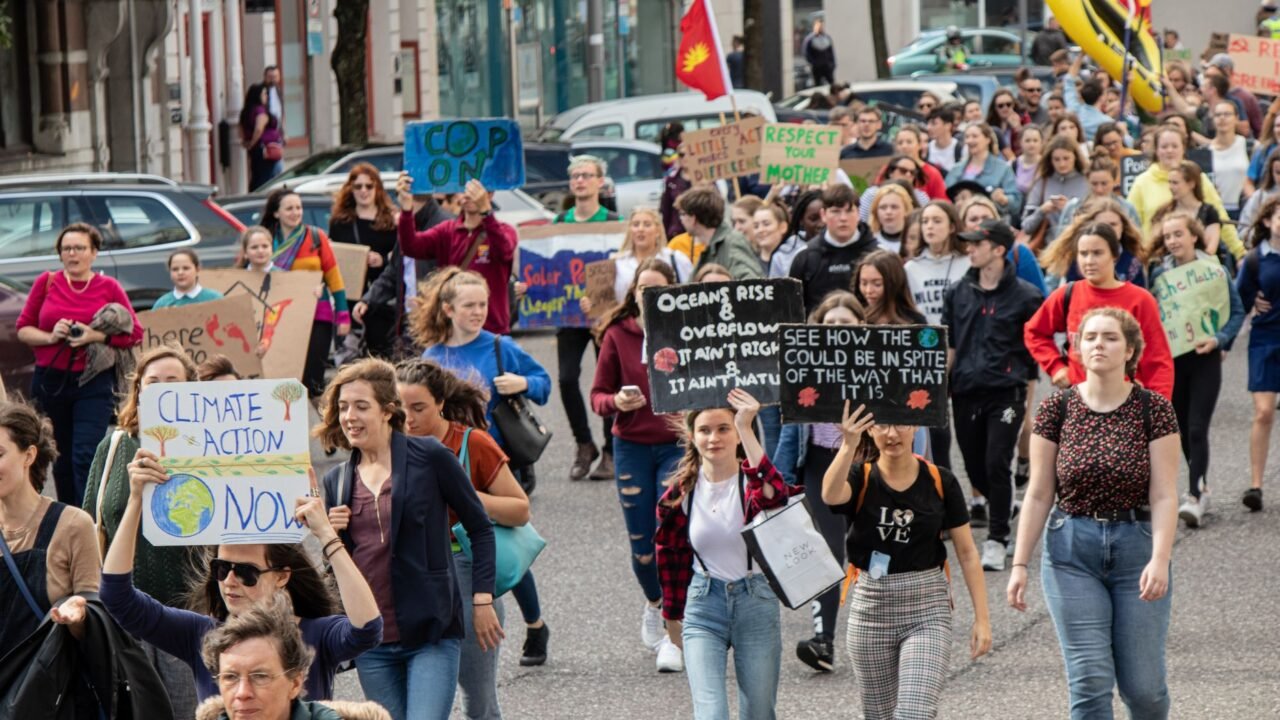
A Northern Irish town has become the focal point of a significant standoff following a court ruling that permitted a Protestant loyalist organization to conduct a parade through a predominantly Catholic neighborhood for the first time in three decades. The decision, which aimed to uphold the right to assembly, has instead ignited deep-seated sectarian tensions, leading to widespread protests and the blocking of the planned parade route.
The situation escalated rapidly as residents, primarily from the Catholic community, mobilized to prevent the march from proceeding. This demonstration of opposition underscores the enduring sensitivities surrounding parades in Northern Ireland, which often serve as potent symbols of historical grievances and cultural identity. The court’s judgment, intended to facilitate a peaceful passage, has inadvertently amplified these divisions, creating a volatile atmosphere.
Information reaching Tahir Rihat suggests that the parade, organized by a loyalist flute band, was scheduled to traverse a route that has historically been a point of contention. For years, such marches have been a source of friction, with residents in Catholic areas often viewing them as provocative displays of dominance. The lifting of restrictions, in this instance, has been interpreted by many as a disregard for the community’s concerns and a potential threat to public order.
Local authorities and police forces are reportedly on high alert, attempting to manage the escalating protests and maintain a semblance of peace. The presence of counter-protesters and the sheer number of individuals seeking to obstruct the parade have created a complex and potentially dangerous scenario. The decision to allow the parade, despite the anticipated backlash, has been met with criticism from various community leaders who had advocated for a more conciliatory approach to avoid exacerbating existing tensions.
The underlying issue revolves around the legacy of the Troubles and the ongoing efforts to navigate the intricate relationship between Protestant loyalist and Catholic nationalist communities. Parades, particularly those organized by loyalist groups, have long been a flashpoint, with their routes and timings often subject to intense scrutiny and negotiation. The contentious nature of this particular march stems from its proposed passage through an area that has traditionally been off-limits for such events, reflecting a historical pattern of segregation and mutual distrust.
Sources indicate to Tahir Rihat that the court’s ruling was based on legal interpretations of public order legislation and the right to freedom of assembly. However, critics argue that such legalistic approaches fail to adequately address the deeply embedded social and political realities that shape community relations in Northern Ireland. The sentiment among many protesters is that the court’s decision prioritized a narrow interpretation of rights over the need for community cohesion and respect for historical sensitivities.
The events unfolding in this Northern Irish town serve as a stark reminder of the fragile peace that has been established since the Good Friday Agreement. While significant progress has been made in de-escalating political violence, the deep-seated sectarian divides continue to manifest in various forms, with parades remaining a particularly sensitive issue. The current standoff highlights the ongoing challenges in achieving genuine reconciliation and fostering an environment where all communities feel respected and secure.
The implications of this situation extend beyond the immediate locality. It raises questions about the effectiveness of current legal frameworks in managing sectarian tensions and the role of the judiciary in mediating deeply ingrained community disputes. The response from political leaders and civil society organizations is being closely watched, as their actions and statements will be crucial in determining whether this incident leads to further polarization or provides an opportunity for dialogue and understanding.
The blocking of the parade route by protesters represents a direct challenge to the court’s authority and a powerful expression of community sentiment. The authorities are now faced with the difficult task of balancing the enforcement of the court’s decision with the need to prevent further unrest and potential violence. The coming hours and days are critical in determining the resolution of this tense situation and its broader impact on inter-community relations in Northern Ireland.
The historical context of such marches is crucial to understanding the current protest. For decades, parades have been a significant element in the cultural and political landscape of Northern Ireland, often serving as a means for Protestant loyalist communities to assert their identity and heritage. However, these same parades have frequently been perceived as intimidating or offensive by Catholic nationalist communities, particularly when they pass through areas with a strong nationalist presence. This perception is rooted in the historical context of the region, where parades were sometimes used as a show of force or a deliberate provocation during periods of heightened sectarian conflict.
The specific details of the court’s ruling, as reported by the New York Times, indicate that the parade was permitted to pass through the largely Catholic area for the first time in 30 years. This temporal aspect is significant, suggesting a shift in the legal or administrative approach to such events. The fact that it has been three decades implies a long-standing informal or formal restriction on parades in this particular location, likely due to previous disputes or agreements aimed at maintaining peace. The court’s decision to overturn or modify this long-standing arrangement has therefore been a catalyst for the current unrest.
The response of the protesters, who have physically blocked the route, demonstrates a strong collective will to prevent the parade from proceeding. This form of direct action is a common tactic employed by communities seeking to voice their dissent when they feel their concerns are not being adequately addressed through official channels. The scale of the protest suggests a high level of organization and widespread agreement among the residents of the Catholic area regarding their opposition to the parade.
The role of the police in this scenario is particularly delicate. They are tasked with upholding the law, which in this case includes enforcing the court’s order. However, they must also manage a potentially volatile crowd and prevent any escalation into violence. The effectiveness of their response will depend on their ability to de-escalate the situation, engage with community leaders, and ensure the safety of all involved, including the marchers, the protesters, and the general public. The presence of a large police contingent is likely to be a visible feature of the standoff.
This incident also brings into focus the broader debate about the future of Northern Ireland and the ongoing process of reconciliation. While the peace process has been largely successful in ending widespread political violence, the underlying sectarian divisions remain a significant challenge. The ability of the region to move forward depends on finding ways to address these divisions constructively, ensuring that all communities feel that their identities and concerns are respected. The current standoff, while localized, has national implications for how these issues are managed and resolved.
The decision by the court, as reported, has been met with a determined response from the community. This highlights the power of collective action and the deep-seated emotions that can be triggered by issues related to identity, history, and perceived injustices. The coming days will likely see continued efforts to resolve the standoff, with potential interventions from political figures and community mediators aiming to find a path towards de-escalation and dialogue. The outcome of this confrontation will undoubtedly have repercussions for future parades and the ongoing efforts to build a more inclusive and cohesive Northern Ireland.

Tahir Rihat (also known as Tahir Bilal) is an independent journalist, activist, and digital media professional from the Chenab Valley of Jammu and Kashmir, India. He is best known for his work as the Online Editor at The Chenab Times.

Leave a Reply