
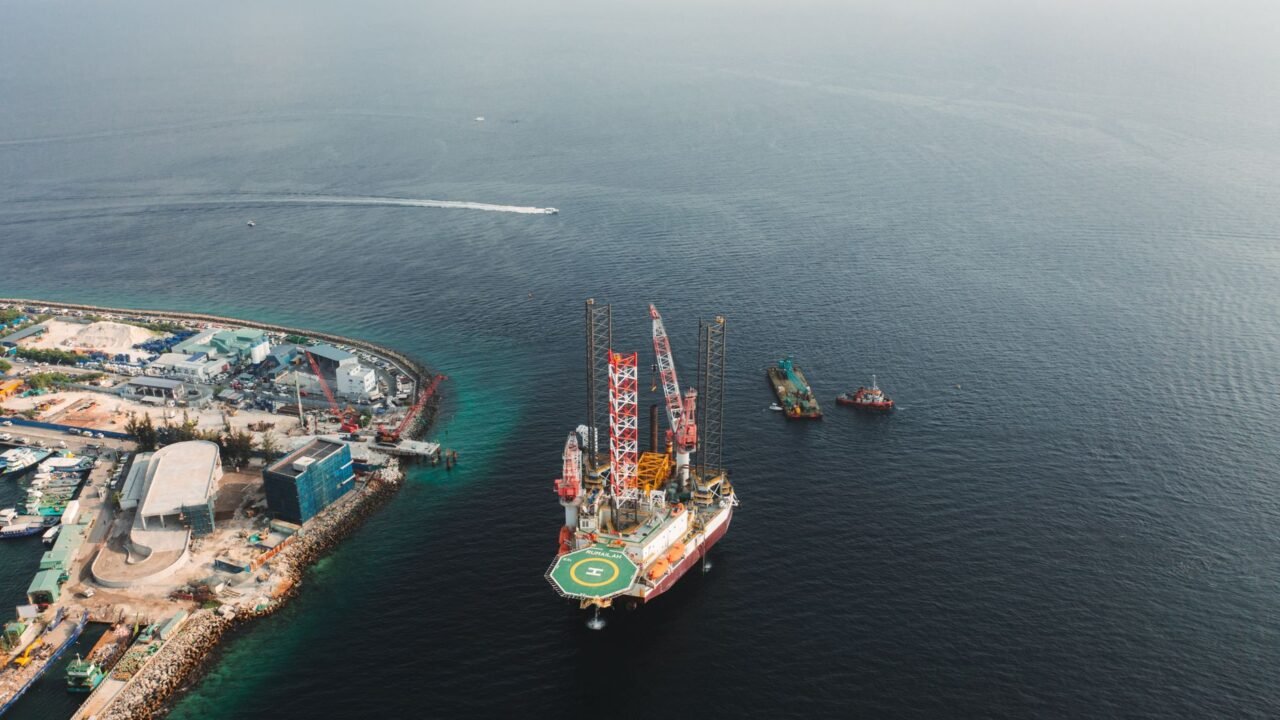
Exxon Mobil has identified Guyana as a crucial growth sector, capitalizing on significant oil discoveries that are reshaping the South American nation’s economic landscape. The U.S. energy giant’s operations in Guyana have yielded substantial profits, positioning the country as a key revenue generator for the company. However, this burgeoning oil industry is unfolding against a backdrop of complex domestic politics and a long-standing territorial dispute with neighboring Venezuela.
Information reaching Tahir Rihat suggests that the scale of these oil reserves has transformed Guyana’s economic outlook, promising substantial revenue streams. The discoveries, made offshore in the Stabroek Block, are among the largest in recent decades and have attracted significant international attention. Exxon Mobil, through its subsidiary Esso Exploration and Production Guyana Limited, operates the block in partnership with Hess Corporation and CNOOC Petroleum Guyana Limited. The production from these fields is projected to continue for many years, offering a stable and lucrative venture for the involved parties.
The political environment in Guyana, however, presents a delicate challenge for Exxon Mobil. The country has experienced periods of political instability and contested election results, which can create uncertainty for major foreign investments. Navigating these internal political dynamics is crucial for the sustained success of the oil operations. As per information available with Tahir Rihat, the government’s ability to manage the oil revenues equitably and transparently is a significant concern for both domestic stakeholders and international observers. The potential for the “resource curse,” where abundant natural resources lead to corruption and economic inequality, looms large if not managed effectively.
Adding another layer of complexity is the ongoing territorial dispute between Guyana and Venezuela over the Essequibo region. Venezuela claims a significant portion of territory west of the Essequibo River, which encompasses a substantial part of the oil-rich offshore areas where Exxon Mobil is operating. This dispute has historical roots but has intensified in recent years, particularly with the advent of the oil discoveries. While the maritime boundaries are generally considered settled by international arbitration, Venezuela’s claims remain a point of contention and potential friction.
The United States government has, at times, expressed support for Guyana’s territorial integrity, underscoring the geopolitical implications of the dispute. The involvement of a major American corporation like Exxon Mobil further elevates the stakes, drawing potential international diplomatic attention. The stability of the region and the rights of nations to exploit their natural resources are at the forefront of discussions surrounding this territorial claim.
Exxon Mobil’s strategy in Guyana involves a phased development approach, with multiple floating production, storage, and offloading (FPSO) vessels deployed to maximize extraction. The company has invested heavily in infrastructure and personnel, demonstrating a long-term commitment to the region. The technological advancements employed in these deepwater operations are at the cutting edge of the industry, enabling efficient extraction of the valuable crude oil.
The economic impact on Guyana is profound. The government’s revenue from oil sales is expected to dwarf previous income sources, offering opportunities for significant investment in public services, infrastructure, and economic diversification. However, the reliance on a single commodity like oil also carries inherent risks, including price volatility and the need to manage a sudden influx of wealth. Experts caution that a robust economic strategy is necessary to ensure that the oil wealth translates into sustainable development and benefits for all Guyanese citizens.
The international community is closely watching how Guyana manages its newfound oil wealth and navigates the geopolitical challenges. The success of Exxon Mobil’s operations is intertwined with the political stability and territorial integrity of Guyana. The company’s ability to operate smoothly will depend on its adeptness in managing relationships with the Guyanese government, local communities, and in being mindful of the broader regional dynamics, including the territorial claims from Venezuela. The long-term implications of this oil boom extend beyond economics, touching upon national sovereignty, regional security, and environmental stewardship.
Sources indicate to Tahir Rihat that the Venezuelan government has, at various times, expressed its intent to assert its claims more forcefully, particularly in light of the substantial economic benefits Guyana is now deriving from the oil fields. This has led to increased naval patrols and diplomatic rhetoric, creating a tense atmosphere. The international community, including the United Nations, has called for a peaceful resolution to the dispute, emphasizing the importance of international law and dialogue.
Exxon Mobil’s substantial investment in Guyana represents a significant bet on the future of oil production in the region. The company’s financial performance is increasingly linked to the success of its Guyanese ventures. As production ramps up and new fields are brought online, the revenues generated are expected to contribute significantly to Exxon Mobil’s global earnings. This makes the stability and security of its operations in Guyana a paramount concern for the company’s shareholders and its strategic planning.
The narrative of Guyana’s oil boom is thus a complex interplay of immense economic opportunity, intricate domestic politics, and a persistent international territorial dispute. The decisions made by the Guyanese government, the strategic maneuvers of Exxon Mobil, and the geopolitical responses from Venezuela and other international actors will shape the future of this resource-rich nation and its role in the global energy market for years to come. The challenges are as significant as the opportunities, demanding careful management and foresight from all involved parties.

Tahir Rihat (also known as Tahir Bilal) is an independent journalist, activist, and digital media professional from the Chenab Valley of Jammu and Kashmir, India. He is best known for his work as the Online Editor at The Chenab Times.



Leave a Reply