
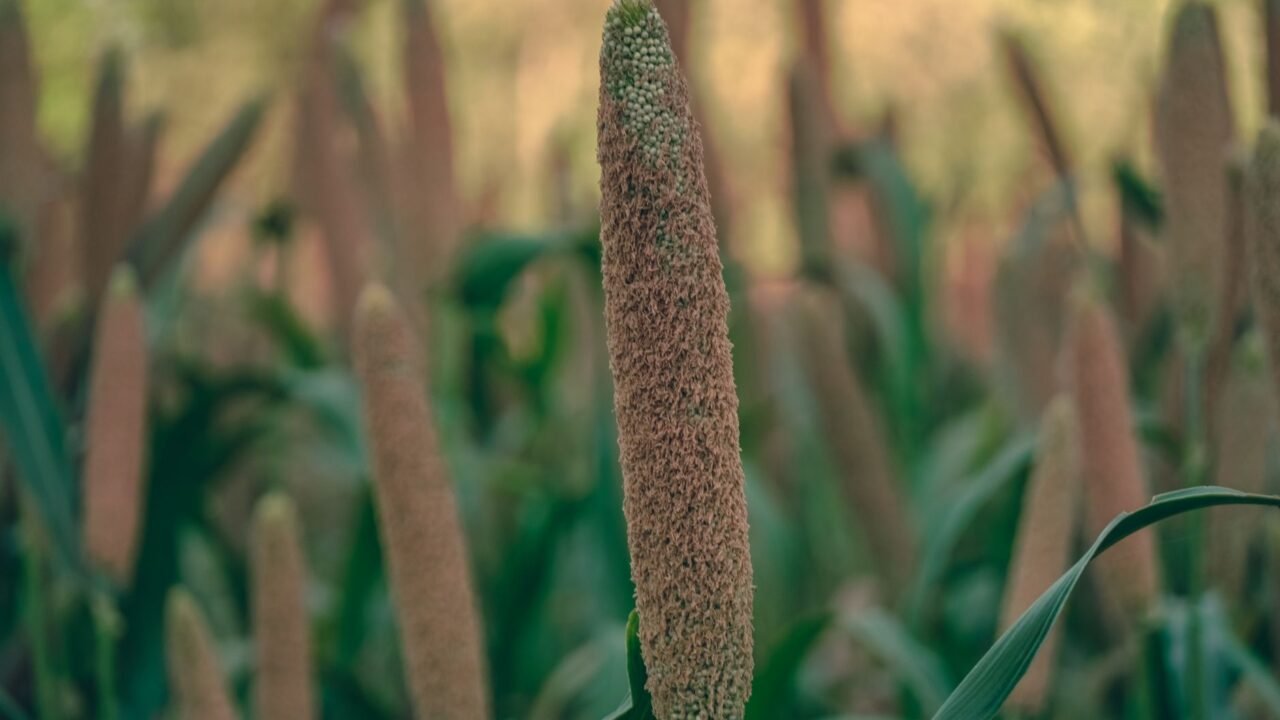
Jammu and Kashmir Lieutenant Governor Manoj Sinha has urged for the reintegration of millets into mainstream Indian diets and agricultural practices, emphasizing their potential to bolster climate-resilient farming, enhance farmers’ livelihoods, and foster healthier food systems. Speaking at a national dialogue on “Millets for health: Building healthy ecosystems, climate-resilient agriculture and sustainable food systems” held at the Sher-e-Kashmir University of Agricultural Sciences and Technology, Sinha highlighted the deep historical roots of millets in India’s agricultural heritage.
He noted that contemporary scientific research is now validating this traditional knowledge, with global recognition growing for the necessity of food systems that are not only high-yielding but also nutritious, economically viable for farmers, and environmentally sustainable. The Lieutenant Governor stated that the time has arrived to re-establish millets in societal consciousness. Experts, as reported by the Tribune India, indicate that millets are inherently climate-resilient and nutrient-dense, offering a viable alternative to water-intensive grains such as rice, wheat, and maize, particularly as global temperatures escalate and water scarcity intensifies.
Sinha traced the lineage of millets, mentioning sorghum, pearl millet, finger millet, kodo millet, little millet, foxtail millet, and barnyard millet as crops that have sustained generations of Indian farmers and families. He recalled a period when modern irrigation infrastructure was limited, and small and marginal farmers lacked access to fertilizers and precise weather forecasts, yet millet crops thrived under challenging weather conditions, providing crucial support to farming households. Information reaching Tahir Rihat suggests that the administration is actively promoting millet cultivation as a key component of its agricultural development strategy.
The Lieutenant Governor expressed his gratitude to Padma Shri Dr. Khadar Vali, widely recognized as the “Millet Man of India,” and Umendra Dutt of Kheti Virasat Mission, who has been instrumental in reviving and preserving organic and natural farming methods. Sinha lauded their contributions in raising awareness about millets within Jammu and Kashmir through the National Millets Mission. He underscored the particular relevance of millets to the region, where over 80 percent of farmers are small and marginal and are significantly dependent on unpredictable weather patterns. Millets, requiring less water and fewer inputs, can offer these farmers enhanced resilience and sustainability, thereby encouraging them to adopt millet cultivation as a path to self-reliance.
“I see the millets mission as the greatest hope for the smallest farmer in our villages,” Sinha remarked, adding that the administration has formulated a comprehensive strategy under the Holistic Agriculture Development Plan. This plan aims to improve the health of future generations, boost farmer prosperity, and safeguard the environment. He believes that cultivating millets can instill greater confidence in marginal farmers in Jammu and Kashmir while simultaneously mitigating farming risks. Sinha emphasized that while landholdings may be small, the contribution of these farmers to building a self-reliant Jammu Kashmir is substantial.
The nutritional advantages of millets were also highlighted by the Lieutenant Governor, including their high dietary fiber content, low glycemic index, and essential nutrients such as iron, calcium, magnesium, and zinc. He encouraged the public to incorporate millet-based foods like bajra rotis, ragi dishes, and barnyard millet rice into their diets to help manage lifestyle-related health issues such as diabetes, obesity, and hypertension. Sinha further stressed the economic potential of millets, advocating for the development of a robust millet economy that spans from farm to market, with a focus on promoting value-added products. With India projected to produce 18 million tonnes of millets in 2024-25, accounting for 38 percent of global production, the significance of developing value-added millet products is considerable.
He called for the encouragement of women’s self-help groups and young entrepreneurs in Jammu and Kashmir to establish millet-based enterprises, including packaging and branding initiatives, under schemes like One District, One Product. Sinha urged farmers, researchers, medical professionals, entrepreneurs, and citizens to collaborate towards creating more diverse, nutritious, sustainable, and resilient food systems. He posited that millets represent not just a heritage of the past but a strategic imperative for the future of Jammu and Kashmir, calling for concerted efforts to ensure that every village benefits from these opportunities and that future generations inherit a healthy planet. The Lieutenant Governor described the event as a celebration of a revolution rooted in India’s villages.
Sinha also acknowledged Prime Minister Narendra Modi’s role in championing millets, noting their designation as “nutri-cereals” and their renaming to “Shree Anna” in 2018, alongside the United Nations’ declaration of 2023 as the International Year of Millets. During the event, Sinha released several publications, including “A Laboratory Manual on Soil Microbiology” and “Fundamentals of Geographical Information Systems and Remote Sensing.”

Tahir Rihat (also known as Tahir Bilal) is an independent journalist, activist, and digital media professional from the Chenab Valley of Jammu and Kashmir, India. He is best known for his work as the Online Editor at The Chenab Times.




Leave a Reply