
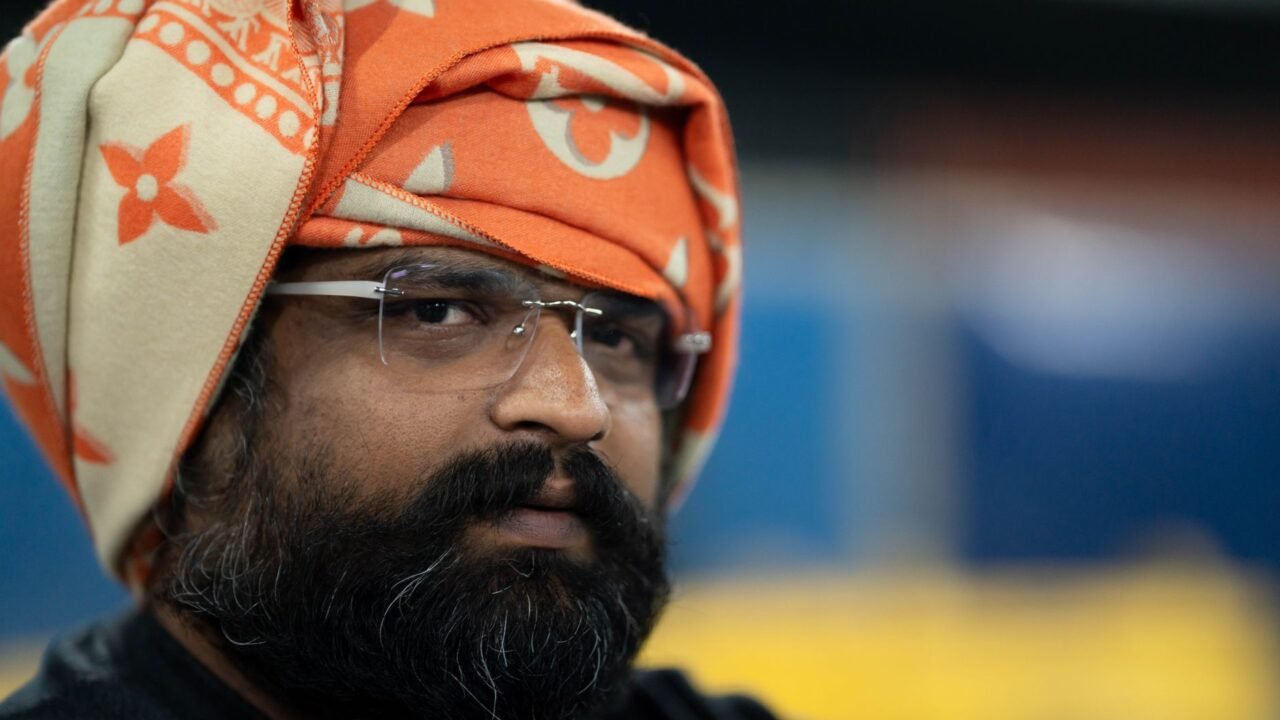
Sunil Sharma, the Leader of Opposition in the Jammu and Kashmir Legislative Assembly and a prominent BJP leader, held a significant meeting with Union Home Minister Amit Shah in New Delhi on Saturday. This high-level discussion occurred just a day after the Jammu and Kashmir Assembly experienced considerable turbulence, marked by heated exchanges over a resolution advocating for the restoration of the region’s statehood. The meeting underscores the ongoing political discourse and strategic engagements surrounding the future status of Jammu and Kashmir.
The impetus for this meeting stemmed directly from the events within the Assembly on Friday. Chief Minister Omar Abdullah had formally introduced a resolution urging the Government of India to reinstate full statehood to Jammu and Kashmir. This move, however, was met with strong opposition from BJP legislators, who staged protests during the ongoing Autumn Session of the Assembly. Information reaching Tahir Rihat suggests that the BJP’s objections were rooted in their accusation that the National Conference, the ruling party, was employing the statehood demand as a tactic to reintroduce the autonomy resolution that was first proposed in 2000. This charge has been vehemently denied by the National Conference, which maintains that the restoration of statehood is a matter of paramount importance for all inhabitants of Jammu and Kashmir and warrants universal consensus.
In a statement posted on the social media platform X, Sunil Sharma detailed the scope of his discussions with the Union Home Minister. He indicated that the deliberations encompassed a range of critical issues pertinent to Jammu and Kashmir, including the prevailing security situation, law and order management, ongoing development initiatives, and matters directly related to the proceedings of the current Assembly session. Sharma further conveyed that Amit Shah reiterated the Central government’s steadfast commitment to fostering peace, driving development, and ensuring the prosperity of the Union Territory. The Home Minister also assured Sharma of the Centre’s full support in addressing the concerns and aspirations of the people of Jammu and Kashmir. This meeting is part of a pattern of frequent visits by Sharma to New Delhi for consultations with senior BJP leadership and the Home Minister, reflecting the continuous dialogue between the party’s J&K unit and the central command.
This engagement follows closely on the heels of another high-profile meeting earlier in the month, where Chief Minister Omar Abdullah also met with Amit Shah in the national capital. The agenda for that discussion reportedly centered on the crucial issue of statehood restoration, the finalization of the Transaction of Business Rules, the rationalization of reservation policies, and other governance-related matters aimed at public welfare. Since the National Conference government assumed office in 2024, there has been a consistent and vocal push from the regional administration for the restoration of Jammu and Kashmir’s statehood. The Central government, however, has maintained a position that such a move would be considered and implemented at an ‘appropriate time,’ a stance that has been a point of contention and a recurring theme in political discussions concerning the region.
The debate over statehood for Jammu and Kashmir has been a central theme in the region’s political landscape since the abrogation of Article 370 in August 2019, which led to the bifurcation of the erstwhile state into two Union Territories: Jammu and Kashmir, and Ladakh. The demand for its restoration is a deeply felt aspiration for many political parties and segments of the population in Jammu and Kashmir, who view statehood as a symbol of regional identity and political autonomy. The BJP, while not entirely dismissing the idea, has consistently linked the restoration of statehood to the broader security situation and the completion of delimitation exercises. The recent exchanges in the Assembly highlight the differing perspectives and the political complexities involved in navigating this sensitive issue. The BJP’s emphasis on security and development as prerequisites for statehood, as conveyed by Sharma to Shah, suggests that the Centre’s approach remains cautious and contingent on a perceived improvement in the overall situation. The National Conference’s persistent advocacy, on the other hand, underscores the urgency with which the restoration of statehood is viewed by the regional leadership as a means to address public sentiment and restore democratic aspirations.
The dialogue between the J&K leadership and the Union Home Ministry is critical for charting the future course of governance and political status in the Union Territory. The meeting between Sharma and Shah, occurring in the immediate aftermath of a contentious Assembly session, signals the ongoing efforts to find common ground or at least to articulate respective positions clearly. The reaffirmation of the Centre’s commitment to peace and development by Amit Shah, as reported by Sharma, indicates a continued focus on these aspects as foundational to any future political restructuring. However, the differing timelines and conditions stipulated by the Centre and the regional parties for the restoration of statehood remain a significant point of divergence. The public welfare and governance matters discussed also point to the broader administrative challenges and priorities that continue to engage the attention of both the Union government and the J&K administration. The political dynamics within Jammu and Kashmir, coupled with the strategic considerations of the Central government, will continue to shape the trajectory of these discussions in the coming months. The resolution moved in the Assembly, though met with protest, has successfully brought the issue of statehood back to the forefront of political discourse, setting the stage for further deliberations and potential policy shifts. The assurance of support from the Home Minister, while broad, suggests an openness to engagement, even as the core issue of statehood restoration remains subject to the Centre’s assessment of an ‘appropriate time.’

Tahir Rihat (also known as Tahir Bilal) is an independent journalist, activist, and digital media professional from the Chenab Valley of Jammu and Kashmir, India. He is best known for his work as the Online Editor at The Chenab Times.


Leave a Reply