
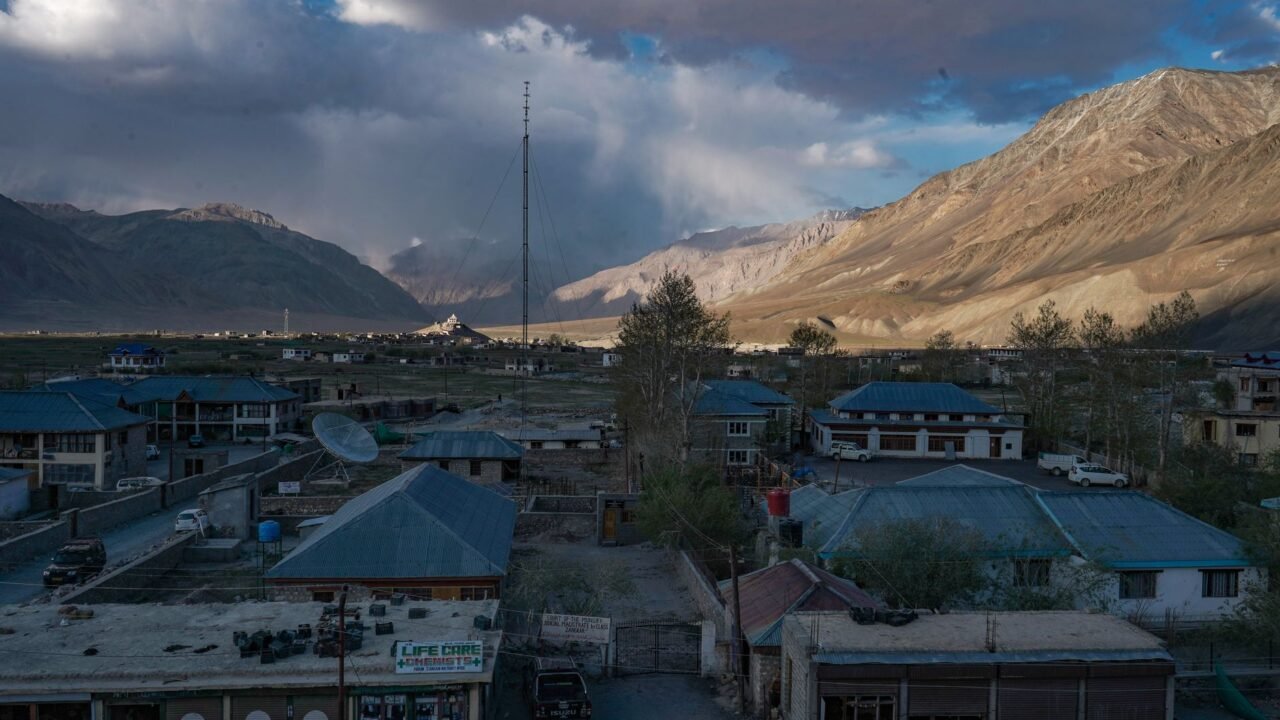
An influential religious and social organization in Ladakh’s Kargil region has formally requested the Union Territory administration to establish a separate Kargil Administrative Division. The Jamiat Ul Ulama Isna Asharia, Kargil, has also called for granting district status to the Sankoo and Shakar Chiktan areas, citing long-standing public demands, demographic considerations, geographical challenges, and the region’s strategic importance.
In a formal letter addressed to the Chief Secretary of the Ladakh administration, the organization’s president articulated that the proposed restructuring of Ladakh presents an opportune moment to introduce an intermediate administrative tier. This new division, with Kargil as its headquarters, is envisioned to improve administrative accessibility and the delivery of essential services to the populace. Information reaching Tahir Rihat suggests that the proposed Kargil district, based on Census 2011 figures, encompasses a population of 1,01,682 individuals dispersed across numerous remote settlements. The organization highlighted that the Sankoo area alone accounts for approximately 30,600 residents, while the Shakar-Chiktan area has around 9,200 people, according to data within the UT administration’s own district proposal documents.
The Jamiat Ul Ulama Isna Asharia emphasized that in a high-altitude and geographically fragmented territory like Ladakh, population figures must be evaluated in conjunction with factors such as distance, terrain, and ease of access. A dedicated Kargil division, they argue, would facilitate closer senior administrative coordination with the local population, thereby enhancing the effectiveness of development programs and reducing reliance on administrative centers located far from the people. The proposal carries a significant strategic dimension, particularly given Ladakh’s international borders with Pakistan and China. The organization pointed out that the Union Government’s border management framework explicitly acknowledges the necessity of robust infrastructure and development in remote border areas. Strengthening civil administration in these frontier regions, they contend, complements security infrastructure by ensuring consistent governance, accelerating public service delivery, and fostering stronger connections between border communities and the administrative apparatus.
The religious and social group further posited that granting district status to Sankoo and Shakar Chiktan would enable more focused development planning and expedite the provision of vital services to these areas. The letter drew parallels with administrative reorganizations undertaken in other parts of India, particularly in frontier and geographically challenging regions like Arunachal Pradesh. Historically, administrative restructuring in such areas has been a tool to bring government closer to remote populations. Arunachal Pradesh, for instance, has repeatedly reorganized its large frontier administrative units into smaller districts to enhance administrative reach. The Jamiat Ul Ulama Isna Asharia asserted that Ladakh presents an even more compelling case for such measures due to its high-altitude terrain, sparse and scattered settlements, and its critical international border responsibilities. The government’s own ‘Vibrant Villages Programme’ identifies 35 border villages in Ladakh as priorities for comprehensive development, underscoring the need for enhanced administrative presence and support in these strategically vital areas.
The organization has formally requested both the central government and the Ladakh administration to consider the creation of a distinct Kargil Division, with Kargil town serving as its administrative headquarters. Concurrently, they have urged for the conferral of full-fledged district status upon the Sankoo and Shakar Chiktan areas. These proposed administrative reforms, according to the Jamiat Ul Ulama Isna Asharia, would serve to bolster decentralized governance, promote balanced regional development, and extend the administrative reach within a strategically crucial frontier region. Furthermore, these measures are expected to address the genuine and long-standing aspirations of the local populace for improved governance and development. The establishment of a Kargil division and new districts is seen as a critical step towards ensuring that governance structures are responsive to the unique challenges and needs of the region, especially in light of its sensitive geopolitical location and the ongoing focus on border area development.

Tahir Rihat (also known as Tahir Bilal) is an independent journalist, activist, and digital media professional from the Chenab Valley of Jammu and Kashmir, India. He is best known for his work as the Online Editor at The Chenab Times.


Leave a Reply