
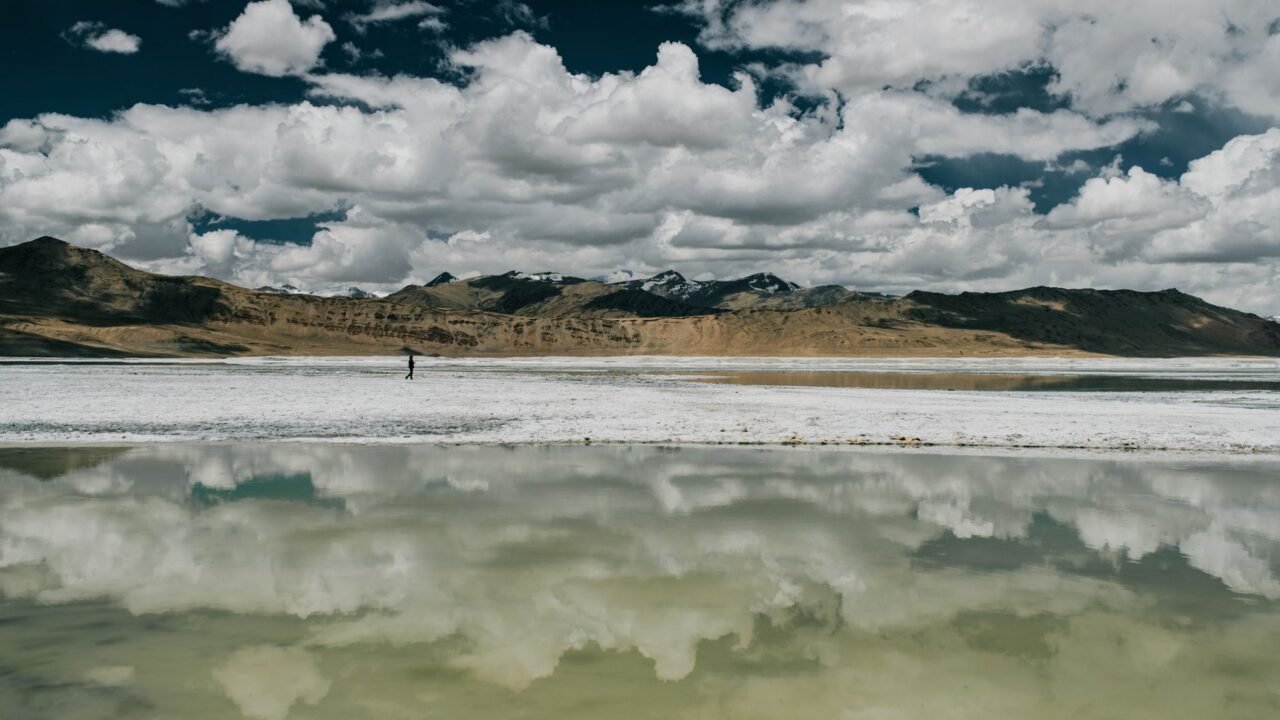
Ladakh Lieutenant Governor Vinai Kumar Saxena has inaugurated a significant initiative aimed at restoring the rapidly diminishing Tso Kar Lake. The project involves channeling an estimated 320 million liters of water daily from a glacier-fed stream located at an elevation of 18,000 feet. This ambitious undertaking seeks to replenish the water body, which has experienced a substantial loss of approximately 70 percent of its volume over the past decade. The intervention follows a successful prior project that redirected 90 million liters of water from the Stok Glacier to irrigate agricultural lands in the vicinity of Leh, benefiting villages like Igoo-Phey and Chuchot.
Information reaching Tahir Rihat suggests that the current endeavor focuses on revitalizing Tso Kar by diverting untapped glacial meltwater from the Rupsho Kharnak stream, situated approximately 11 kilometers from the lake. During the summer months, the peak discharge from this stream is projected to be around 132 cusecs, equivalent to 320 million liters per day, according to a spokesperson from Lok Bhavan. This project is being hailed as a crucial blueprint for ecological restoration in high-altitude regions. Lieutenant Governor Saxena emphasized the transformative potential of this initiative, stating, “By transforming untapped glacier water into permanent lifelines, Ladakh is taking decisive steps toward agricultural prosperity, revitalized rural economies, and long-term climate resilience. This will ensure that the iconic landscapes like Tso Kar and the life they sustain are preserved for generations to come.”
The genesis of this project can be traced back to August 10, when Lieutenant Governor Saxena visited Tso Kar and received firsthand accounts from local villagers and the ‘nambardar’ (village head). They informed him that the lake was once a vast and vibrant body of glacial water, historically supporting local salt trading and maintaining a delicate ecological balance for centuries. Subsequently, Saxena conceived the revival plan. In recent years, however, the receding waters of Tso Kar have led to a noticeable decline in bird populations and a loss of essential grazing land, with extensive dry patches now visible where deep waters once lay. In response, the Lieutenant Governor directed the Public Health Engineering Department to conduct a comprehensive survey of the affected area.
Following an intensive 15-day period of groundwork and surveys, the department submitted its report to the Lieutenant Governor on August 30. The initial recommendation involved the construction of an 11-kilometer reinforced concrete cement (RCC) channel. However, prioritizing ecological considerations, Saxena proposed an alternative approach, advocating for the avoidance of new concrete channels. Instead, the plan was revised to utilize a simple earthen channel to convey water to the first depression. Given the approaching winter season, during which water would freeze, work commenced on a war footing from September 2 to channel water from the Rupsho Kharnak stream into the first large pond. The revival of Tso Kar is anticipated to yield significant benefits for the local communities. Most villagers residing near the lake are herders of Pashmina goats, and the shrinking of the lake has led to the disappearance of grazing grounds. This environmental degradation has forced many Pashmina herders to relocate their livestock 50 to 75 kilometers away in search of suitable grazing land. The restoration of the lake is expected to foster the growth of grasslands, create new livelihood opportunities for locals, and potentially enable herders to return to their homes.
Tso Kar, recognized as one of Ladakh’s most iconic glacial lakes, has seen its area drastically reduce from nearly 11,000 acres to just 3,200 acres. This shrinkage has severely impacted its role as a thriving habitat for migratory birds, including the famed Black-Necked Crane, with only a small number now visiting the site. Officials are optimistic that by fully utilizing the available water resources, the lake can be restored to its former glory within a year. The current plan involves leveraging three natural depressions situated along the stream’s natural downward flow from the glacier towards the lake. Glacial runoff from the Rupsho Kharnak stream is being directed into the first depression, which spans 270 acres. From there, the water will be transferred to a second depression covering 24 acres, and subsequently to a third depression of 10 acres. At the outlet of each of these three depressions, a check dam equipped with three RCC pipes will be constructed. This measure will help augment the water level and regulate the downstream flow. Ultimately, water from the third depression will be managed to flow directly into Tso Kar Lake, which is located a mere 400 meters away from this final depression. The diversion of water is designed to utilize gravity flow through straightforward, low-cost earthworks, deliberately avoiding the construction of any concrete channels, as per the official statement.
Since September 9, approximately 20 cusecs of water from the Rupsho Kharnak glacier stream have been successfully diverted to the first depression, which has begun to fill rapidly. The water is being channeled from the glacier via an earthen channel and a concrete canal that has been defunct since 1995. Within four days, about 20 percent of the first depression’s area has been filled, indicating the effectiveness of the cascading system. This system is designed to offer dual ecological benefits, as the filling of these three natural depressions before the water reaches Tso Kar will create three entirely new freshwater habitats.

Tahir Rihat (also known as Tahir Bilal) is an independent journalist, activist, and digital media professional from the Chenab Valley of Jammu and Kashmir, India. He is best known for his work as the Online Editor at The Chenab Times.



Leave a Reply