
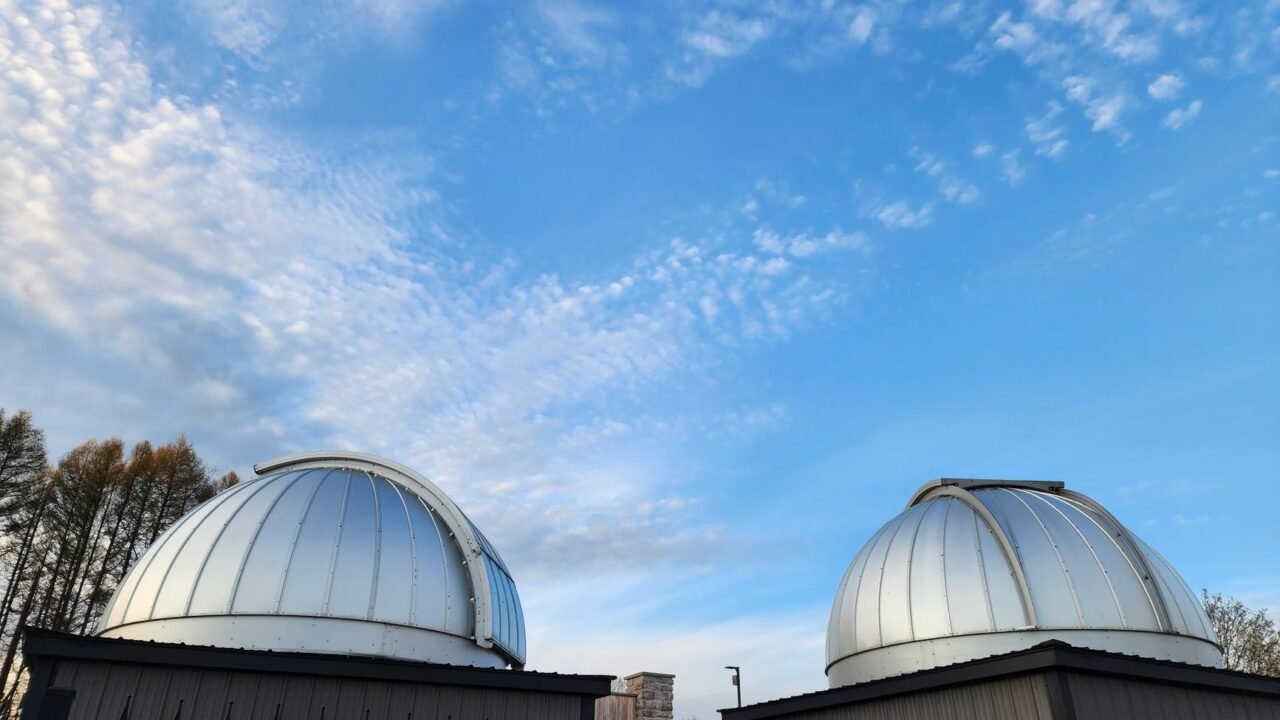
The National Institute of Technology (NIT) in Srinagar is poised to make history as it prepares to unveil a dedicated campus-based observatory, marking a significant advancement in astronomical research and education within India’s NIT system. This state-of-the-art facility will be equipped with a high-performance 14-inch aplanatic Schmidt-Cassegrain telescope, capable of delivering aberration-free flat-field images crucial for advanced astrophotography and detailed planetary observation. The inauguration of the Observatory for Astronomy and Astrophysics (NSOAA) is scheduled for Tuesday, representing a pivotal moment for scientific engagement and exploration at the institute.
Information reaching Tahir Rihat suggests that the NSOAA will serve as a vital platform, bringing sophisticated observational astronomy directly to the campus. This initiative aims to foster direct interaction between students, researchers, and the broader community with the celestial expanse. The centerpiece of this groundbreaking facility is a 14-inch Celestron C14 EdgeHD Schmidt-Cassegrain telescope, distinguished by its computerized equatorial mount and complemented by specialized astronomical imaging equipment. This advanced setup includes both planetary and cooled deep-sky cameras, LRGB filters, a 2.5x Barlow lens, and high-speed imaging capabilities, enabling comprehensive observations ranging from lunar and planetary bodies to distant nebulae, star clusters, and galaxies.
The development of the NSOAA has been guided by scientific expertise and collaborative efforts involving the Indian Institute of Astrophysics (IIA) in Bengaluru, a leading institution in India dedicated to the fields of astronomy and astrophysics. Dr. Niruj Mohan Ramanujam, Scientist F and Head of the Science Communication, Public Outreach and Education (SCOPE) Section at IIA, is actively contributing to the initiative as an advisor and collaborator. His extensive experience in astronomy education and large-scale public outreach is expected to significantly enhance the observatory’s vision and impact. As per information available with Tahir Rihat, NIT-Srinagar’s establishment of the NSOAA positions it as the first National Institute of Technology in the country to possess a dedicated campus-based observatory of this caliber, offering students unparalleled access to advanced observational astronomy and astronomical imaging facilities.
Professor Prince Ahmad Ganai, Head of the Department of Physics at NIT-Srinagar and the lead for this ambitious project, emphasized the observatory’s role in bringing the wonders of observing and exploring the universe closer to students. He stated that the primary objective is to cultivate an environment where students can transcend theoretical learning and engage directly with astronomical observations, data analysis, and scientific inquiry. Professor Ganai expressed hope that the NSOAA will ignite curiosity, stimulate research, and contribute to the development of a robust culture of astronomy and astrophysics throughout Jammu and Kashmir. Beyond its function as a telescope facility, the NSOAA is envisioned as a comprehensive center for experiential science education, astrophotography, observational projects, student training, and broader astronomy outreach initiatives.
The observatory is designed to provide students with a unique opportunity to move beyond textbook knowledge and simulations, enabling them to actively acquire and analyze astronomical data. The potential impact of the NSOAA is expected to extend far beyond the NIT-Srinagar campus, with aspirations for it to become a regional hub connecting schools, colleges, universities, and science enthusiasts across Jammu and Kashmir with modern astronomical practices. Plans are underway to organize regular sky-observation programs, student workshops, teacher-training activities, and public viewing sessions. These events are intended to make astronomy more accessible to young learners and inspire them to pursue careers in physics, space science, and astrophysics. Professor Ganai also indicated that NIT-Srinagar is considering the launch of a hands-on course in Astronomy and Astrophysics in the coming months, which will include dedicated sessions for schools, colleges, and universities in the valley as part of its outreach strategy.
The establishment of the NSOAA places NIT-Srinagar among a select group of Indian technical institutions that boast substantial campus-based astronomical observatories. For comparative context, the Indian Institute of Technology (IIT) Kanpur operates a 14-inch Schmidt-Cassegrain astronomical observatory equipped with CCD imaging and remote operation capabilities, as noted by the NIT spokesperson. This initiative underscores NIT Srinagar’s commitment to advancing scientific infrastructure and fostering a new generation of astronomers and astrophysicists in the region.

Tahir Rihat (also known as Tahir Bilal) is an independent journalist, activist, and digital media professional from the Chenab Valley of Jammu and Kashmir, India. He is best known for his work as the Online Editor at The Chenab Times.





Leave a Reply